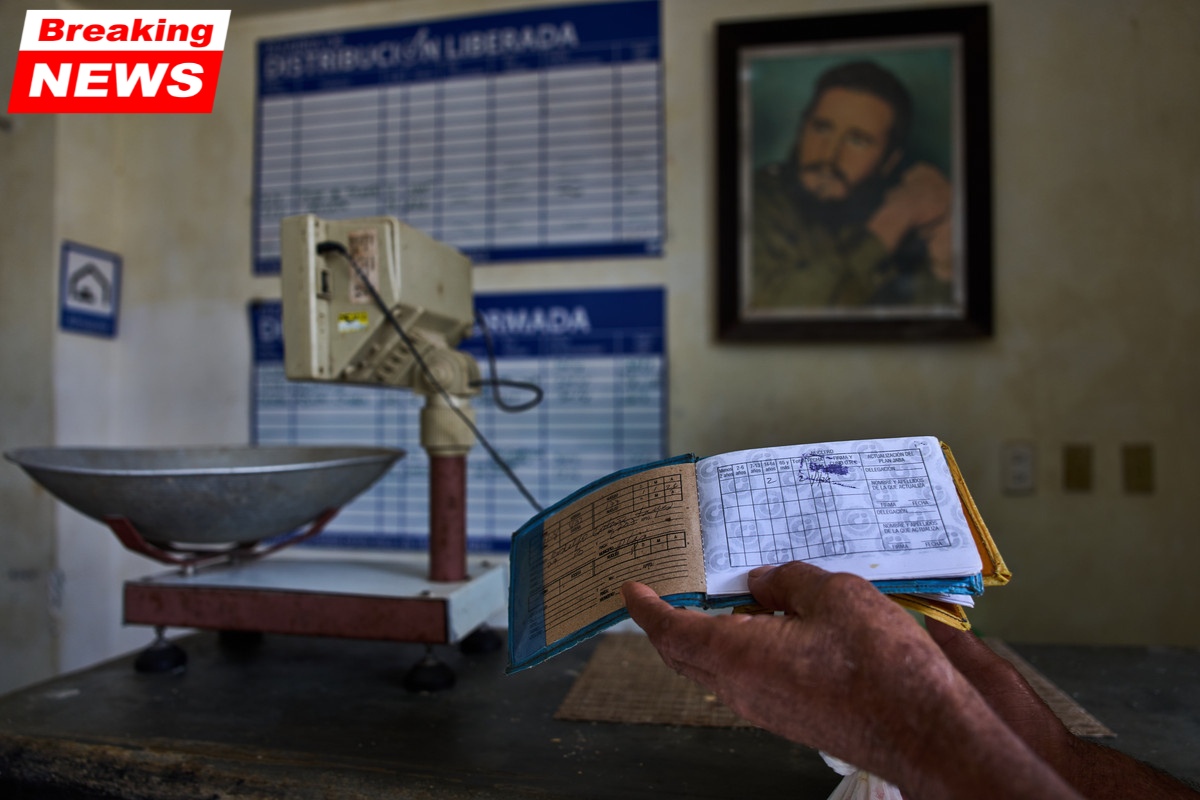
In Havana, the once-bustling state-run bodega where José Luis Amate López works now stands almost barren. What was once a source of daily nourishment for thousands of Cubans is now barely able to provide the essentials.
In April, López was left with only rice, sugar, and split chickpeas to sell—far from the diverse and subsidized selection that once filled the shelves. This shortage is emblematic of the deepening economic crisis in Cuba, where the ration system, which has long been a pillar of socialist welfare, is increasingly unable to meet the basic needs of the population.
The Collapse of Cuba’s Ration System
Cuba’s ration book, or “la libreta,” was introduced by Fidel Castro in the early 1960s as a means of providing basic goods at heavily subsidized prices. The ration book allowed families to rely on a monthly supply of necessities such as milk, rice, bread, and even cigarettes. For decades, it was a cornerstone of daily life in Cuba, ensuring that citizens had access to affordable food.
However, the system has dramatically shrunk over the years. In the 1990s, during the “Special Period,” when Cuba lost Soviet support, the ration system was significantly cut back. Basic goods like bread, milk, eggs, and chicken became increasingly difficult to obtain, and Cubans endured widespread hunger and deprivation.
Despite this hardship, many people who lived through that period contend that the current situation is even worse, as the ration book now offers an even more limited selection of goods.
José Luis Amate López, who works at a central Havana bodega, recalls a time when shelves were full and people could easily find what they needed. “The bodega was so full you could barely walk,” he said. Today, the shelves are nearly empty, and the freezers once stocked with meat and poultry now serve only to chill his water bottle.
The small rationing store has nothing left to sell, reflecting the deeper economic issues that have affected the entire country.
The Impact of Inflation and the Shift to U.S. Dollars
As the Cuban economy continues to spiral downward, prices have soared, making it increasingly difficult for ordinary citizens to afford basic goods. This has pushed many Cubans to rely on U.S. dollars to buy necessities, particularly in the private sector, where “mipymes” (small, privately-owned stores) sell goods at market rates.
This is an especially difficult reality for many Cubans, whose monthly salaries are paltry by international standards.
Ana Enamorado, a 68-year-old Havana resident, shares how her salary and pension, totaling around 8,000 Cuban pesos ($16), hardly allow her to purchase the essentials. In April, the only items she was able to obtain from her bodega were split chickpeas and sugar.
She struggles to buy other basic food items at private stores due to their high prices—30 eggs cost 3,000 pesos ($6), and 2 pounds of meat hash are nearly 900 pesos ($2). “There’s hardly anything in the ration book,” Enamorado said. “We’re practically living off air.”
Enamorado recalls better times when the variety of food available from her bodega allowed her to enjoy meals like pork, lamb, and fried plantains. “Now we have to cut back, have one meal a day, and live on memories,” she added.
The Government’s Economic Struggles
Cuba imports up to 80% of its food, but the government now faces an acute shortage of funds to purchase these imports. William LeoGrande, a professor at American University, notes that the Cuban government has not been able to balance its budget due to excessive spending, particularly in sectors like tourism, which has seen a significant decline.
As the country grapples with a crumbling economy, it has been forced to consider alternatives to the traditional ration system, such as directly subsidizing individuals in need rather than providing subsidized goods.
This shift would theoretically free up money for critical imports like fuel and medicine, but for many Cubans, the reality is far more dire. The government’s inability to fund the basic needs of its citizens is compounded by worsening shortages of power, fuel, and essential goods, exacerbating the hardships faced by the population.
The Strain on Cuban Families
While some Cubans receive financial support from family members abroad in the form of remittances, the vast majority of people struggle to get by on their meager state salaries. Lázaro Cuesta, a 56-year-old food worker, earns 6,000 Cuban pesos ($12) a month, while his wife, a retired nurse, receives 4,800 pesos ($10). Together, their combined income barely covers their basic needs.
However, Cuesta’s family in the United States sends them $200 a month, allowing them to afford additional staples like avocados and eggs. Without these remittances, Cuesta acknowledges, they wouldn’t be able to survive.
In contrast, Rosa Rodríguez, 54, does not receive any remittances and faces a far more difficult situation. Earning 4,000 Cuban pesos ($8) a month, she cannot afford many of the basics and often has to make difficult choices between essential items. “If you buy beans, then you can’t buy sugar,” she said, highlighting the extreme scarcity of goods and the crushing burden of inflation.
The Future of Cuba’s Ration System
Cuba’s ration system, once a lifeline for millions, is now a shadow of its former self. Many citizens feel the system is no longer viable in the face of skyrocketing prices and limited availability of goods.
Even with the government’s talk of reforming the way it provides assistance, it is unclear whether any changes will come in time to alleviate the suffering of Cuba’s most vulnerable populations.
Comedians in Cuba have even parodied the ration book, with characters like “Pánfilo” humorously declaring the ration book is “ready to be buried.” The bleak reality of daily life is a far cry from the days when the ration book represented a reliable safety net.
Summary Table of Key Points
| Topic | Details |
|---|---|
| Ration System | Cuba’s ration system has shrunk drastically, offering fewer goods. |
| Economic Crisis | Inflation, food shortages, and the collapse of the state-run economy worsen living conditions. |
| Average Monthly Income | State salaries are insufficient, with many families relying on remittances from abroad. |
| Impact on Basic Goods | Goods like eggs, meat, and bread are increasingly difficult to afford. |
| Government Response | The Cuban government has discussed shifting to direct subsidies for people instead of goods. |
The Struggling Cuban People
Cuba’s ongoing economic crisis has left millions of citizens grappling with severe shortages, high prices, and an ever-shrinking ration system. While the government has attempted to adapt by subsidizing people rather than goods, many Cubans continue to face unimaginable hardship.
As the country’s socialist system contends with mounting challenges, the ration book’s decline symbolizes the deepening struggles of an entire nation.