The story swirling around Corey Lewandowski right now feels less like a quiet personnel shake-up and more like a slow-motion political unraveling. Just weeks after his abrupt exit from the Department of Homeland Security, fresh reporting suggests the longtime Trump loyalist may be on the outside looking in for good this time—and not just temporarily.
A Sudden Fall From Inside DHS
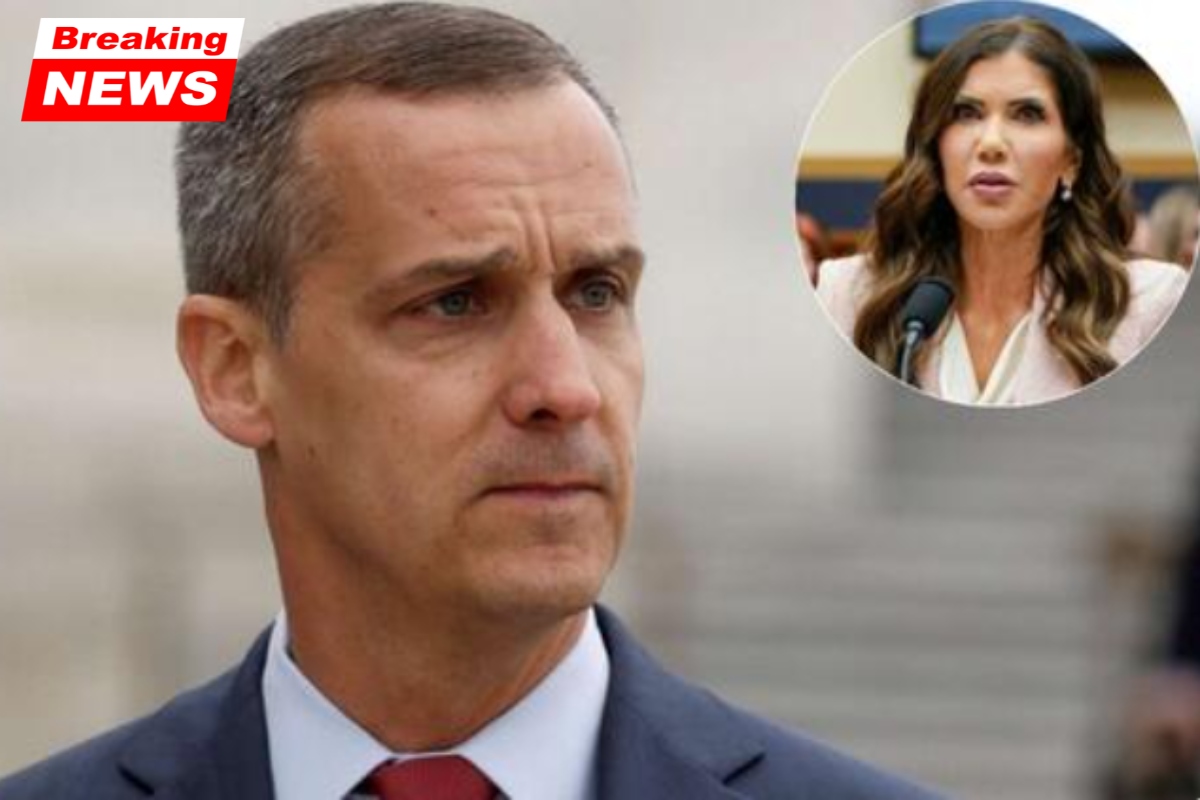
Lewandowski, 52, had carved out a powerful—if controversial—role as a senior adviser inside DHS before stepping away earlier this month. But according to reporting from The New York Times, that chapter didn’t just end—it imploded.
Inside the department, his tenure was described in stark terms. Multiple officials painted a picture of a figure who wielded unusual influence without holding a traditional, Senate-confirmed leadership role. One insider bluntly called it a “reign of terror,” alleging that Lewandowski maintained tight control over operations, often firing staff abruptly and creating what some described as a culture of fear.
That’s not just office gossip. Nearly 20 current and former officials reportedly spoke about his conduct, suggesting this wasn’t an isolated gripe but a broader internal concern.
Power Without Title—and Questions That Followed
What’s raising eyebrows in Washington isn’t just Lewandowski’s management style—it’s how much authority he appeared to have.
According to multiple reports, he:
| Area of Influence | Allegation |
|---|---|
| Contract approvals | Had final sign-off on deals over $100,000 before reaching Secretary Kristi Noem |
| Intelligence access | Received the President’s Daily Brief, typically reserved for top officials |
| ICE operations | Played a role in overseeing enforcement decisions |
| Internal meetings | Operated out of Noem’s office and attended classified briefings |
That level of access is unusual for someone without a formal cabinet-level or Senate-confirmed position. The President’s Daily Brief alone is among the most tightly controlled intelligence documents in government.
The Department of Homeland Security itself outlines strict protocols for handling sensitive information at https://www.dhs.gov, making the reported access all the more significant if accurate.
Kristi Noem in the Spotlight
Kristi Noem, who led DHS during this period, has found herself pulled into the controversy—both professionally and personally.
During a recent Senate Judiciary Committee hearing (details available via https://www.judiciary.senate.gov), Noem was directly asked whether Lewandowski had any role in approving contracts. Her answer was clear: “No.”
But that denial now sits awkwardly alongside internal records reportedly showing his name was required for sign-offs on high-value contracts before they reached her desk.
That contradiction hasn’t gone unnoticed on Capitol Hill.
Adding another layer of intrigue are long-running rumors about a personal relationship between Noem and Lewandowski. Both have denied those claims, with Noem dismissing them as “tabloid garbage.” Still, in Washington, perception often carries its own weight—fair or not.
Allegations of Financial Impropriety
Perhaps the most serious claims involve allegations that Lewandowski may have used his position to influence—or potentially benefit from—government contracts.
NBC News previously reported that a private prison executive told White House officials he was asked to make payments linked to Lewandowski. The executive, GEO Group founder George Zoley, allegedly had a strained relationship with him during the transition period following Trump’s 2024 election victory.
That said, Lewandowski’s legal team is pushing back hard.
His attorney, Adam Trigg, stated unequivocally that Lewandowski “adamantly denies ever demanding any payment or compensation” from contractors, emphasizing that no evidence has substantiated those claims.
For now, no formal charges have emerged—but the optics alone are politically damaging.
A Familiar Pattern of Controversy
If all of this feels familiar, it’s because Lewandowski’s career has been punctuated by high-profile exits and controversies.
Back in 2016, he was removed as Donald Trump’s campaign manager amid internal power struggles. Then, in 2021, he was sidelined again following allegations of inappropriate behavior at a charity event in Las Vegas—claims he also denied.
And yet, despite repeated setbacks, he has consistently found his way back into Trump’s orbit.
This time, however, things may be different.
No Clear Path Back to Trump World
The latest reporting suggests Lewandowski shouldn’t expect another role in the Trump administration anytime soon. That’s a notable shift for someone long considered one of Trump’s most loyal—and resilient—allies.
Whether this marks a permanent break or just another pause remains to be seen. In Trump’s political universe, comebacks are never entirely off the table.
But right now? Lewandowski appears to be on the sidelines.
The Bigger Picture
This episode raises broader questions about how influence operates inside federal agencies—especially during politically charged administrations.
Who gets access? Who signs off on major decisions? And how much oversight is actually in place?
For DHS, whose responsibilities include national security, immigration enforcement, and disaster response, those questions aren’t abstract—they’re foundational. You can explore the department’s structure and oversight mechanisms at https://www.dhs.gov/about-dhs.
For now, the Lewandowski saga is less about closure and more about fallout. Investigations may deepen, political pressure may build, and reputations—already bruised—could take further hits.
And somewhere in all that noise, one reality stands out: in Washington, power is rarely just about titles. Sometimes, it’s about proximity. And when that proximity comes under scrutiny, the consequences tend to follow.