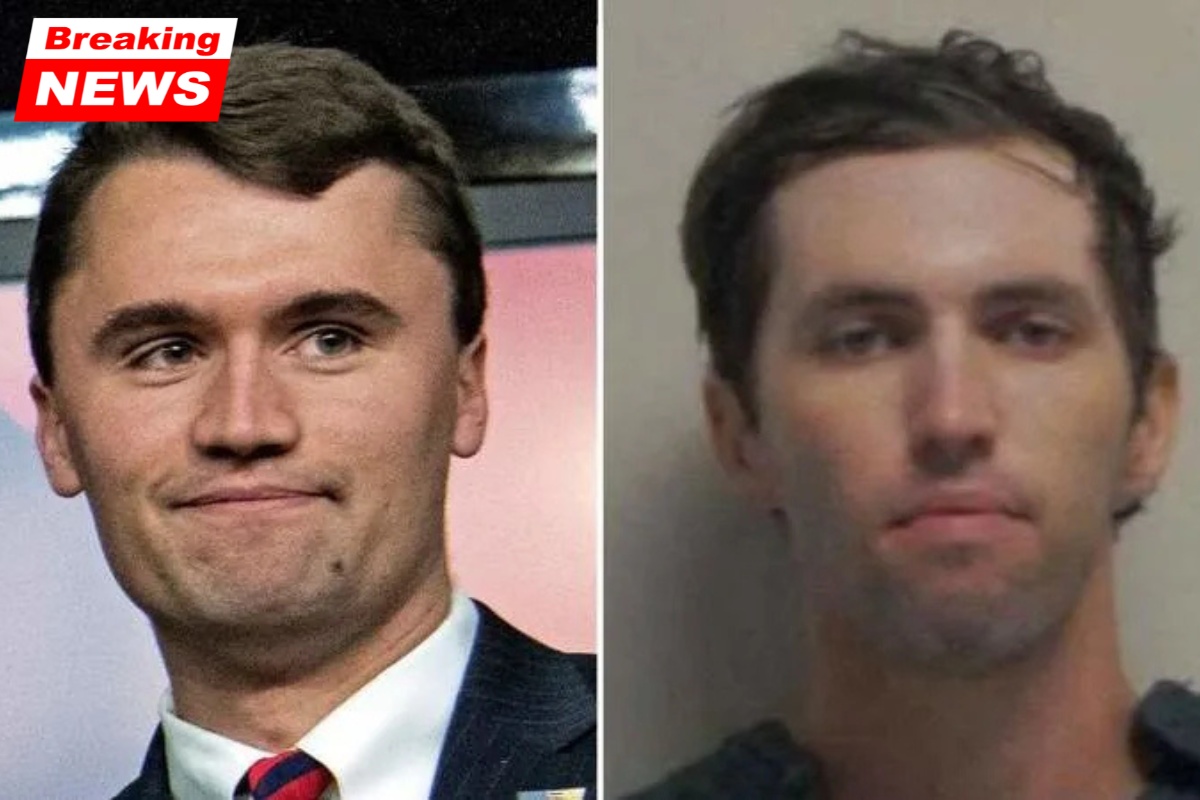
The case against Tyler Robinson just hit a sharp—and potentially game-changing—turn. In a new court filing that’s already raising eyebrows, his defense team claims the very bullet that killed Charlie Kirk cannot be forensically matched to the rifle prosecutors say was used in the murder.
If that holds up in court, it doesn’t automatically clear Robinson—but it complicates the prosecution’s narrative in a serious way.
A Forensic Gap at the Center of the Case
According to the filing, attorneys for Robinson say the Bureau of Alcohol, Tobacco, Firearms and Explosives (ATF) was unable to definitively link the fatal bullet to the rifle allegedly connected to him.
That’s not a minor technicality. In homicide cases, ballistic matches often serve as a cornerstone of physical evidence.
Here’s what’s being argued:
| Evidence Type | Defense Claim |
|---|---|
| Bullet recovered at autopsy | Not matched to suspect’s rifle |
| Rifle tied to Robinson | Allegedly cannot be forensically confirmed as the weapon used |
| ATF analysis | Inconclusive, per defense filing |
Now, “inconclusive” doesn’t mean the rifle is ruled out—it means the science couldn’t confirm it either way. But in a capital murder case, that ambiguity matters.
Why This Could Reshape the Case
Prosecutors have built their case around a fairly direct chain of events: Robinson allegedly drove hours to Utah Valley University, used a rifle tied to his family, and carried out the killing.
But if the weapon can’t be conclusively linked to the fatal shot, the defense gains room to argue:
- The wrong weapon may have been identified
- The forensic process is incomplete or flawed
- Reasonable doubt exists about the sequence of events
That last point is key. Criminal trials don’t require the defense to prove innocence—just to challenge certainty.
The Defense Wants More Time—and There’s a Reason
Alongside the ballistic claim, Robinson’s legal team is asking to delay the preliminary hearing by up to six months.
At first glance, that might look like a stalling tactic. But the details suggest something more complex.
They say they’re dealing with:
| Evidence Volume | Details |
|---|---|
| Digital files | ~20,000 audio, video, and document files |
| DNA evidence | Multiple contributors on key items |
| Forensic reports | FBI and ATF analyses still under review |
The defense describes the DNA analysis as a “complicated process,” requiring input from specialists ranging from geneticists to statisticians.
That’s not unusual in modern trials—but it does signal that this case may hinge as much on scientific interpretation as on witness testimony.
DNA Evidence: Another Layer of Uncertainty
The filing also highlights that multiple DNA profiles were found on certain pieces of evidence.
That introduces a different kind of challenge.
When DNA mixtures are involved, experts must determine:
- How many individuals contributed
- Whether samples were contaminated or transferred indirectly
- How statistically strong any match actually is
In other words, DNA evidence isn’t always the clean, TV-style “match” people expect. It can be messy—and open to interpretation.
What Prosecutors Are Expected to Present
Based on earlier discussions between both sides, the defense anticipates prosecutors will rely on several “buckets” of evidence at the preliminary hearing:
- Forensic reports (DNA and ballistics)
- Social media data
- Testimony from law enforcement
- Statements from Robinson’s family and roommate
- Additional secondhand (hearsay) testimony
That’s a broad mix—some physical, some circumstantial, some narrative-driven.
If the forensic pieces weaken, the case may lean more heavily on the rest.
The Backstory: How Robinson Was Identified
Authorities have alleged that Robinson drove roughly three hours to the university campus on the day of the killing.
A key moment in the investigation came when his father reportedly contacted police after recognizing a rifle—believed to belong to the family—in images released during the manhunt.
That detail has been central to the prosecution’s argument tying Robinson to the weapon.
But again, if the bullet can’t be matched to that rifle, the strength of that connection becomes less clear-cut.
Important Context: What This Filing Does—and Doesn’t Mean
It’s worth slowing down here, because filings like this can sound more definitive than they are.
What the defense is saying:
- The ballistic evidence is inconclusive
- More time is needed to analyze forensic data
- The current evidence requires deeper scrutiny
What it does not mean (at least yet):
- That Robinson has been cleared
- That the rifle wasn’t involved
- That the prosecution’s case collapses
Court filings are inherently one-sided. This is the defense presenting its strongest interpretation of the evidence. Prosecutors will almost certainly counter with their own experts and explanations.
The Bigger Picture: Trials Are Increasingly About Science
If anything, this case highlights a broader trend in criminal justice: modern trials are becoming battles of experts.
Ballistics, DNA mixtures, digital forensics—these aren’t straightforward facts. They’re interpretations built on methodology, probability, and sometimes disagreement between specialists.
That’s why the defense is emphasizing the need for:
- Independent forensic review
- Expert consultation
- Time to process massive data sets
Because in a case where the death penalty is on the table, uncertainty—even technical uncertainty—can carry enormous weight.
What Happens Next
The immediate question is whether the judge grants the requested delay. That decision alone could shape the timeline—and strategy—of the entire case.
If the delay is approved:
- The defense gets more time to challenge forensic evidence
- Expert testimony becomes even more central
- The preliminary hearing could become far more detailed
If it’s denied:
- The defense may have to proceed with incomplete analysis
- Early arguments could hinge on unresolved forensic questions
Either way, this case is no longer just about what happened—it’s about what can be proven, and how convincingly.