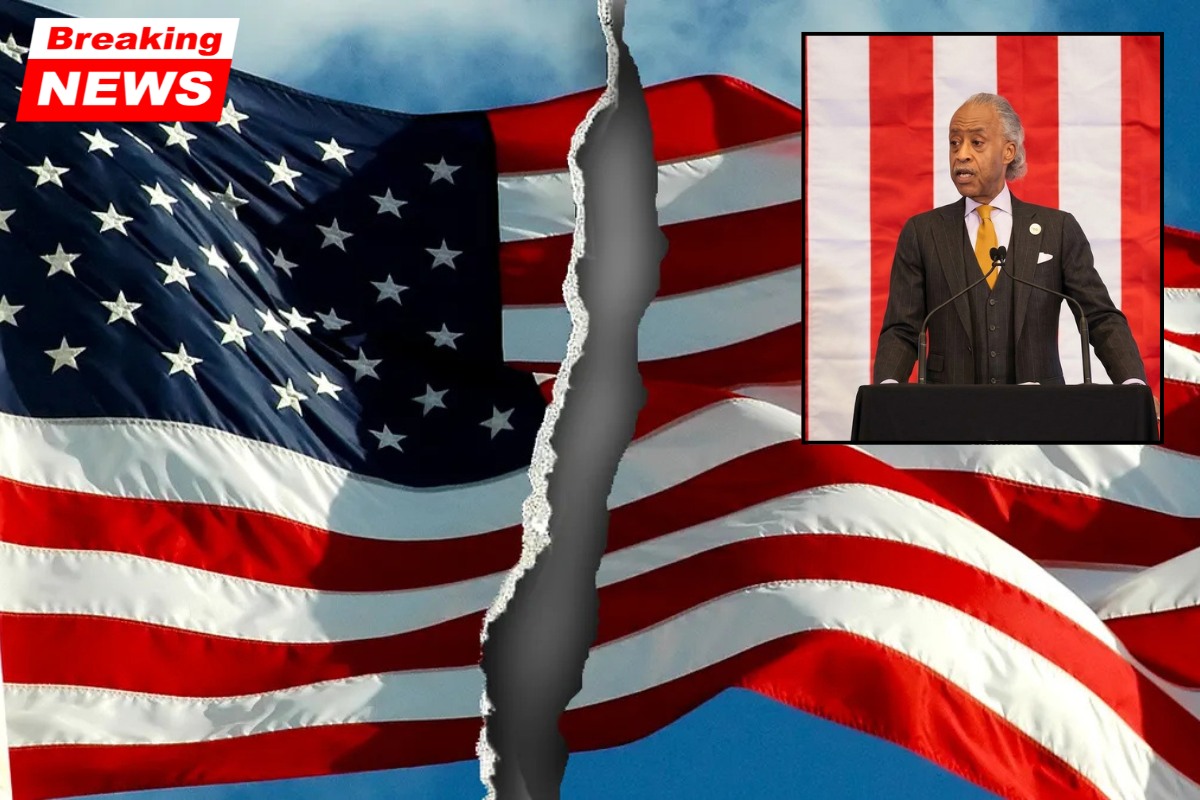
Civil rights leader Al Sharpton said the upcoming 250th anniversary of the United States should not be viewed as a celebration for Black Americans, arguing that the nation’s founding did not include them.
Speaking at the National Action Network Convention, Sharpton said it is “crazy” to expect Black Americans to celebrate a moment in history when they were still enslaved.
“They’re going to celebrate the 250th anniversary of the country July 4th, but that’s not our celebration,” he said, referencing the signing of the Declaration of Independence.
Historical Context Behind the Remarks
Sharpton pointed out that while the United States declared independence in 1776, slavery remained legal for nearly a century afterward. Enslaved Black Americans were not emancipated until 1863, during the Emancipation Proclamation.
His argument centers on the idea that national celebrations tied to freedom can feel incomplete or exclusionary when viewed through that historical lens.
He compared the situation to attending someone else’s birthday party, saying it doesn’t feel like something meant for him.
Call for Greater Awareness of History
Sharpton also expressed concern that younger generations may not fully understand this history. He criticized efforts to reduce or reshape discussions around race and inequality in education.
In particular, he has been critical of policies associated with Donald Trump and Ron DeSantis, arguing that changes to curriculum and diversity programs risk limiting how history is taught.
He suggested that without a full understanding of the past, conversations about policies like reparations or affirmative action can be misunderstood.
Debate Over Education and DEI Policies
Sharpton has been a vocal opponent of scaling back diversity, equity, and inclusion (DEI) initiatives in schools and businesses.
He previously criticized Florida’s decision to revise an Advanced Placement African American studies course, calling it an attempt to “erase Black history.”
Supporters of such changes argue they are aimed at removing political bias, while critics say they diminish important historical context.
Proposal for a ‘Department of Reconciliation’
During the same event, Al Green proposed the creation of a federal “Department of Reconciliation.”
According to Green, this department would:
- Address historical injustices
- Promote national unity
- Explore policies such as reparations
He argued that just as the government has departments for education and labor, it should have one dedicated to reconciling historical divisions.
Ongoing National Conversation
Sharpton’s remarks reflect a broader national conversation about how the United States remembers its history and who feels included in its milestones.
For some, Independence Day represents the country’s founding ideals of freedom and democracy. For others, it highlights contradictions between those ideals and historical realities.
These differing perspectives continue to shape debates over education, public policy, and national identity.
Summary Table
| Topic | Key Points |
|---|---|
| Event | National Action Network Convention |
| Main Statement | July 4th not a celebration for Black Americans |
| Historical Reference | Slavery existed until 1863 |
| Criticism | Education changes under Trump and DeSantis |
| Policy Debate | DEI, reparations, affirmative action |
| Proposal | Department of Reconciliation |
Al Sharpton’s comments are part of an ongoing discussion about how history is remembered and who feels represented in national celebrations.
By highlighting the gap between America’s founding ideals and its historical realities, he is calling for a more inclusive understanding of the past.
Whether one agrees or disagrees, the conversation reflects a deeper question: how should a nation balance pride in its history with an honest acknowledgment of its shortcomings?