
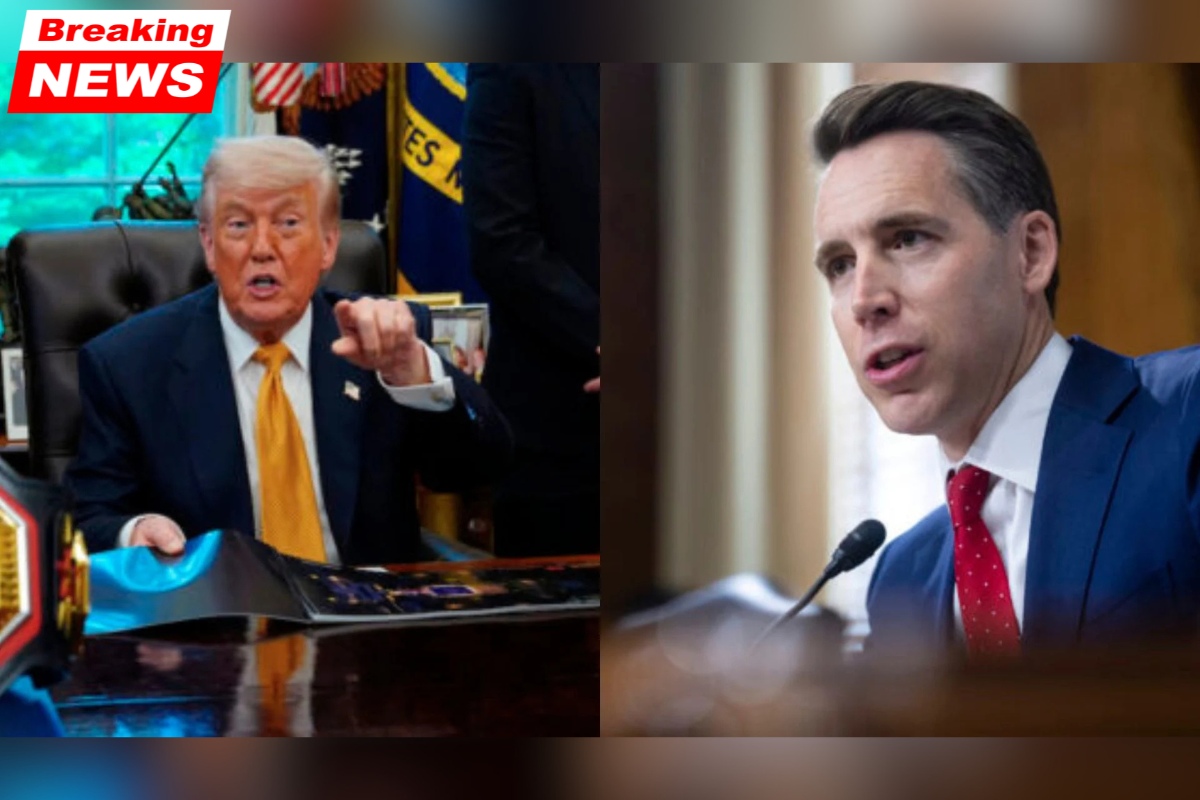
President Donald Trump’s previous criticism of Senator Josh Hawley (R-MO) is gaining new attention amid scrutiny of Trump’s stock-trading activity. Reports indicate that Trump conducted between $220 million and $750 million in stock market transactions during the first quarter of 2026, according to filings with the Office of Government Ethics.
The president had publicly called for a congressional stock-trading ban during his State of the Union address earlier this year. However, he had previously opposed a similar ban advanced by Hawley, which would have applied to the presidency as well, despite Hawley securing a de facto exemption for Trump.
Trump’s Criticism of Senator Hawley
Last July, Trump criticized Hawley on social media for siding with Democrats to block a review of Nancy Pelosi’s stock trading. In a post, Trump wrote that Hawley was acting against Republican interests and aiding Democrats, calling him a “pawn” and a “second-tier Senator.”
Trump’s remarks reflected his long-standing tension with Hawley, framing the Missouri senator as collaborating with political opponents and undermining Trump’s achievements. The dispute highlighted intra-party divisions over ethics reform and oversight of stock trading by elected officials.
Trump Organization Statement
In response to questions about the president’s market activity, the Trump Organization stated that neither Trump, his family, nor the organization directs or approves specific investments. According to the statement, they receive no advance notice of trading activity and have no input regarding investment decisions or portfolio management.
This statement seeks to clarify that reported stock transactions are not personally directed by Trump or influenced by his office, amid ongoing debates over transparency and conflicts of interest in political stock trading.
NBC News reported on the disagreement at the time:
Tensions between Hawley and Republican leaders reached a boiling point late last month when he teamed up with Democrats to advance a ban on congressional stock trading.
Sen. Rand Paul, R-Ky., the chair of the Homeland Security and Government Affairs Committee and an opponent of stock trading bans, granted Hawley the opportunity to mark up his bill, dubbed the Preventing Elected Leaders from Owning Securities and Investments — or PELOSI — Act. But Paul said he would not support it, requiring Hawley to work with Democrats. Hawley joined forces with Sen. Gary Peters, D-Mich., the ranking member on the panel, but did not consult with fellow Republicans or the White House before he did so, three people familiar with the episode recalled.
“I can imagine he’s not on their nice list,” a Republican senator told NBC News when asked how the White House views Hawley.
Hawley and Peters reached a compromise under which the legislation would no longer be labeled the “PELOSI Act” and the ban would also apply to presidents and vice presidents. (Hawley secured a tweak that would delay implementation for officials until the start of their next terms, effectively exempting President Donald Trump.) The bill advanced with unified Democratic support plus Hawley’s vote.
“The president just endorsed it at the White House,” Hawley told NBC News after reporters asked Trump about the bill. But moments later, Trump lashed out.
Table: Overview of Trump Stock Trading and Hawley Dispute
| Element | Details |
|---|---|
| Individual Involved | President Donald Trump, Senator Josh Hawley (R-MO) |
| Stock Trading Activity | $220 million to $750 million in Q1 2026 |
| Ethics Filing | Office of Government Ethics filings |
| Previous Conflict | Trump opposed Hawley’s proposed stock-trading ban for the presidency |
| Public Statements | Trump criticized Hawley for siding with Democrats and blocking a review of Pelosi’s stocks |
| Trump Organization Response | Neither Trump nor family directs or approves specific trades; no advance notice of activity |
| Political Implications | Raises questions about ethics, intra-party conflict, and stock-trading oversight |
Potential Implications
The renewed focus on Trump’s stock-trading activity highlights ongoing concerns about ethics, transparency, and conflicts of interest for elected officials.
The dispute with Senator Hawley underscores intra-party disagreements over reform measures and the balance between personal financial freedom and public accountability.
Public and congressional scrutiny may increase pressure for stricter rules on stock trading by high-ranking officials, especially for those holding executive office or significant political influence.
President Trump’s stock trading and his feud with Senator Josh Hawley illustrate the intersection of politics, ethics, and financial transparency.
While the Trump Organization maintains that trading decisions are independent of the president, the sheer volume of activity and past criticisms of Hawley fuel ongoing debate about accountability, oversight, and the role of elected officials in financial markets.






