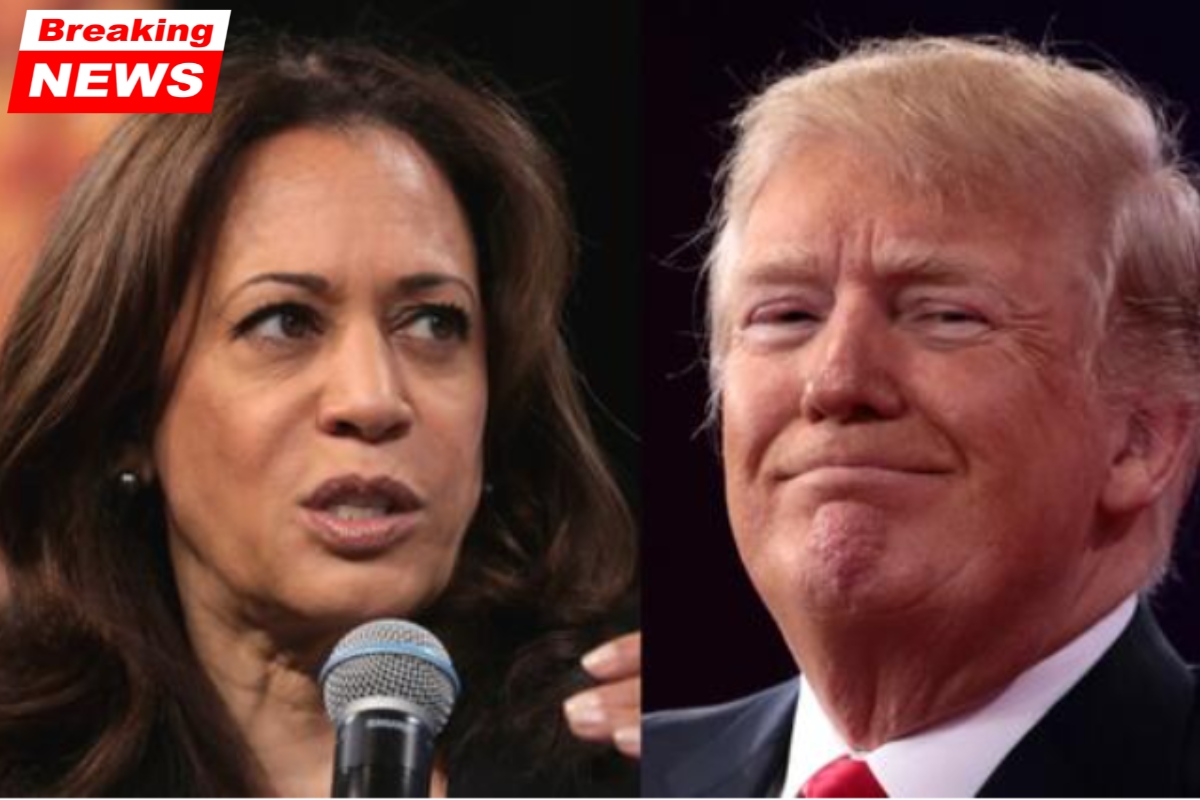
Vice President Kamala Harris has delivered one of her sharpest critiques yet of former President Donald Trump’s foreign policy, accusing him of being the first commander-in-chief in modern history to systematically undermine the alliances and international norms that have been central to U.S. power since the end of World War II.
Her remarks underscore growing concerns about the long-term impact of Trump’s presidency on the United States’ standing in the world.
The Core of Harris’s Argument
During a recent fireside chat with the Nevada State Democratic Party, Harris stated that Trump’s actions have made the U.S. “increasingly unreliable” as an ally and that the damage inflicted will outlast his presidency. “Donald Trump is the first president of the United States of either party, since World War II, who has thumbed his nose at the importance of America’s relationships with our allies,” Harris said. She criticized Trump for treating long-standing U.S. allies with disrespect, including calling them names and failing to uphold America’s commitment to international norms like sovereignty and territorial integrity.
Harris’s statement is part of an ongoing campaign to highlight the damaging consequences of Trump’s foreign policy decisions. She has argued that Trump’s approach to international relations has cost the U.S. valuable influence on the world stage, a point she elaborated on during a recent appearance at the National Action Network convention, where she stated, “It’s going to take a while and some serious work, way beyond the end of this man’s term, to regain whatever we had.”
The Evidence of Weakened Alliances
Harris’s claims are supported by a series of controversial incidents and decisions during Trump’s second term. In 2025, a meeting with Ukrainian President Volodymyr Zelensky reportedly saw the latter humiliated and berated by Trump, an event that raised alarms about the U.S. potentially abandoning Ukraine entirely.
Additionally, in January 2026, Trump threatened 10 percent tariffs on NATO allies like Germany, the UK, and France in retaliation for their opposition to U.S. control over Greenland. This threatened move was condemned by the eight NATO nations involved, who warned that it could seriously damage transatlantic relations.
The situation escalated further in February 2026, when the U.S. launched military operations in Iran, but none of its NATO allies chose to join the campaign. This refusal highlighted the growing divide between the U.S. and its traditional allies, who viewed the Iran war as an infringement of international law and an unwise military venture.
Former NATO Secretary General Anders Fogh Rasmussen said Trump’s treatment of NATO allies had caused “painful” strains and warned that Europe may need to urgently seek independence from U.S. security arrangements.
Harris’s Historical Claim and Its Context
Harris’s statement that Trump is the first president since World War II to abandon America’s alliance system is historically significant. Since the end of the war, U.S. presidents have largely maintained the post-war order — including the NATO alliance, the United Nations, and the Bretton Woods institutions — which has helped ensure global stability.
While some administrations, such as those of Lyndon Johnson and George W. Bush, strained relationships with key allies (e.g., over the Vietnam War and Iraq), none actively attempted to dismantle the international system itself or publicly disparage alliances.
Trump’s second term, however, has gone beyond previous presidential strains. He has threatened to withdraw the U.S. from NATO, repeatedly demanded that European allies meet his self-imposed defense spending targets, and actively pursued policies that critics argue undermine long-standing international norms, including his stance on territorial integrity and sovereignty.
Sovereignty and Territorial Integrity: A Key Point of Conflict
Harris’s critique specifically highlights Trump’s disregard for sovereignty and territorial integrity — two pillars of the post-war international order. Trump’s ambitions regarding Greenland and his controversial handling of Ukraine’s territorial integrity stand in stark contrast to the positions held by every other post-war president.
By undermining these principles, Trump has put U.S. foreign policy at odds with both historical norms and the interests of America’s allies.
For example, Trump’s suggestions that Canada should become the 51st U.S. state and his acquiescence to Russia’s annexation of Ukrainian territory have deeply concerned international leaders. Harris argues that this departure from traditional American values has not only damaged the U.S.’s reputation but also weakened its ability to shape global events, broker deals, and deter adversaries.
The Geopolitical Cost: Weakened Global Influence
The broader geopolitical impact of Trump’s foreign policy approach is reflected in the weakening of U.S. influence on the world stage. Harris notes that the IMF downgraded its global growth forecast in 2026, citing disruptions in energy markets caused by the Iran war — a war in which no U.S. allies participated and many publicly opposed.
As Harris points out, the U.S. has lost the leverage it once held in global negotiations, and the cost of rebuilding its credibility and influence will require sustained effort beyond Trump’s presidency.
The fallout from Trump’s foreign policy decisions is felt across the globe. The U.S. has alienated some of its most important allies, and many of them, including European leaders, are unable to defend U.S. policies to their own citizens.
For example, the U.K.’s growth forecast was slashed due to the economic impact of the Iran conflict, and Japan, heavily reliant on Middle Eastern energy, has also faced rising inflation and slower economic growth as a direct result.
The Long-Term Impact of Trump’s Foreign Policy
Kamala Harris’s indictment of Donald Trump’s foreign policy highlights the far-reaching consequences of his approach to international relations. She argues that Trump’s disregard for alliances, international rules, and sovereignty has not only eroded U.S. credibility but also placed the nation in a precarious position for the future.
As the U.S. seeks to regain its global standing, Harris contends that the damage done by Trump will require years of effort to repair — far beyond the end of his presidency. Her critique signals a broader call for a return to a more constructive, alliance-based approach to foreign policy.