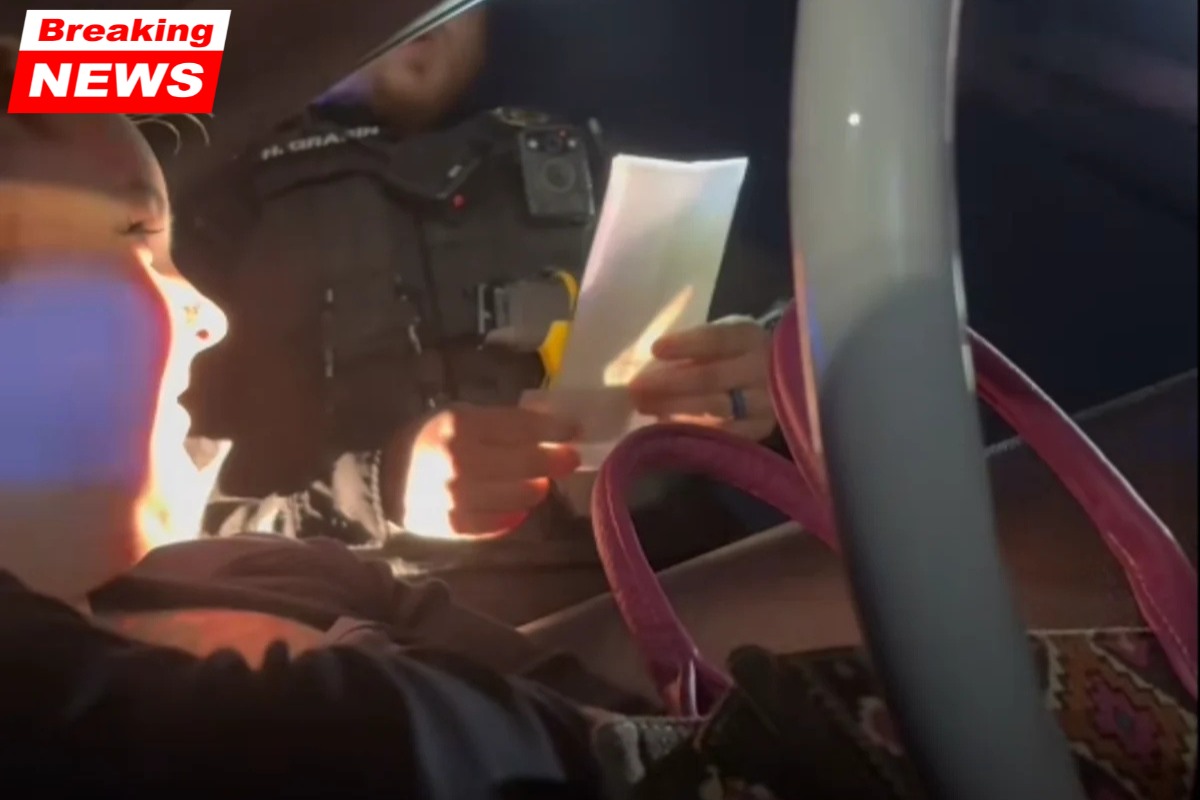
SEMINOLE, Okla. — A traffic stop in Oklahoma went viral when a Mustang owner, known as Cheyanne on TikTok, was issued two tickets for defective equipment and a modified exhaust, despite the officer performing no inspection beyond listening.
The TikTok video captured the interaction in real time, racking up over 222,000 views as viewers watched Cheyanne calmly push back against the officer’s claims (KOKH, 2026).
Both tickets were eventually dismissed, but the incident sparked widespread discussion about how Oklahoma enforces exhaust noise laws and the role of evidence in traffic court.
Officer Relied on “Experience” Instead of Evidence
Cheyanne asked the officer how he determined her exhaust was modified without inspecting the car or using a sound meter. The officer responded that he could tell “by the decibels it’s displaying” and his “observation and experience”.
No meter. No inspection. Just confidence and a notepad.
The video drew attention because the officer seemed confidently wrong while Cheyanne calmly asked for objective testing. She was told to take the matter to court, which she did, resulting in both tickets being dismissed.
Oklahoma Law on Exhaust Noise
Oklahoma law prohibits any exhaust modification that increases noise beyond the manufacturer’s design, but there is no specific decibel limit or measurement threshold. This gives officers discretion to issue tickets based on perceived noise, but also allows drivers to challenge citations in court.
| Law | Description | Notes |
|---|---|---|
| Muffler Statute | Prohibits modifications that increase exhaust noise | No decibel threshold defined |
| Enforcement | Officer discretion | No sound meter required, subjective assessment |
| Exceptions | N/A | Drivers can challenge tickets if no objective evidence exists |
The lack of a concrete standard means cases often rely solely on officer testimony, which can be weak if not supported by measurements or inspections.
The Role of Decibel Meters in Court
While Oklahoma officers are not required to use sound meters, expert analysis shows that if a meter is used, it must meet certain standards to hold up in court:
- Regular calibration to ensure accuracy
- “C” weighting mode for low-frequency noise, like engine exhaust
- Trained operator to correctly perform readings
If any of these criteria are not met, a defense attorney can argue the measurement is inadmissible, often weakening the case significantly.
Court Outcome and Legal Implications
Cheyanne attended court, while the officer did not appear. The judge reviewed the tickets and dismissed both charges, likely influenced by the lack of inspection or measurable evidence.
While officer no-shows do not automatically dismiss tickets, judges can and do exercise discretion, and in this case, the lack of concrete evidence made dismissal the likely outcome (Flusche, 2026).
This case highlights that traffic stops based on vague laws and officer discretion can be successfully challenged, especially when the driver has documented evidence.
Lessons for Drivers With Modified Vehicles
Drivers of modified vehicles, especially those with loud exhausts, should keep these practical tips in mind:
- Know local laws – Oklahoma’s statute is vague, but other states may have strict decibel limits.
- Ask questions – Officers must articulate the basis of a citation; Cheyanne’s questions became the foundation of her defense.
- Document interactions – Video or audio recordings can preserve crucial evidence.
- Attend court – Contesting the ticket is necessary to have a chance at dismissal.
This stop demonstrates how knowledge, documentation, and persistence can make a major difference when dealing with traffic citations.
The Oklahoma modified exhaust traffic stop went viral because of the confident yet unsupported officer claims and Cheyanne’s calm, documented response.
It highlights a broader issue: Oklahoma’s law gives officers wide discretion but also provides drivers room to defend themselves when citations are issued without objective measurement or inspection.
For drivers with modified vehicles, understanding the law, documenting encounters, and showing up in court can mean the difference between a fine and a dismissal.