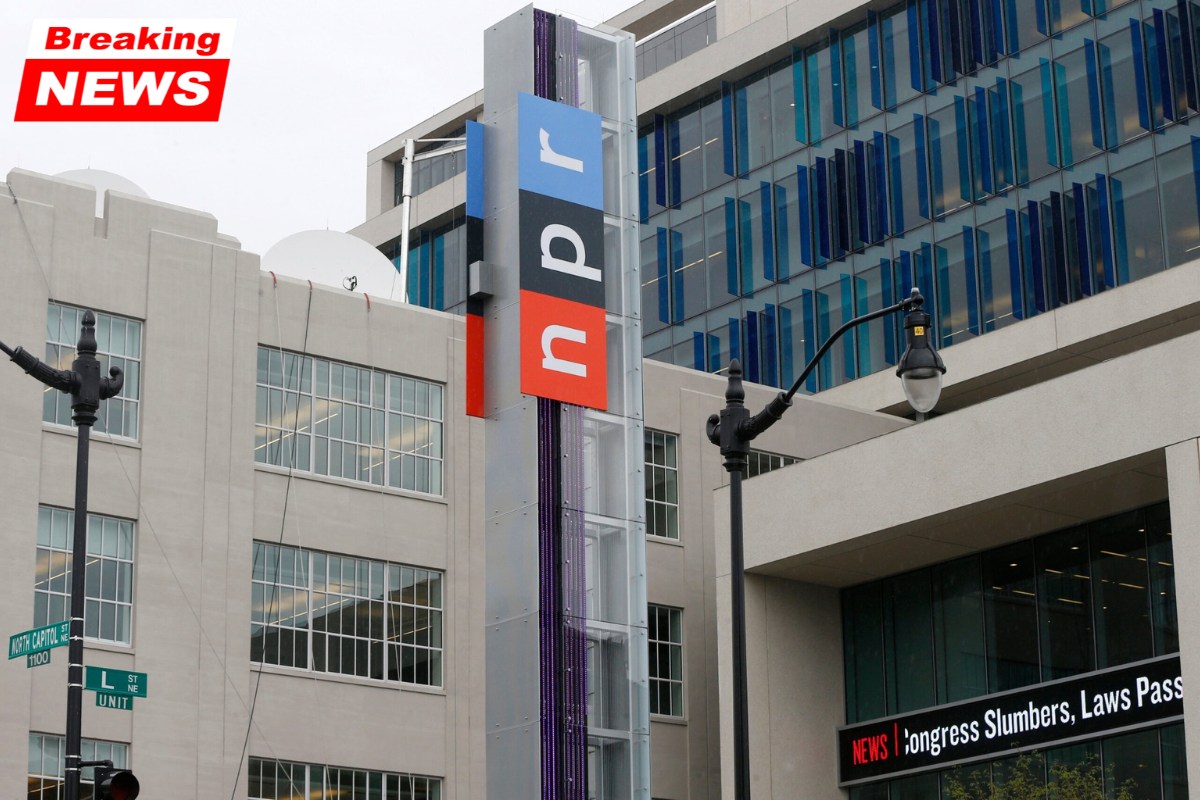
The federal judge’s ruling landed like a ref on a last-minute tackle: final, loud, and likely to redraw the field. U.S. District Judge Randolph Moss has permanently blocked President Trump’s directive to cut off federal funding to National Public Radio and the Public Broadcasting Service, finding the move squarely ran up against the First Amendment’s ban on viewpoint discrimination.
The decision is a win for press-freedom advocates, but it raises as many practical questions as it answers — about damages already inflicted, what an appeal might do, and how Congress and agencies will respond next.
What the judge decided and why it matters
Judge Moss concluded that the executive order, which directed federal agencies to “cut off any and all funding” to NPR and PBS, amounted to unconstitutional punishment for past speech and impermissible viewpoint discrimination.
As Moss put it, the government may not use the power of the purse to silence voices it disfavors. That doctrine is rooted in long-standing First Amendment principles and the bedrock idea that public funds cannot be conditioned on surrendering protected expression.
The ruling doesn’t erase harm that’s already been done: federal grants were pulled, the Corporation for Public Broadcasting (CPB) wound down after congressional cuts, and PBS reported layoffs in its children’s programming unit.
But the judicial order stops the administration from extending a facial ban across all agencies — a move that would have curtailed future grant applications and other federal benefits simply because of these organizations’ editorial choices.
Key facts at a glance
| Item | Detail |
|---|---|
| Judge | U.S. District Judge Randolph Moss |
| Ruling | Permanent injunction blocking the executive order to end federal funding to NPR and PBS |
| Constitutional basis | First Amendment — viewpoint discrimination and retaliation for past speech |
| Immediate effects | Bars the administration from enforcing the funding ban; existing appropriations by Congress not directly altered by the ruling |
| Outstanding issues | Appeals likely; damage from prior funding cuts (including CPB closure, reported layoffs) remains |
What the court focused on
Moss emphasized two central legal objections. First, the government action targeted entities for their past journalism — a form of retaliatory motive the First Amendment forbids. Second, the order was sweeping: it did not evaluate grant applications on their merits but categorically barred NPR and PBS from receiving federal support.
The judge noted the absence of any historical precedent where a statute or executive action permanently excluded an entity from federally funded activity based on the content of its speech.
That line of reasoning tracks with prior decisions that protect recipients of government funds from being penalized for constitutionally protected expression, and it frames the executive order not as neutral budgetary policy but as overtly punitive.
The practical fallout — money, jobs, and programming
Even with an injunction in hand, public broadcasting faces a bruised operational landscape. Congress controls appropriations, and earlier rollbacks contributed to CPB’s shutdown and program cuts.
Federal agencies affected by the executive order — including the Department of Education, which historically funded children’s media and educational outreach — had already halted or redirected grants, producing layoffs and program suspensions in the short term.
Plaintiffs argued, and Moss agreed, that the executive order’s broad sweep risked more than symbolic harm: it could foreclose grant decisions across agencies regardless of program merits. That’s why the injunction matters beyond NPR and PBS; it preserves the principle that policy decisions about funding must be made without viewpoint-based exclusions.
Reactions: what stakeholders are saying
NPR and PBS leaders hailed the ruling. NPR’s CEO called it a decisive affirmation of independent journalism, while PBS argued the order constituted textbook unconstitutional discrimination. Plaintiffs’ counsel framed the decision as a clear victory for press freedom.
The administration signaled it would likely appeal, and legal analysts expect that an appellate court — and potentially the Supreme Court — could ultimately weigh in. Meanwhile, Congress remains a crucial actor. Even if the judiciary curbs the executive, legislative funding choices and oversight hearings can still shape the fate of public media.
Legal pathway and what to watch next
- Appeals: The administration is likely to appeal to the D.C. Circuit; the legal trajectory could extend to the Supreme Court.
- Congressional action: Appropriations, hearings, and potential legislative protections or restrictions will factor heavily into the medium-term outcome. For federal guidance on grants and departmental authority, see the Department of Justice and Department of Education resources at justice.gov and ed.gov.
- Operational recovery: Restoring programs, rehiring staff, and rebuilding CPB’s distribution role would require concrete appropriations and administrative coordination. The White House’s statements and the executive order text are archived at whitehouse.gov for reference. For court-related filings and precedents, the Supreme Court’s docket and opinions are available at supremecourt.gov.
Why this case matters beyond NPR and PBS
At stake is a constitutional guardrail: the government can’t lawfully blacklist speakers from federal programs because it dislikes their message. The ruling reasserts that principle in an era of intense political polarization about media coverage.
It also underscores a practical lesson: cutting budgets and issuing directives can inflict immediate harm that courts can’t always repair after the fact. Even when a court vindicates constitutional limits, the real-world consequences — lost staff, shuttered programs, communities without services — can linger.
Judge Moss’s injunction is a clear judicial rebuke to using executive power to silence institutions for their reporting. It preserves a constitutional norm but leaves open the political and practical mess created by earlier funding decisions. Expect appeals, congressional maneuvering, and — critically — continued debates over how government dollars intersect with free speech in a democracy.