The decision in Colorado to charge a federal immigration officer with assault marks a significant moment in the ongoing debate over law enforcement accountability during heightened immigration enforcement.
The case stems from an October protest in Durango, where a 57-year-old woman was forcibly restrained by a federal agent. Now, the incident is raising broader questions about how far state authorities can go in holding federal officers accountable for use of force.
What Happened in Durango, Colorado
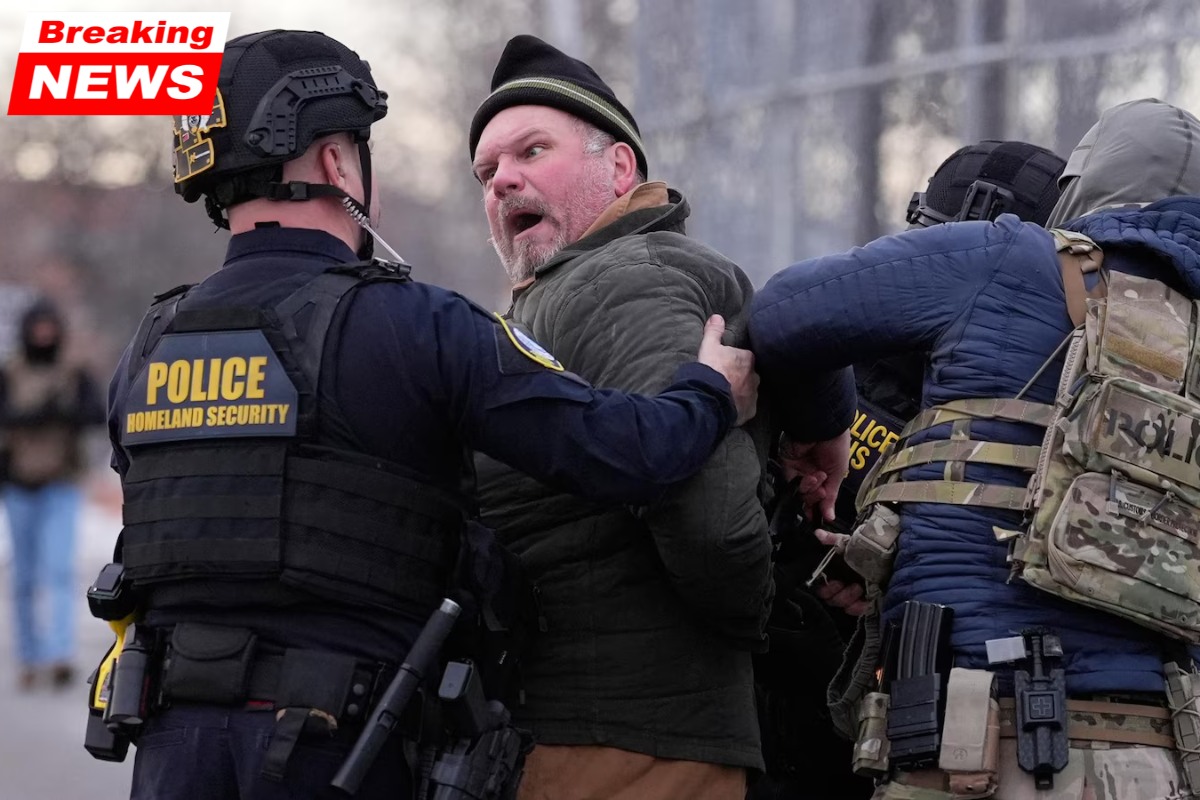
During a protest in Durango, Colorado, multiple videos captured a masked federal agent grabbing a woman by the neck and pulling her across the street. The woman, identified as Franci Stagi, later said she was placed in a chokehold and thrown down an embankment.
A local prosecutor has since charged the officer, Nicholas Rice, with third-degree assault and criminal mischief. However, court documents reportedly do not explicitly mention a chokehold or detail the injuries sustained.
This incident is especially sensitive because Colorado law restricts the use of chokeholds and neck restraints by law enforcement. These restrictions were strengthened following nationwide protests over police use of force in recent years.
Why This Case Matters Legally
At the heart of the issue is a constitutional tension between state authority and federal power. Federal officers are typically protected under the Supremacy Clause of the U.S. Constitution, which establishes that federal law overrides state law in certain situations.
Legal experts note that while federal agents enjoy strong protections when performing official duties, those protections are not unlimited. If an officer is found to have acted outside the scope of their duties or used excessive force, state-level prosecution may still be possible.
The U.S. Department of Justice has taken a firm stance, with Deputy Attorney General Todd Blanche stating that arresting federal officers performing their duties could be considered “illegal and futile.”
Meanwhile, the U.S. Department of Homeland Security has argued that only federal agencies should investigate such incidents, not state authorities. This disagreement sets up a potential legal battle that could clarify the limits of federal immunity.
Similar Investigations Across the United States
The Colorado case is not isolated. Across the country, state and local authorities are increasingly scrutinizing immigration enforcement actions.
Minnesota Investigations
In Minnesota, an ICE officer, Gregory Donnell Morgan Jr., faces two counts of second-degree assault. He allegedly pointed a firearm at occupants of a vehicle during an enforcement operation. Investigators say he claimed he feared for his safety after the vehicle swerved.
Minnesota officials have also filed lawsuits seeking access to evidence related to multiple shootings tied to immigration enforcement operations.
Chicago Area Incident
Near Chicago, an off-duty ICE agent has been charged with misdemeanor battery after allegedly throwing a 68-year-old protester to the ground. The incident reportedly occurred at a gas station, and federal officials have claimed the agent acted in self-defense.
California Shooting Case
In California, the fatal shooting of Keith Porter by an off-duty agent on New Year’s Eve has sparked protests and demands for an independent investigation.
Together, these cases reflect a growing trend: state authorities are no longer deferring entirely to federal agencies when allegations of excessive force arise.
The Role of Immigration Policy and Enforcement
These incidents are unfolding amid a broader immigration crackdown that has intensified enforcement actions nationwide. Rapid hiring within agencies like Immigration and Customs Enforcement has raised concerns about vetting standards and officer training.
Critics argue that increased enforcement pressure can lead to more confrontations and a higher risk of excessive force. Supporters of the crackdown, however, maintain that strong enforcement is necessary for national security and border control.
This tension has created a climate where protests, enforcement operations, and legal disputes frequently intersect.
Use of Force and Public Accountability
The debate over chokeholds and use of force has been ongoing for years, particularly since the death of Eric Garner in 2014. That incident led to widespread calls for reform and stricter limits on restraint techniques.
States like Colorado have since enacted laws banning or severely limiting chokeholds. However, applying those rules to federal officers remains legally complex.
Franci Stagi has expressed disappointment that the charges against the officer are relatively minor but hopes the case sends a clear message about accountability. Her perspective reflects a broader public demand for transparency and limits on the use of force, regardless of whether an officer is local or federal.
Key Takeaways at a Glance
| Aspect | Details |
|---|---|
| Location | Durango, Colorado |
| Incident | Protester allegedly placed in chokehold and dragged |
| Officer Charged | Nicholas Rice |
| Charges | Third-degree assault, criminal mischief |
| Legal Issue | State authority vs. federal immunity |
| Related Cases | Minnesota, Chicago, California investigations |
| Core Debate | Limits of force and accountability for federal agents |
The Colorado case could become a defining moment in the relationship between state and federal law enforcement authority. While federal agents have long operated with significant legal protections, growing public scrutiny and state-level action suggest those protections may face new challenges.
If the case proceeds, it could help clarify whether federal officers can be held accountable under state laws governing use of force. More broadly, it reflects a shift in how states respond to federal enforcement actions, particularly when public safety and civil rights concerns are involved.