
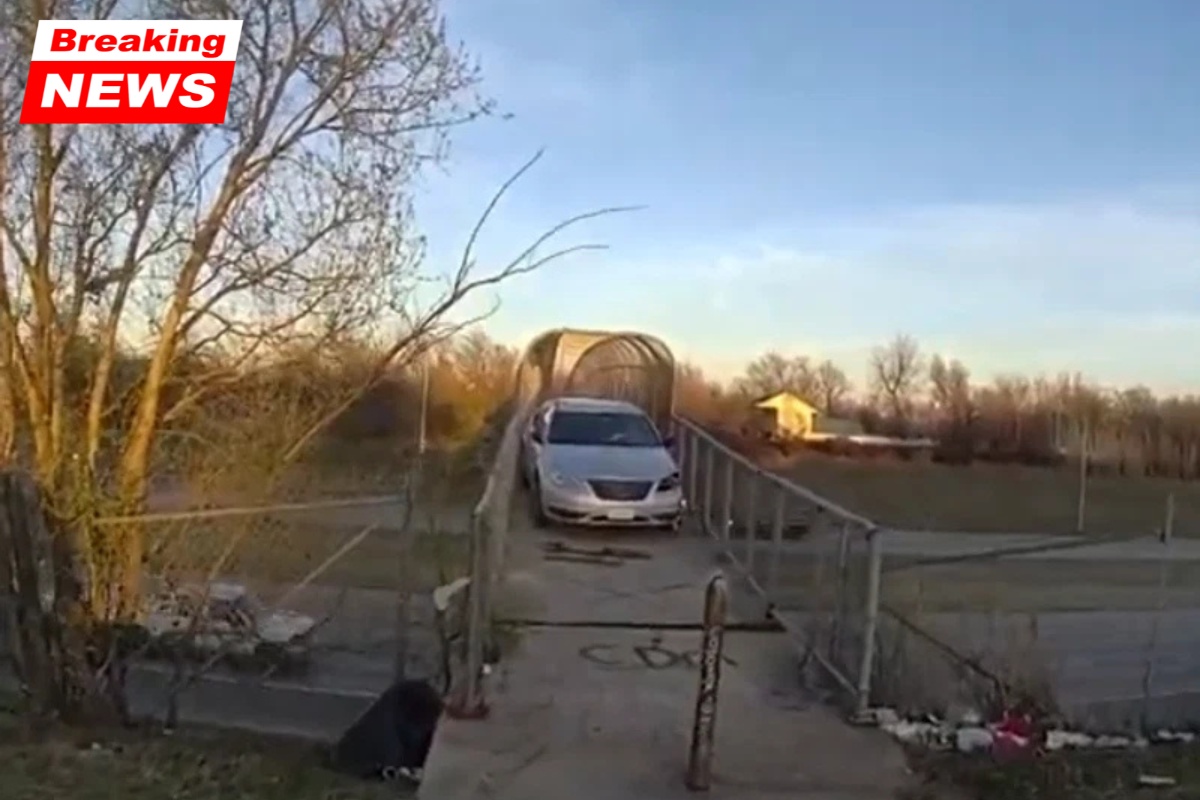
Tennitra Wilson, a 31-year-old driver, was arrested after Oklahoma City police say she tried to drive across a pedestrian bridge, then urinated in the patrol vehicle when officers put her in the back. Below is a plain, easy-to-read rewrite of the incident that explains what happened, what officers reported, and what charges she faces.
Who is Tennitra Wilson?
Wilson is the driver stopped by police on March 12 after someone reported a car on a pedestrian bridge. She told officers she thought the bridge crossed the interstate and said she had not had alcohol for nine hours before the stop.
What did officers from the Oklahoma City Police Department find?
Officers approached the vehicle, which was stopped in the middle of the pedestrian bridge. They helped Wilson out of the car. Police say she was slurring her words and that they smelled alcohol on her breath. Because of those signs, officers put her in handcuffs and placed her in the back of the patrol vehicle.
What happened inside the patrol vehicle?
While in the back of the squad car, Wilson told officers she needed to use the restroom. Instead of being taken to a facility, she began to undress and then urinated on the floor of the vehicle. After that behavior, officers arrested her and charged her with driving under the influence of alcohol.
Where did this take place?
The police response and arrest happened in Oklahoma City on March 12. The incident involved a car that had come to a stop on a bridge meant for pedestrians, which prompted the initial call to police.
What charges does Wilson face?
She was charged with driving under the influence (DUI) of alcohol. That means prosecutors believe she was impaired while driving. The exact next steps — such as booking, bail, and court dates — were not detailed in the initial report.
Why this matters
- Public safety: Driving on a pedestrian bridge risks people’s lives.
- Officer safety and procedure: Police must decide how to handle someone who appears intoxicated and how to respond if the person needs a bathroom.
- Legal consequences: A DUI charge can bring fines, licence suspension, and other penalties depending on state law and prior records.
Content overview
| Item | Quick info |
|---|---|
| Date | March 12 |
| Location | Oklahoma City pedestrian bridge |
| Person involved | Driver stopped after vehicle was on bridge |
| Officer action | Helped driver out, detected slurred speech and alcohol smell, handcuffed and placed in patrol vehicle |
| In-vehicle incident | Driver undressed and urinated on the vehicle floor |
| Charge | Driving under the influence (DUI) |
Simple timeline
- Call about a car attempting to drive across a pedestrian bridge.
- Officers find the car stopped on the bridge and help the driver exit.
- Officers notice slurred speech and smell of alcohol; driver is handcuffed and put in back of patrol car.
- Driver undresses and urinates on the patrol car floor.
- Driver is arrested and charged with DUI.
What to watch for next
- Local booking records and court filings will show the exact charge language and any additional counts.
- Police reports may add detail about breath or field sobriety tests.
- If the driver contests the charge, court dates and motions will appear in public records.
Short note for readers
This was an unusual arrest that began with a car stopped on a pedestrian-only bridge. Officers say signs of intoxication led to detention, and the in-vehicle behaviour — undressing and urinating — triggered the arrest and DUI charge. The case will move through the local criminal system where facts and evidence will be reviewed.
Incidents like this combine public safety concerns, police procedure and legal processes. Driving in a place meant for pedestrians creates immediate risk of harm; appearing intoxicated can lead to arrest for DUI; and acting in an extreme way inside a patrol car can strengthen the case for detention.
The legal system will decide the outcome after arrest, booking and court hearings. For the community, the key lessons are simple: avoid driving while impaired, stick to roads meant for vehicles, and cooperate calmly with officers so safety and legal issues are handled correctly.






