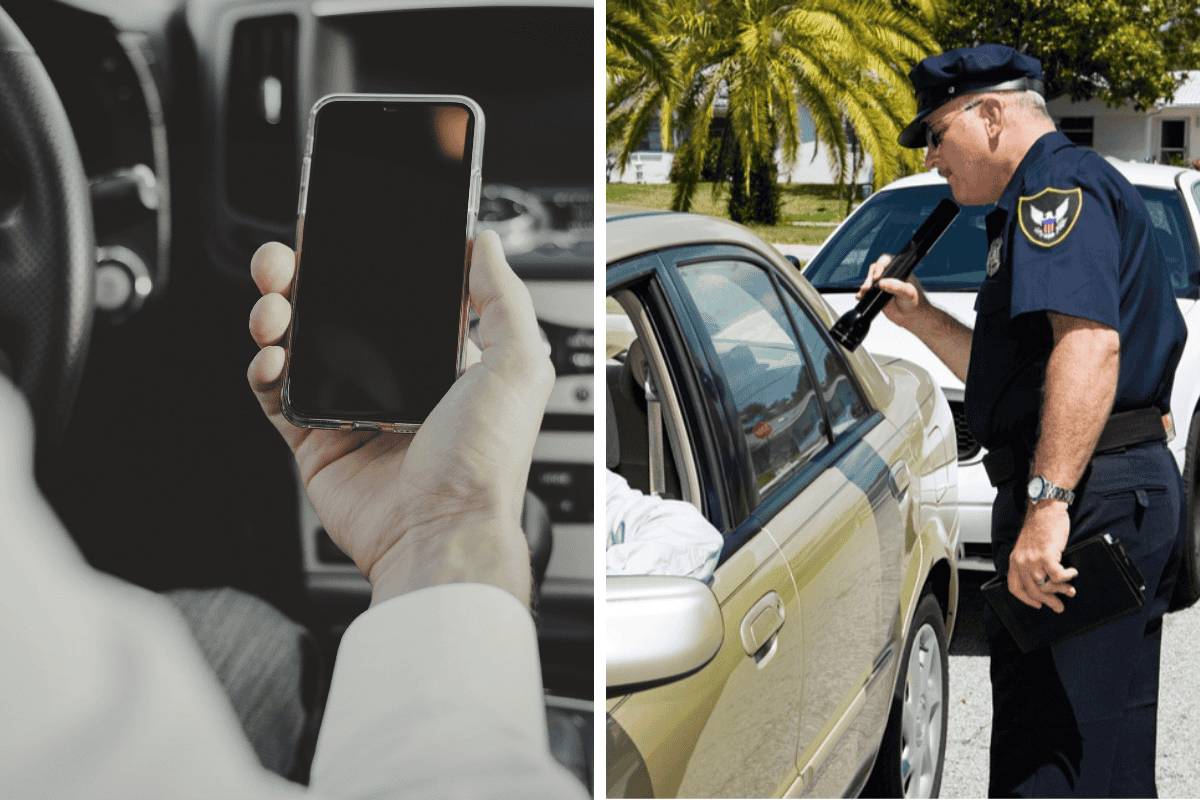
New York police generally cannot search your phone during a routine traffic stop without a warrant, your consent, or specific exigent circumstances, thanks to strong Fourth Amendment protections reinforced by U.S. Supreme Court precedent.
This applies statewide, from NYC streets to upstate highways, ensuring your digital privacy unless probable cause justifies further action.
Fourth Amendment Foundation
The U.S. Constitution’s Fourth Amendment shields against unreasonable searches, treating cell phones as highly private containers holding vast personal data—far beyond a wallet or glovebox.
In Riley v. California (2014), the Supreme Court unanimously ruled that warrantless phone searches incident to arrest are unconstitutional, even if the phone is on your person. New York courts strictly follow this, rejecting “search incident to arrest” for devices during traffic stops.
Traffic stops are brief investigative detentions (Terry v. Ohio), limited to the vehicle’s scope unless probable cause expands it—no automatic phone access for tickets or minor infractions.
Exceptions Allowing Searches
Police may search without a warrant in limited scenarios:
- Consent: Voluntarily handing over or unlocking your phone legalizes it, but you can politely decline: “I do not consent to a search.” Officers must inform you of this right before vehicle searches under proposed bills like S3662.
- Exigent Circumstances: Imminent threats, like destroying evidence (remote wipe) or locating a victim, permit quick looks—but courts scrutinize these post-hoc.
- Plain View or Incident to Lawful Arrest: If your screen displays contraband openly or you’re arrested for DUI/weapons (probable cause), limited access might apply, but full forensic digs need warrants.
- Vehicle Exception: Cars have lower thresholds (Carroll v. United States), but phones remain distinct—officers can’t rifle through apps without tying them to the stop’s purpose.
No 2026 changes alter this; NYPD training emphasizes warrants amid digital forensics advances.
Traffic Stop Protocols
During stops, provide license, registration, and insurance—nothing more unless asked. Officers can pat-down for weapons if reasonably fearing danger, but not phones unless bulge suggests a gun. Proposed reforms (S3662/A6631) limit stops for secondary violations (e.g., tinted windows), curbing pretextual phone grabs.
NYC’s dense enforcement contrasts rural leniency, but Riley binds all.
What to Do If Asked
- Stay calm, hands visible—roll down window fully.
- Decline politely: “Officer, I respect you but do not consent to any searches.”
- Don’t unlock or hand over; silence is your right (Fifth Amendment).
- If detained, request a lawyer; note badge numbers, times, witnesses.
- Film interactions (legal in NY if not interfering).
Resisting physically risks charges—challenge illegally obtained evidence in court via suppression motions.
Consequences of Illegal Searches
Evidence from warrantless phone dives gets tossed under the exclusionary rule (Mapp v. Ohio), potentially dismissing cases. Civil suits via §1983 claims can yield damages for violations; NYCLU tracks patterns. Digital tools like Cellebrite aid police, but judges demand specificity in warrants.
Practical Protections
- Use biometric locks with passcode backups (biometrics compelled less often).
- Enable auto-wipe after failed attempts.
- Store sensitive data encrypted (e.g., Signal app).
- For business travelers like Amit in logistics, secure freight manifests separately—traffic stops near ports heighten scrutiny.
Broader NY Policing Context
Attorney General initiatives curb abusive stops, with data transparency mandates. 2026 trainings stress Riley compliance amid pursuits reforms. Urban areas like Buffalo see higher challenges, but rights hold statewide.
Knowing these rules empowers safe interactions—say no, stay composed, suppress later if needed.
SOURCES:
- https://collincountymagazine.com/2025/07/24/can-new-york-police-search-my-phone-during-a-traffic-stop-heres-what-the-law-says/
- https://www.ajslaw.com/post/can-the-police-search-my-phone-in-new-york