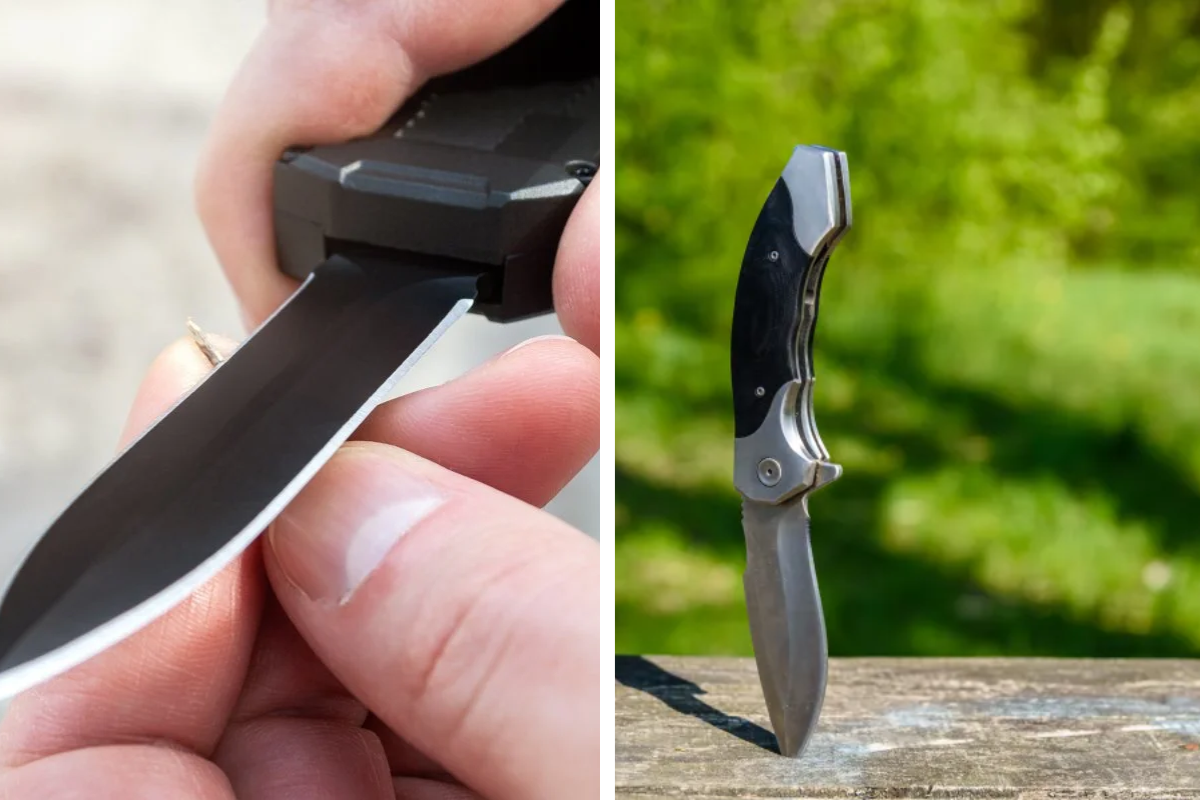
Iowa has undergone significant legislative updates in recent years—most notably with the passage of HF 756 in 2021—which shifted the state toward a more permissive framework for carrying knives.
As of May 2026, the state generally allows both open and concealed carry of most knives for lawful possessors, though understanding the distinction between types of knives and their classification as “dangerous weapons” remains important.
Classification and Dangerous Weapons
While most knives are legal to own and carry, Iowa Code § 702.7 categorizes certain knives as “dangerous weapons,” particularly those with blades exceeding five inches. While this classification does not act as an outright ban on carrying these items, it triggers specific rules and potential liabilities in certain contexts:
- Ballistic Knives: These remain prohibited as “offensive weapons” under Iowa Code § 724.1. Possession of a ballistic knife is generally illegal.
- Five-Inch Rule: Knives with blades longer than five inches are explicitly defined as dangerous weapons. While you can legally carry them, this classification becomes relevant if you are charged with other offenses, such as carrying while intoxicated, or if you are in a prohibited location.
- General Legality: Common pocket knives, switchblades, butterfly knives (balisongs), and daggers are generally lawful to own and carry.
Carrying and Restricted Areas
Iowa law now explicitly clarifies that the existence of a permit system for firearms does not prohibit the otherwise lawful carry—open or concealed—of dangerous weapons, including knives. However, this does not grant unrestricted access everywhere.
Where You Cannot Carry
Despite the permissive nature of state law, you are restricted from carrying weapons in several sensitive locations:
- Correctional Facilities: Possession of a knife in a correctional facility is strictly prohibited.
- State Buildings: Restrictions apply to certain buildings within the Capitol complex and other secured state-managed facilities.
- Schools: Carrying knives on school grounds is generally prohibited with few specific exceptions.
- Courthouses: While rules can be more nuanced than often assumed, many courthouses maintain strict security protocols that prohibit all knives.
Conduct and Intent
The most critical takeaway is that your conduct and intent remain paramount. Carrying a knife with the specific intent to use it unlawfully against another person is a serious offense, regardless of the blade length or type.
Additionally, carrying any dangerous weapon while intoxicated is illegal. Even with Iowa’s move toward broader personal carry rights, always exercise caution and discretion, as behaving in a threatening manner or using a knife inappropriately will almost certainly lead to criminal charges.
SOURCES :
- https://knifeinformer.com/state-knife-laws/iowa/
- https://homesteadauthority.com/iowa-knife-laws/