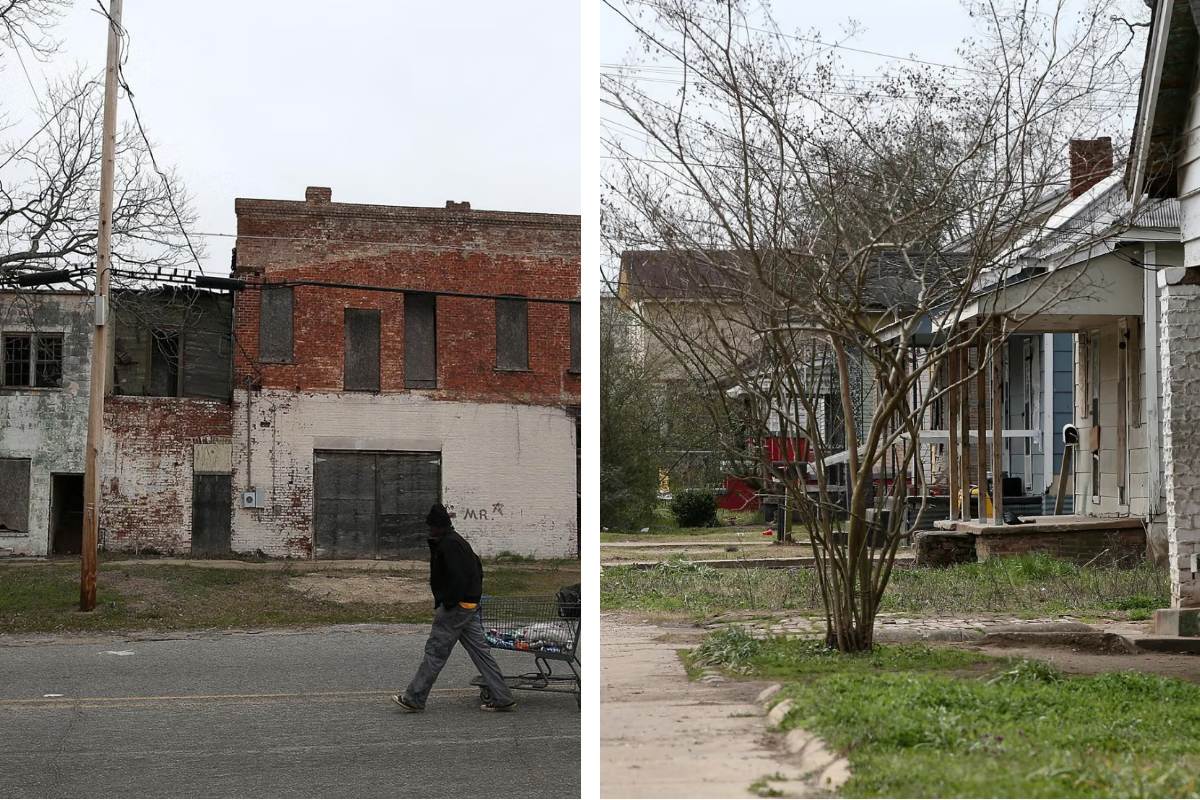
Identifying the “poorest” town in any state is a complex task because data sources, methodology, and population size cut-offs vary significantly. Depending on the metric—whether focusing on median household income, poverty rates, or per capita income—different locations frequently rise to the top. As of recent 2025/2026 reporting, Fort Deposit has been cited in prominent analyses as having one of the lowest median household incomes and highest poverty rates in the state.
Understanding the Economic Data
Economic rankings are typically derived from United States Census Bureau data, specifically the American Community Survey. These reports look at crucial indicators such as median household income, the percentage of the population living below the poverty line, and median home values.
When a community is labeled “the poorest,” it almost always reflects a combination of deep-seated issues: low median wages, high unemployment rates, and a lack of diverse job opportunities.
It is important to recognize that small, rural towns like Fort Deposit often appear at the top of these lists due to limited economic diversification. In towns with populations under 2,000, a single economic event—such as the closing of a local plant or a decline in a specific agricultural industry—can significantly shift the median income of the entire community, making these towns more vulnerable to extreme fluctuations in financial status compared to larger, more urbanized cities.
Challenges Facing Small Alabama Towns
Many of Alabama’s most economically disadvantaged municipalities share a history of systemic challenges. These often include a shrinking population base, which reduces the tax revenue available for public services, and an aging infrastructure that requires costly maintenance.
Without a robust tax base, these towns struggle to attract new businesses, create jobs, and maintain the public education or healthcare facilities necessary to support long-term economic growth.
Educational attainment is another major factor often linked to these economic statistics. Data frequently shows a strong correlation between areas with the lowest median incomes and lower rates of bachelor’s degrees or higher education.
This creates a difficult cycle: without high-wage jobs to attract educated workers, and without a highly skilled workforce, it becomes difficult for companies to justify investing in these areas, leaving many residents with few career paths beyond traditional, low-wage sectors.
Contextualizing the Rankings
While reports from outlets like 24/7 Wall St. identify Fort Deposit, other analyses—which may focus only on cities with populations over 5,000—often highlight different places like Atmore, Selma, or Prichard as having the highest poverty rates.
Because these rankings rely on different population thresholds and methodologies, they should be viewed as snapshots of economic struggle rather than definitive, permanent labels for any single location.
Ultimately, the focus on these rankings serves a greater purpose: drawing attention to the systemic economic disparities that persist across Alabama. By identifying these areas, policymakers and community leaders can better target resources, infrastructure projects, and economic development incentives to support regions that have long been left behind.
Understanding these numbers is the first step toward discussing potential solutions for growth, revitalization, and long-term stability for the residents of these communities.
Sources
- (https://953thebear.com/alabamas-10-poorest-cities-may-surprise-you/)
- (https://www.youtube.com/watch?v=3yJMV4L7Uho)
- (https://953thebear.com/10-alabama-cities-you-dont-want-to-live-in/)