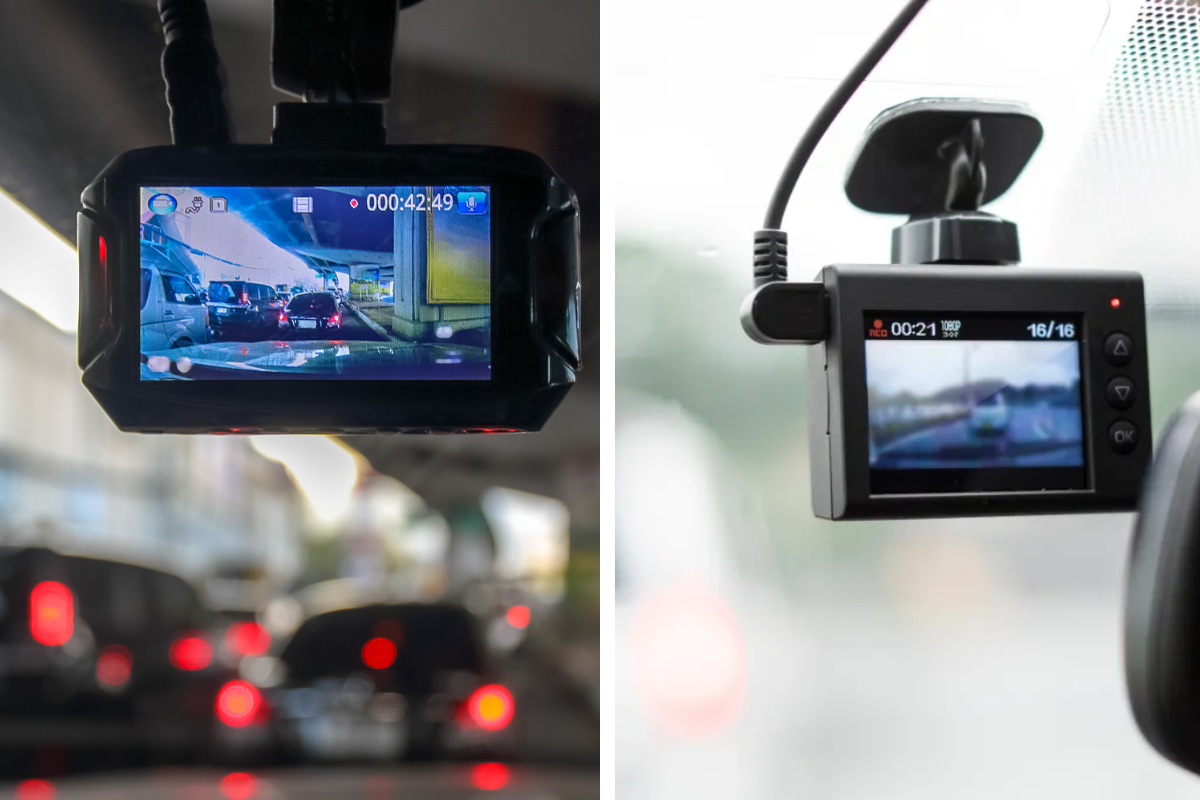
Dash cams are generally legal in Oregon, but how you mount them and what you record is tightly regulated by state law. Oregon allows in‑car video recording for safety and evidence, while still protecting drivers’ visibility, passenger privacy, and the rights of others on the road.
Are dash cams legal in Oregon?
Yes. Oregon does not ban dash cams, and drivers may install front‑facing, rear‑facing, or interior dash cameras in private vehicles. The law treats the camera itself as a neutral tool, but it focuses heavily on placement and audio recording to prevent obstruction and unwarranted surveillance.
Mounting and visibility rules
Oregon law prohibits any object that blocks or impairs the driver’s view of the road (ORS 815.260–815.270 on “obstruction of vehicle windows”). In practice, this means:
- Do not mount a dash cam so it blocks your line of sight to the windshield, side windows, or traffic ahead.
- Prefer dashboard‑mounting or a small unit behind the rearview mirror, rather than large blocks in the central field of vision.
- Mounting a device that materially restricts visibility can be cited as an obstruction‑to‑view offense, even if the camera is “legal.”
Audio recording: the two‑party consent problem
Oregon law treats audio recording far more strictly than video. Under ORS 165.540, Oregon is a two‑party (all‑party) consent state for audio of private conversations. That means:
- You cannot legally record conversations inside the car (driver and passengers) without the knowledge and consent of everyone involved.
- Many legal guides and dash‑cam resources recommend either disabling the microphone or clearly warning passengers that audio is being recorded, so everyone can consent.
Using dash cam footage for legal or employer purposes
Dash‑cam video can be valuable evidence in accidents, traffic disputes, or even criminal investigations, and Oregon courts may admit it if it is relevant and properly authenticated. However:
- Employers may install dash cams in company vehicles, but they usually must notify employees and limit how footage is used, especially if it records audio or personal habits.
- Excessive or covert recording of third‑party drivers or pedestrians can raise privacy and evidentiary challenges, so courts review whether the recording was reasonable and narrowly tailored.
Practical tips for Oregon drivers
- Mount the camera low on the dashboard or behind the rearview mirror, keeping your field of view clear.
- Turn off audio recording or get explicit buy‑in from all occupants before using the mic.
- Avoid pointing interior cameras directly at passengers’ faces or conversations; use them only for broader safety or incident‑documentation purposes
SOURCES :
- https://theashlandchronicle.com/understanding-dash-cam-regulations-in-oregon/
- https://www.paulsoncoletti.com/oregon-dash-cam-laws/