Pocket knives remain a staple for everyday carry in California, but navigating the state’s knife laws requires careful attention to blade length, type, and context. California’s Penal Code outlines strict rules to balance public safety with personal rights, distinguishing legal carry from concealed weapons. This guide breaks down the essentials, helping residents avoid fines or felony charges.
Defining Legal Pocket Knives
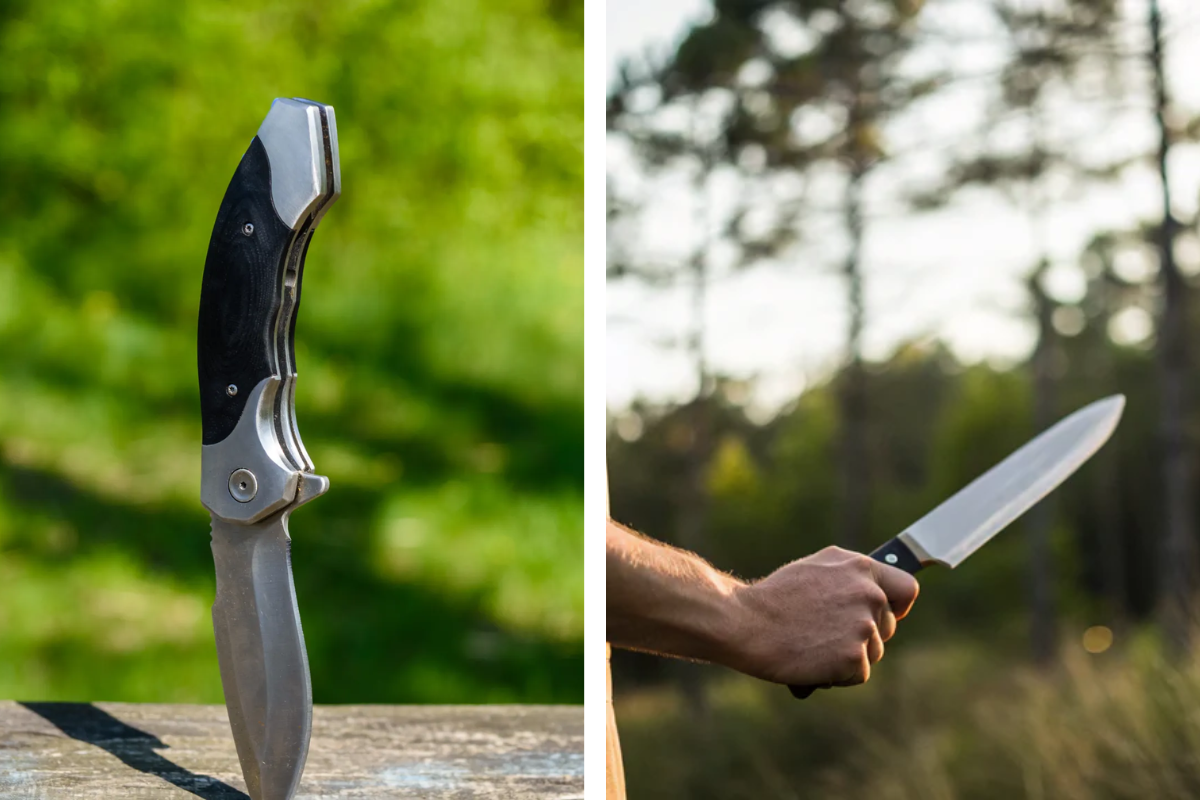
California law permits most folding pocket knives without restrictions on ownership or open carry. Under Penal Code 20200, a “pocketknife” is any knife that folds with a blade less than 4 inches long and can be carried in a pocket. Common examples include Swiss Army knives or basic multi-tools—these are legal for adults to own and openly carry anywhere blades aren’t explicitly banned.
The key distinction lies in the blade length: knives with blades 4 inches or longer fall under stricter scrutiny. Fixed-blade knives, even short ones, cannot be concealed but can be carried openly in a sheath. Always check local city ordinances, as places like Los Angeles may impose additional limits.
Concealed Carry Rules and Exceptions
Concealing a pocket knife is where things get tricky. Penal Code 21310 prohibits carrying concealed dirks or daggers—broadly defined as any knife capable of ready use as a stabbing weapon. For pocket knives, concealment means hidden on your person (e.g., in a pocket with the blade folded) if the blade exceeds 4 inches when open.
However, folding knives under 4 inches are exempt from concealed weapon charges if they fold automatically or manually without a bias toward opening (Penal Code 20200). Switchblades with blades under 2 inches are legal statewide since 2022 amendments (AB 2981), but larger ones remain illegal unless you’re law enforcement. Pro tip: A pocket knife clipped visibly to your belt or pocket avoids “concealed” classification.
Restricted Knife Types to Avoid
Certain knives are outright banned in California, regardless of size. Penal Code 21510 outlaws balisong (butterfly) knives, disguised knives (e.g., belt buckle or lipstick models), and undetectables (non-metallic blades). Undetectable knives, popularized post-9/11, violate federal and state laws if they pass metal detectors.
Ballistic knives—those ejecting blades via explosion—are felonies under Penal Code 21110. Even legal pocket knives become illegal if modified into automatic openers exceeding limits. Recent court rulings, like People v. Castillanos (2023), affirm that intent matters: carrying with criminal purpose escalates misdemeanor to felony.
Carrying on School Grounds and Public Spaces
Schools are zero-tolerance zones. Penal Code 626.10 bans any knife with a blade over 2.5 inches on K-12 campuses, including parking lots—violations mean expulsion and potential jail time. Colleges follow similar rules under Education Code 48900.
Airports, courthouses, and government buildings prohibit all knives via posted signs or Penal Code 171b. State parks allow pocket knives for camping but ban fixed blades without permits. Always stow knives in checked luggage for travel.
Penalties for Violations and Best Practices
Misdemeanor concealed carry violations carry up to 1 year in jail and $1,000 fines (Penal Code 21310). Felonies, like possessing banned types, mean 16 months to 3 years plus $10,000 fines. Repeat offenders face enhanced sentences.
To stay compliant:
- Measure your blade tip-to-hilt.
- Opt for under-4-inch folders.
- Carry openly or in a visible case.
- Research municipal codes via official sites like leginfo.legislature.ca.gov.
SOURCES :
- https://www.akti.org/state-knife-laws/california/
- https://www.tkellknives.com/blogs/default-blog/is-it-legal-to-carry-a-knife-in-california-know-the-law