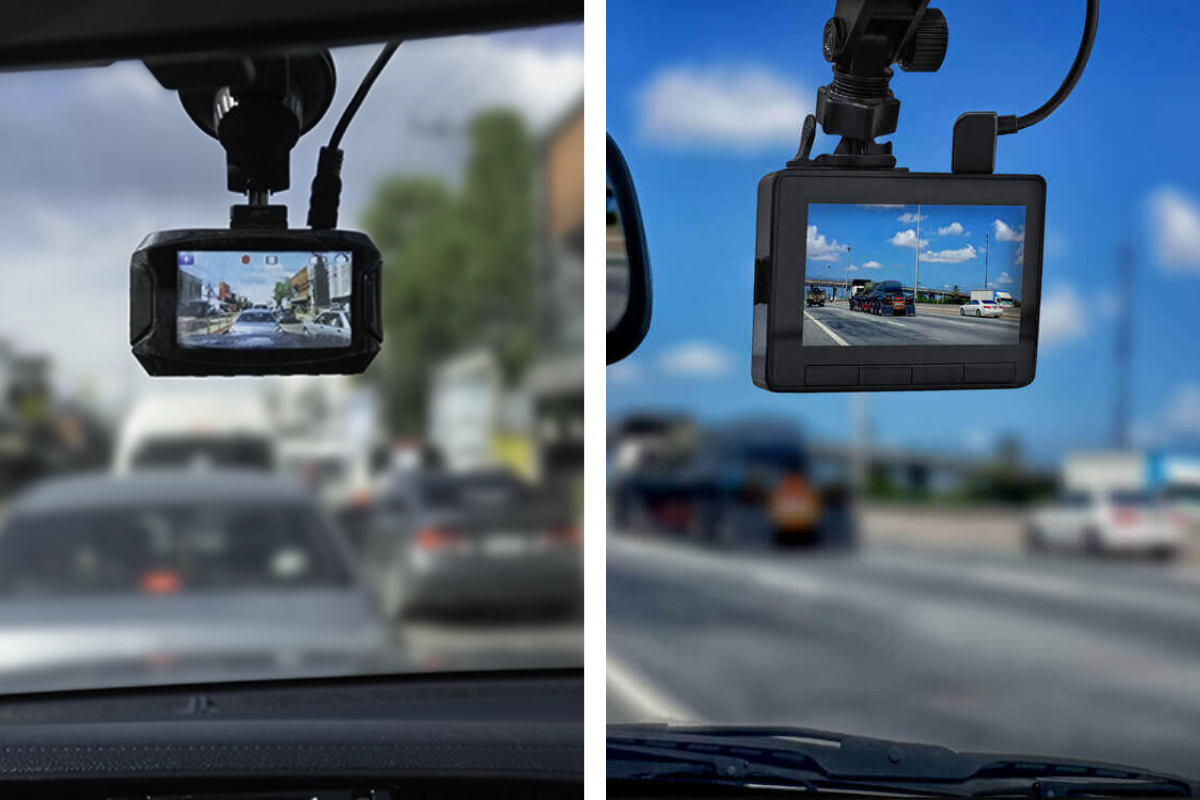
Dash cams are legal in New Mexico, but where and how you mount them—and whether you record audio—must follow traffic and privacy rules. There is no specific “dash‑cam law,” so compliance turns mainly on windshield‑obstruction limits and New Mexico’s one‑party‑consent rules for audio recording.
Mounting and visibility rules
New Mexico bars drivers from operating a vehicle with any sign, poster, or other non‑transparent material on the front windshield, driver‑side window, passenger‑side window, or rear window if that window is used for visibility.
That means many dash cams cannot sit directly on the windshield where they block your line of sight; the safest options are mounting low on the dashboard or behind the rearview mirror, as long as the driver’s view stays clear.
Recording video in public
Recording video with a dash cam in public spaces, including on public roads, is generally allowed in New Mexico. Courts and attorneys in the state commonly treat dash‑cam footage as admissible evidence in accidents and other traffic disputes, as long as it was obtained legally.
However, filming on private property without permission can raise privacy concerns, so it is wise to avoid continuous recording in areas where people reasonably expect privacy (such as private driveways or gated communities) unless you have consent.
Audio recording and consent
New Mexico is a one‑party‑consent state for audio recording, meaning you can legally record conversations if at least one participant in the conversation consents (for example, the driver).
This makes driver‑side dash‑cam audio generally lawful, but good practice is to let passengers know they are being recorded, especially in commercial or rideshare settings. Some companies and fleet operators place small signage inside the vehicle to notify riders that audio and video may be recorded, which helps avoid privacy disputes.
Practical tips for compliance
To stay within the legal landscape in New Mexico, mount your dash cam on the dashboard or behind the rearview mirror so it does not block any window, avoid using it primarily to record inside private properties, and be transparent about any audio recording in your vehicle.
If you get into a crash, do not delete or tamper with footage, since courts may view spoliation of evidence negatively in personal‑injury or insurance cases.
SOURCES :
- https://www.expertmarket.com/dash-cams/dash-cam-laws-by-state
- https://www.ddpai.com/blog/dash-cam-laws/