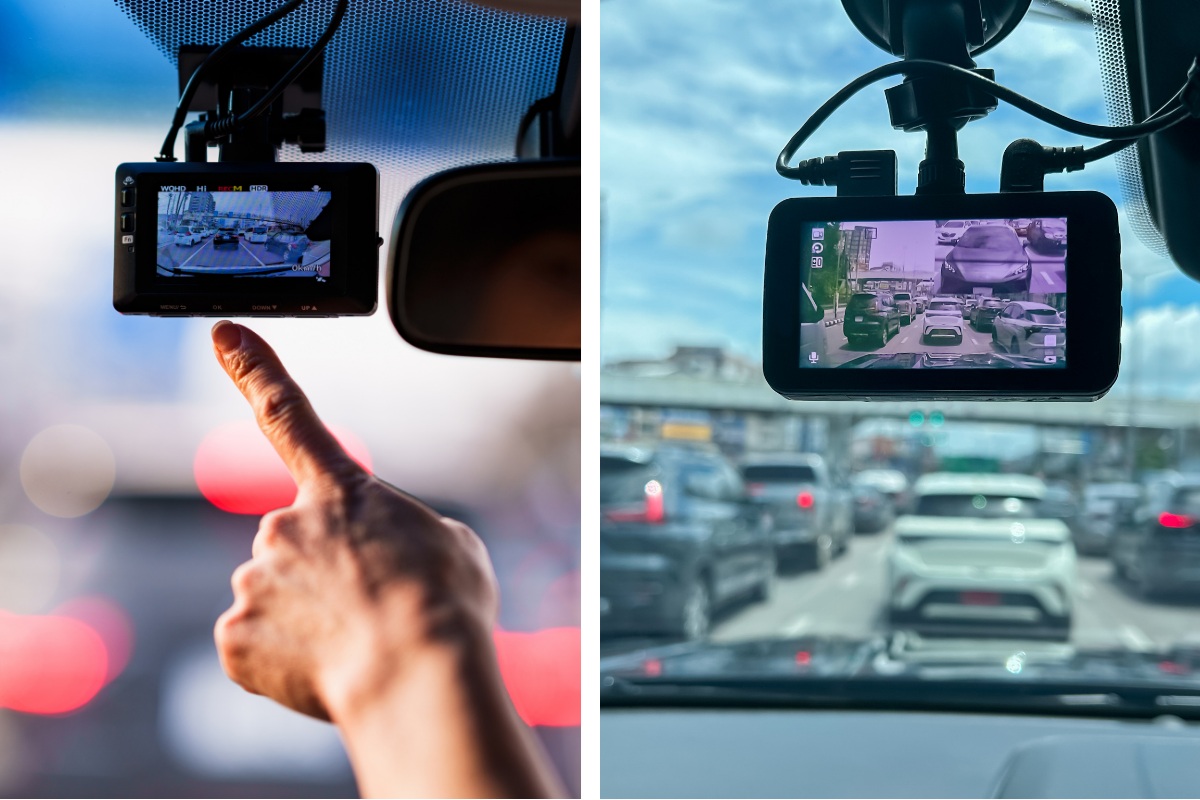
Dash cams are legal in California, but drivers must follow rules about where they are mounted, how they record audio, and how the footage is used. The main idea is simple: you can use a dash cam, but it cannot obstruct your view or violate privacy laws.
Legal Mounting Rules
California Vehicle Code Section 26708 generally prohibits objects on the windshield that block the driver’s clear view, and dash cams are only allowed in limited areas. Commonly cited legal placement zones include the lower left or lower right corners of the windshield in small approved spaces, or on the dashboard if the camera does not interfere with visibility.
The safest approach is to mount the device low and out of the driver’s line of sight. If a dash cam is placed too high, too large, or in the wrong part of the windshield, it can be treated as an obstruction even if the camera itself is legal.
Audio Recording Limits
California is a two-party consent state for confidential conversations, which means recording audio inside a vehicle can create legal problems if passengers have not consented. If your dash cam records sound, you should notify passengers or disable audio unless everyone has agreed to being recorded.
This is especially important for rideshare drivers, commuters, and family vehicles where private conversations may be captured automatically. Video recording of public driving is generally acceptable, but audio recording is where privacy rules become much stricter.
Using Footage in Claims
Dash cam footage is often useful in traffic disputes and insurance claims because it can show what actually happened before, during, and after a crash. California courts generally accept dash cam video if it is relevant, authentic, and not altered, but illegally obtained audio or tampered footage may be challenged.
If you want footage to help in an accident claim, keep the original file, preserve timestamps, and avoid editing the video before sharing it with an insurer or attorney. The more complete and reliable the recording, the more likely it is to be useful as evidence.
Practical Tips
Choose a compact dash cam and install it in a position that does not distract you or block your view. If the camera has audio recording, turn it off unless you have consent from all passengers.
It is also smart to check your dash cam’s size, angle, and mounting method before driving. A properly installed camera can protect you in disputes, while a poorly placed one can create a legal issue of its own.
Final Word
In California, dash cams are allowed and often helpful, but they must be installed carefully and used responsibly. Follow the windshield placement rules, respect audio-consent requirements, and keep your footage unchanged if you may need it later.
If you want, I can also turn this into a more polished blog-style article with a title, intro, and conclusion.
Sources
- (https://michaelhendersonlaw.com/legal-placement-dashcam-california/)
- (https://www.freightwaves.com/checkpoint/dash-cam-laws-by-state/)
- (https://sorenacaraudio.com/dashcam-laws-in-california-what-you-need-to-know/)