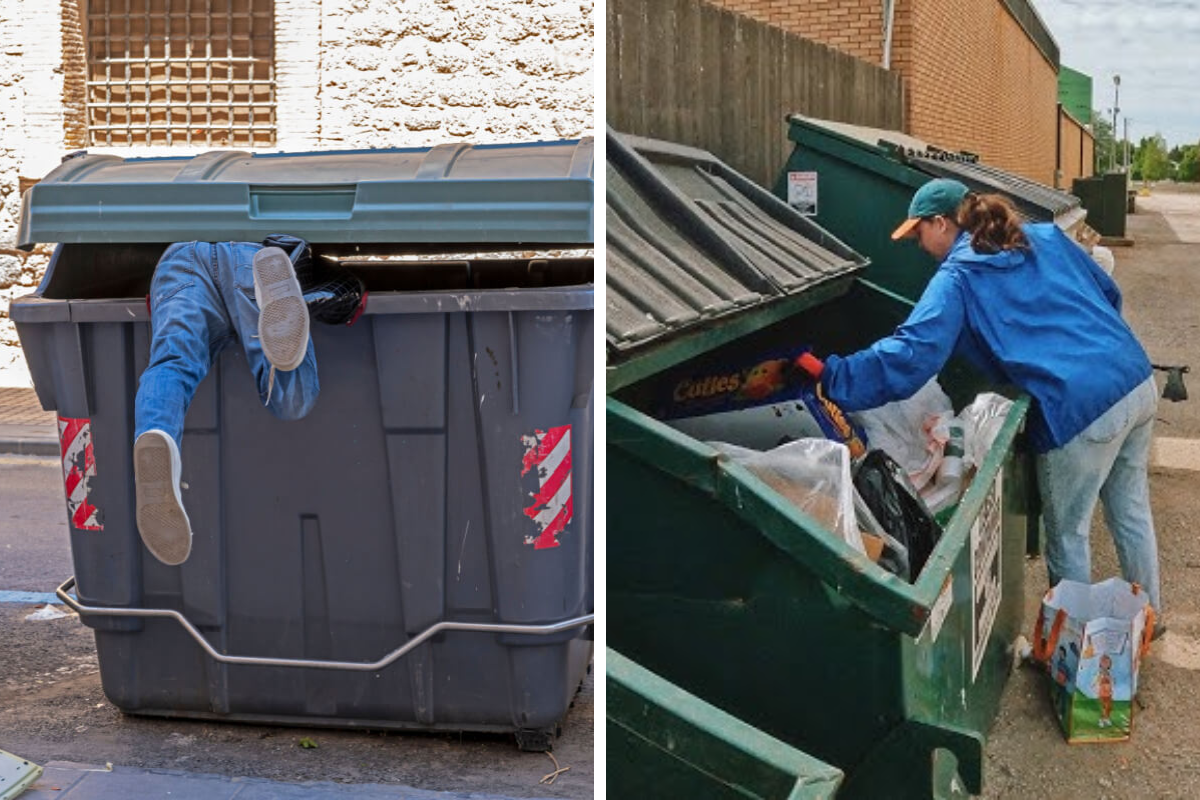
North Carolina lacks a statewide ban on dumpster diving, making it generally legal if done correctly, but local rules and property laws create significant risks. Understanding these nuances helps avoid fines or arrests.
Statewide Legal Framework
North Carolina does not explicitly prohibit dumpster diving through any state statute. This aligns with the U.S. Supreme Court’s 1988 California v. Greenwood ruling, which holds that discarded trash in public areas lacks privacy protections under the Fourth Amendment.
Items in dumpsters are typically considered abandoned property, so taking them from accessible public spots is permissible.
However, related state laws on trespassing (N.C.G.S. § 14-159.12), larceny (N.C.G.S. § 14-72), and unauthorized entry (N.C.G.S. § 14-159.13) can apply if you cross boundaries. Entering fenced, locked, or posted private property without permission turns diving into a crime, even if the dumpster appears reachable.
Local Ordinances and City Rules
Local governments enforce a patchwork of regulations, often stricter than state law. In Charlotte, city code bans unauthorized access to solid waste containers on private or commercial property, leading to fines or arrests.
Raleigh’s Code § 10-2102 prohibits removing materials from waste containers or sites without permission, with civil penalties of $25–$250 per violation and potential criminal referral for repeats.
Asheville’s Code § 14-1-12 defines unlawful scavenging in enclosed waste areas as a Class 3 misdemeanor, punishable by up to 20 days in jail and $200 fines. Winston-Salem restricts removal from private alleys to authorized personnel, with Class 3 misdemeanor penalties up to $500.
These rules prioritize property rights and public safety, so always check municipal codes via city websites or clerks before diving.
When It’s Legal to Dive
Dumpster diving remains lawful under specific conditions. Public dumpsters—those on streetsides or curbs for collection, without “no trespassing” signs—are fair game. Gaining explicit permission from property owners or businesses eliminates risks entirely.
Avoid damaging containers, creating messes, or taking hazardous waste, as these violate health codes or theft statutes. Nighttime or early morning dives in low-traffic areas reduce confrontations, but daylight visibility aids safety.
Potential Risks and Penalties
Trespassing charges are the most common issue, escalating quickly on private land. Fines range from $25 to $500 locally, with misdemeanors adding jail time in severe cases. Health hazards like sharp objects, biohazards, or insects pose non-legal dangers—wear gloves and sturdy shoes.
Business owners may call police if they view divers as disturbances, even if no law breaks. Repeat offenses in regulated cities can lead to bans or heightened scrutiny.
Practical Tips for Safe Diving
Research your target city’s ordinances first via official sites. Seek permission proactively, especially at retail spots like grocery stores with food discards. Stick to public rights-of-way and clean up after yourself to build goodwill.
Document permissions if granted, and avoid locked or alarmed dumpsters. For sustainability, apps like Too Good To Go complement diving by sourcing surplus legally.
In summary, dumpster diving in North Carolina is not outright illegal but demands caution around private property and local bans. Stay informed, respectful, and public-focused to minimize trouble—knowledge of these rules keeps your hunts lawful and productive.
SOURCES :
- https://lawbhoomi.com/is-dumpster-diving-illegal-in-north-carolina/
- https://www.worldlawdigest.com/usa/is-dumpster-diving-legal-in-nc