Wyoming stands out as one of the most knife-friendly states in the United States, with laws that strongly emphasize individual rights to bear arms, including knives. The state’s approach closely mirrors a “Constitutional Carry” concept, imposing minimal restrictions on knife ownership and carry. Understanding these rights and the few limitations that exist can help you stay compliant while exercising your lawful freedoms.
Legal Knife Ownership
Wyoming law does not prohibit the ownership of any type of knife. Residents and visitors alike can legally own, purchase, sell, and possess all varieties of knives without restrictions. This includes hunting knives, Bowie knives, daggers, stilettos, switchblades, gravity knives, balisong (butterfly) knives, swords, machetes, push knives, and even disguised blades such as lipstick knives.
There are no blade length restrictions for ownership purposes, making Wyoming one of the most permissive states for knife collectors and enthusiasts.
Open Carry Regulations
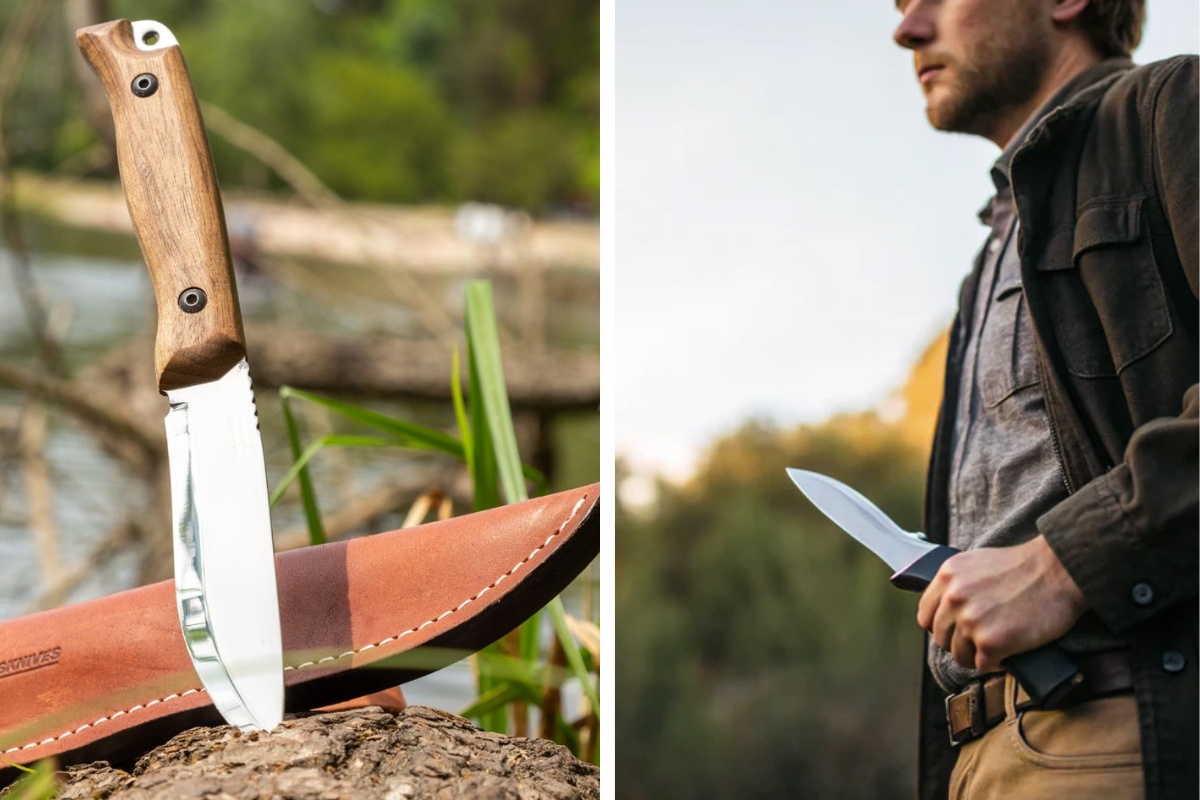
Wyoming permits the open carry of any type of knife without restrictions on blade length or knife type. This liberal policy allows individuals to openly carry knives for legitimate purposes such as hunting, fishing, camping, or other outdoor activities.
Both residents and non-residents can open carry knives throughout the state without needing a permit or license. The absence of categorical restrictions means you can carry fixed-blade knives, folding knives, or any other type visibly on your person.
Concealed Carry Requirements
Concealed carry laws in Wyoming are permissive but include specific requirements. Wyoming residents who meet the qualifications for a concealed weapons permit can carry any knife concealed without actually possessing the permit—they simply must qualify for one.
To qualify, residents must be at least 21 years old, have been a Wyoming resident for at least six months, have no felony convictions, no misdemeanor convictions within the past year, no controlled substance abuse within the past year, and not be legally incompetent or involuntarily committed to a mental institution. Residents must carry a state-issued photo ID to prove residency while carrying concealed.
Non-residents must possess a concealed weapons permit from a state with Wyoming reciprocity or obtain a Wyoming permit to carry knives concealed. Pocket knives with blade lengths under six inches can generally be carried concealed without legal concerns. However, carrying any concealed knife with the intent to use it as a weapon against another person is prohibited under Wyoming Statute § 6-8-104.
Restricted Locations
While Wyoming’s knife laws are liberal, certain locations prohibit knife possession. Knives cannot be legally carried on school grounds, in school buildings, or on other government property. Private property posted as weapon-free also restricts knife carry, though such postings are less common than firearm restrictions. Federal facilities and courthouses typically prohibit knives regardless of state law.
Penalties and Violations
Violating Wyoming’s knife laws, particularly carrying a concealed knife with intent to harm, can result in criminal charges. Penalties range from fines to imprisonment depending on the severity of the violation. Law-abiding knife owners who use their knives for legitimate purposes will rarely encounter legal difficulties.
Wyoming’s knife laws reflect the state’s commitment to individual liberty while maintaining public safety. By understanding these straightforward regulations, you can confidently exercise your knife rights within legal boundaries.
SOURCES :
- https://www.knifeden.com/knife-laws-in-wyoming/
- https://ravencresttactical.com/wyoming-knife-laws/