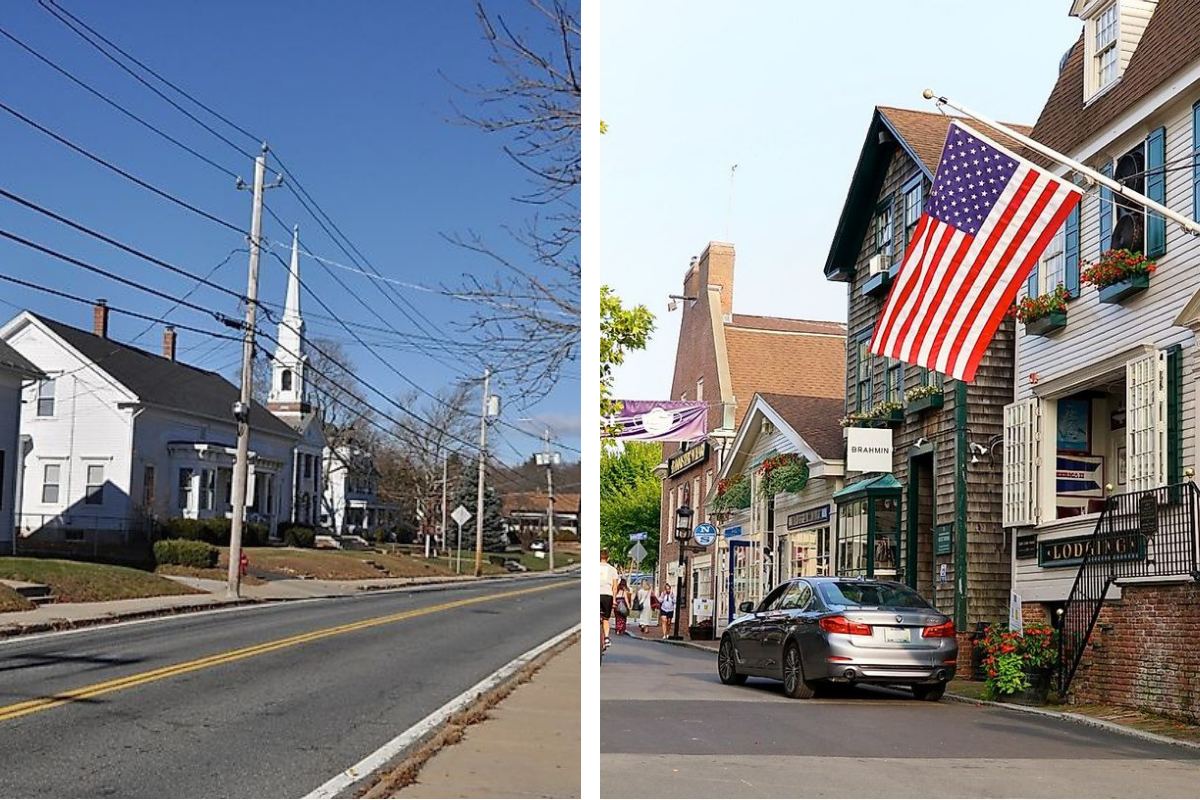
Central Falls has repeatedly been identified as the poorest town in Rhode Island, standing out for its low median household income, high poverty rate, and deep‑seated economic challenges compared with the rest of the state.
Census‑based data and several recent rankings place Central Falls at the bottom of Rhode Island’s income‑distribution ladder, making it the poster‑child community when analysts talk about concentrated poverty in the Ocean State.
Why Central Falls ranks as the poorest
Recent analyses using U.S. Census Bureau data show that Central Falls has one of the lowest median household incomes in Rhode Island, often around 40,000 dollars per year, substantially below the statewide median closer to 70,000 dollars.
At the same time, the city’s poverty rate runs well above the state average, with a notable share of residents living below the federal poverty line. This combination of low income and high poverty sets Central Falls apart from larger cities like Providence and Pawtucket, which, while still facing economic hardship, tend to have somewhat higher median earnings and more diverse tax bases.
History and structural factors
Central Falls is a small, densely populated city just north of Providence, with a long industrial past that once relied on mills and manufacturing. As those industries declined, the town lost many of the higher‑paying jobs that supported its middle‑class base, leaving a gap that has not been fully filled by newer service‑ and healthcare‑sector jobs.
Today the workforce is disproportionately concentrated in lower‑pay industries, part‑time positions, or jobs with limited benefits, which perpetuates the cycle of low household income and limited upward mobility.
Another key factor is the age and condition of the housing stock. Central Falls has a high proportion of older, multi‑unit buildings that often command lower rents than single‑family homes elsewhere in the state. This keeps property values and tax revenue lower, constraining the city’s ability to invest in schools, parks, and infrastructure improvements that could attract more‑affluent residents or businesses.
Community life and challenges
Despite its economic struggles, Central Falls remains a tight‑knit, culturally vibrant community with a diverse population, including large Latino and immigrant households that contribute to the city’s character and economy.
Local nonprofits, churches, and advocacy groups have launched programs to expand access to food, healthcare, and job‑training services, aiming to lift families out of poverty while preserving the city’s social fabric.
However, residents still face real‑world pressures: food insecurity, limited access to well‑paying jobs, and difficulty affording basic utilities and healthcare, especially for those without employer‑sponsored insurance.
Crime and public‑safety issues also get attention in the state‑level narrative about Central Falls, even though crime rates are part of broader regional patterns.
The association of concentrated poverty with higher reported crime can further stigmatize the city, sometimes overshadowing the everyday resilience and community‑building efforts of its residents.
What the “poorest town” label really means
Calling Central Falls the poorest town in Rhode Island is a statistical shorthand, not a judgment on the people who live there. The label reflects the city’s ranking on income and poverty metrics, but it also highlights the need for targeted state and federal investment in affordable housing, education, small‑business development, and workforce training.
Economists and policy advocates often point to Central Falls as a testing ground for anti‑poverty programs that could later be scaled to other struggling communities in Rhode Island and beyond.
For Rhode Island as a whole, the prominence of Central Falls on “poorest town” lists underscores the stark inequality that exists within a small state rich in coastal tourism and higher‑income suburbs. Bridging that gap will require both local determination and sustained policy support to ensure that economic opportunity spreads more evenly across the communities that call Rhode Island home.
Sources:
- https://www.roadsnacks.net/poorest-places-in-rhode-island/
- https://stacker.com/stories/rhode-island/cities-rhode-island-most-living-poverty
- https://en.wikipedia.org/wiki/List_of_Rhode_Island_locations_by_per_capita_income