Vermont police generally cannot search your phone during a routine traffic stop without a warrant, consent, or rare exigent circumstances, thanks to strong Fourth Amendment protections and state constitutional safeguards.
This principle stems from U.S. Supreme Court precedents like Riley v. California (2014), which treat cell phones as uniquely private due to their vast data stores. Here’s a detailed breakdown for Vermont drivers in 2026.
Constitutional Protections
The Fourth Amendment to the U.S. Constitution prohibits unreasonable searches, and Vermont’s Constitution (Chapter I, Article 11) explicitly guards “papers and possessions,” including digital devices, from warrantless intrusions. In Riley, the Court ruled that officers need a warrant for phone searches incident to arrest, even for minor offenses—far beyond a traffic stop’s scope.
Vermont courts reinforce this: Real-time cell site location information (CSLI) requires a warrant, as affirmed by the state Supreme Court, equating phone pings to physical tracking. No 2026 changes alter this; proposed bills for distracted driving searches (e.g., H.527 from earlier sessions) failed amid privacy outcry.
Traffic Stop Specifics
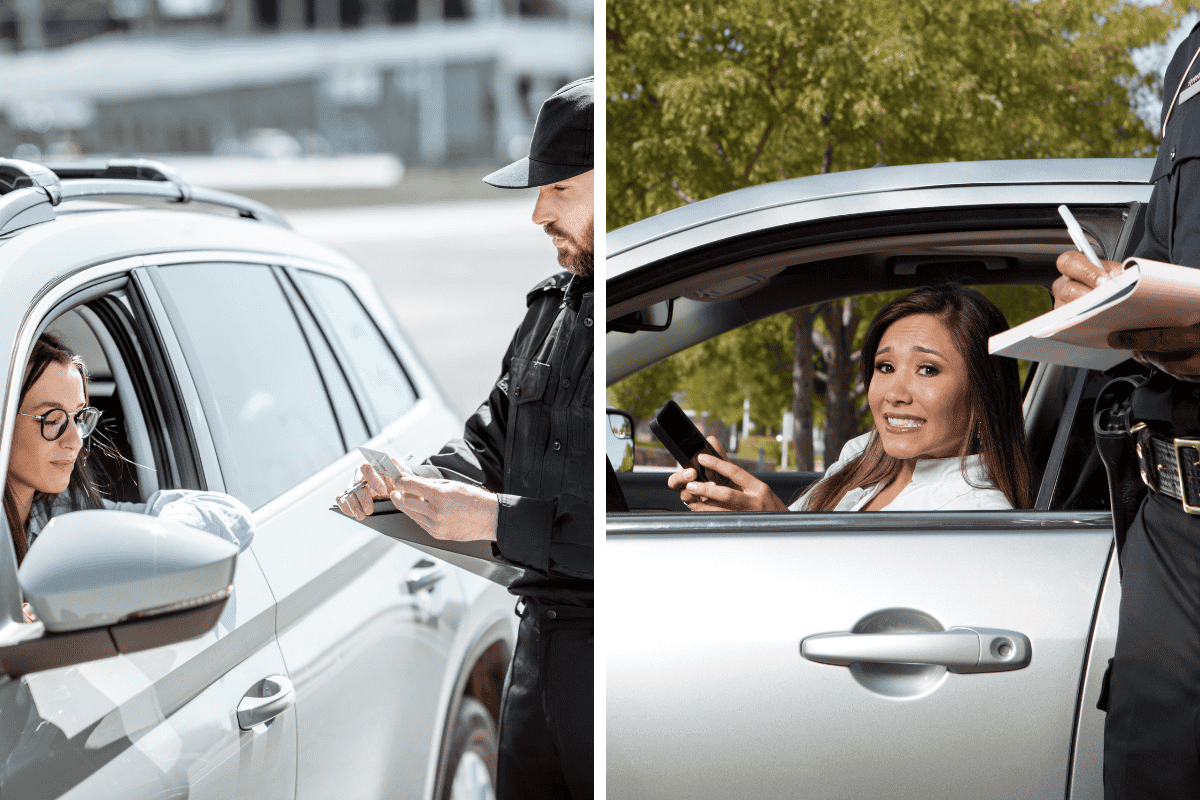
Routine stops—for speeding, broken taillights, or DUI suspicion—limit police to visible observations and license checks. Asking for your phone is common to probe for consent, but you can politely decline: “Officer, I don’t consent to searches.” Unlocking or handing it over waives rights, potentially revealing texts, photos, or apps irrelevant to the stop.
If arrested (e.g., for impaired driving), inventory searches of impounded vehicles might access unlocked phones left inside, but not compelled unlocking—Fifth Amendment protects passcodes. Vermont’s Electronic Communication Privacy Act (13 V.S.A. § 8102) further bars warrantless access to stored data.
Exceptions Where Searches Are Allowed
This table summarizes key scenarios based on current law.
Step-by-Step: What Happens in a Stop
- Pull over safely: Signal, stop in safe spot, hands visible.
- Provide basics: License, registration, proof of insurance.
- Answer limited questions: Name, destination; invoke silence on others.
- Handle phone request: “I respectfully decline to consent to any searches.”
- If escalated: Ask “Am I free to go?” or “Am I being detained?”—clarifies rights.
- Post-stop: Note badge number, details for complaints or suppression motions.
Body cams capture interactions; Vermont State Police policy requires documenting refusals.
Risks of Non-Compliance
Refusing doesn’t escalate legally, but officers might detain longer for warrants (30–60 minutes via telephonic approval). False arrest claims succeed if prolonged without cause. In 2026, ACLU-VT reports low phone search rates due to training post-Riley.
DUI stops heighten scrutiny—breath tests are mandatory, but phones aren’t. Data from carriers requires warrants too.
Practical Tips for Protection
- Lock and auto-erase: Use biometrics with delays; apps like Signal auto-delete.
- Faraday bags: Block signals if paranoid (legal, but explainable).
- Cloud backups: Wipe phone remotely if seized.
- Dash cams: Record stops from mount.
- Know contacts: Vermont Legal Aid or ACLU-VT for free advice.
Avoid “unlock tricks”—courts admit coerced access as evidence.
Broader Context and Failed Reforms
Vermont lawmakers floated warrantless searches for texting violations in 2016, implying “implied consent” by driving, but privacy advocates killed it—no U.S. state mandates this. 2026 sees no revival; focus shifted to hands-free laws (effective 2020).
Comparatively, Vermont aligns with liberal states like Massachusetts, contrasting warrant-light approaches elsewhere. Supreme Court location rulings (Carpenter v. U.S., 2018) bolster digital privacy nationwide.
If Your Rights Are Violated
File a complaint with the Vermont Criminal Justice Council or sue via 42 U.S.C. § 1983 for civil rights breaches. Suppressed evidence wins motions to dismiss charges. Precedents like Murphy (2023) suppress warrantless CSLI.
For 650,000 Vermont drivers, vigilance ensures stops remain brief. Politeness de-escalates; knowledge empowers. This isn’t legal advice—consult attorneys via vtlawyer.com or legislature.vermont.gov for statutes.
SOURCES:
- https://mywaynecountynow.com/can-vermont-police-search-my-phone-during-a-traffic-stop-heres-what-the-law-says/
- https://legislature.vermont.gov/statutes/section/13/232/08102