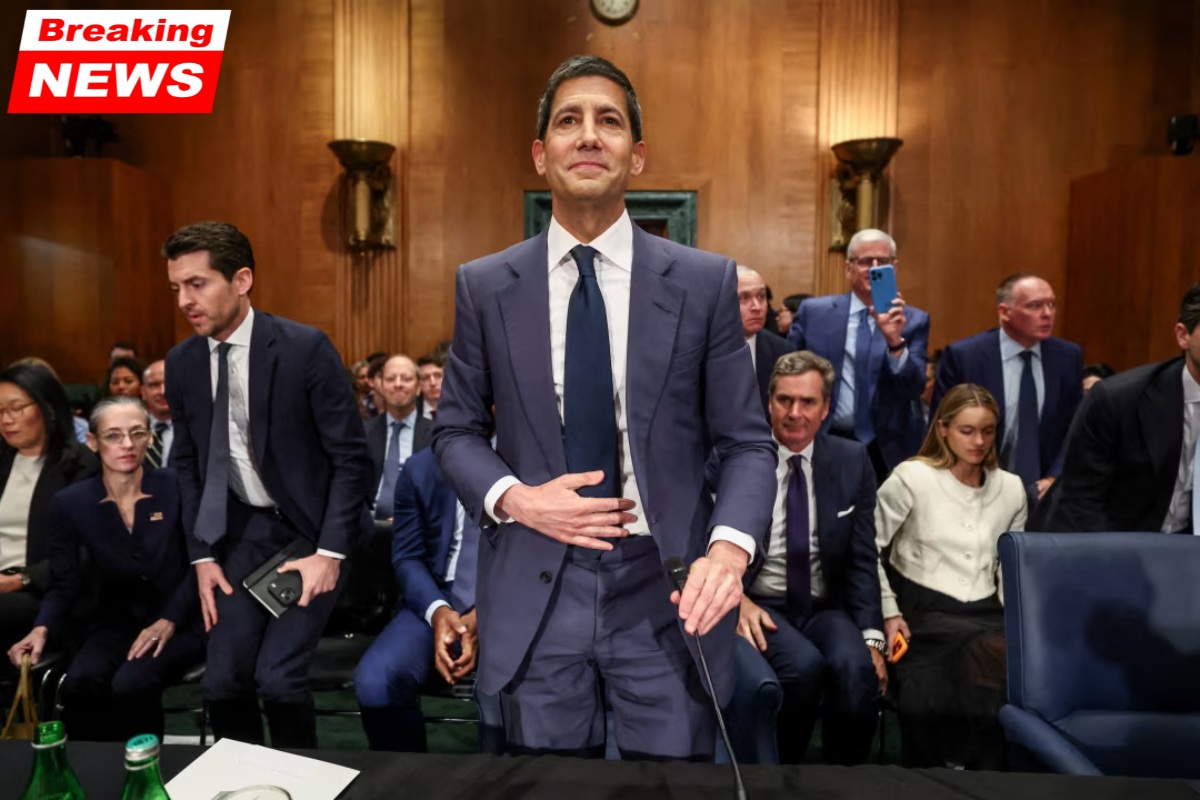
In a surprising move, Senators John Fetterman (D-Pa.) and Chris Coons (D-Del.) joined Republicans on Monday to vote in favor of advancing Kevin Warsh’s nomination to the Federal Reserve Board of Governors. Warsh, who was nominated by President Trump to replace Jerome Powell as chair of the Federal Reserve, is now one step closer to being confirmed after the Senate vote.
The Senate voted 49-44 to move Warsh’s nomination forward, setting him up to be confirmed in the coming days. Powell’s term as chair of the Federal Reserve ends on Friday, and Warsh is set to replace him, pending Senate confirmation.
Cross-Party Support for Warsh’s Nomination
The vote saw Fetterman and Coons, both Democrats, break from their party’s lines to support Warsh, a former Federal Reserve governor from 2006 to 2011.
Warsh has been known for his hawkish stance on inflation during his time at the Fed, which aligns with concerns over rising prices and inflation in the U.S. economy. Notably, no Republicans voted against advancing Warsh’s nomination, showcasing strong bipartisan support for the nominee.
Fetterman, who has increasingly voted contrary to his party’s stance, has been vocal about his shift on various policy issues, and this vote is one of his latest departures from the Democratic Party’s position.
Warsh’s Nomination History and Delays
Warsh’s confirmation process faced delays earlier, particularly after Sen. Thom Tillis (R-N.C.) blocked all Federal Reserve nominations due to a criminal investigation into Jerome Powell and the Federal Reserve by the Justice Department. Tillis, however, later indicated that he would back Warsh after the investigation was closed, which allowed the nomination process to proceed.
Warsh’s history as a Fed governor and his inflation hawk reputation played a major role in his nomination. If confirmed, Warsh will inherit the chairmanship of the Federal Reserve at a crucial time for the U.S. economy, which is grappling with inflation concerns, interest rates, and economic recovery.
Fetterman’s Political Shifts and Increasing Independence
This vote highlights Fetterman’s increasing willingness to break ranks with his own party. Over the past few years, Fetterman has expressed discontent with the Democratic Party’s direction, particularly on issues like Israel, border security, and government shutdowns.
In a recent appearance on Bill Maher’s show, Fetterman said that he felt increasingly “lonely” in his party as the Democratic values seemed to shift.
“I’ve had to vote against the caucus,” Fetterman told Maher, referring to his votes that went against the Democratic Party. “We used to be a party that would always refuse to shut the government down, and now we have shut it down, and I just couldn’t be a part of that.”
Fetterman’s voting record also includes support for Trump nominees, such as Markwayne Mullin, the nominee for Department of Homeland Security Secretary, and Pam Bondi, former Attorney General. These votes signal a growing independence for Fetterman in his approach to political decisions.
Fetterman’s Relationship with the Democratic Party
Fetterman’s divergence from the party has sparked intrigue in political circles. While he continues to align with Democrats on some issues, he has become a more maverick figure, one that is willing to vote based on his principles rather than party lines. This trend of voting contrary to the Democratic establishment may have political ramifications for him moving forward, particularly as 2024 elections approach.
The Senate vote to advance Kevin Warsh’s nomination marks a moment of political tension within the Democratic Party, with Fetterman and Coons crossing party lines to support a nominee seen as an ally to the Trump administration.
Warsh, an experienced economist and former Fed governor, could become the next chair of the Federal Reserve, bringing his conservative views on inflation to the forefront of economic policy in the U.S.
Meanwhile, Fetterman’s growing independence from the Democratic Party underscores his evolving political identity, potentially setting him apart from his colleagues in future legislative battles.