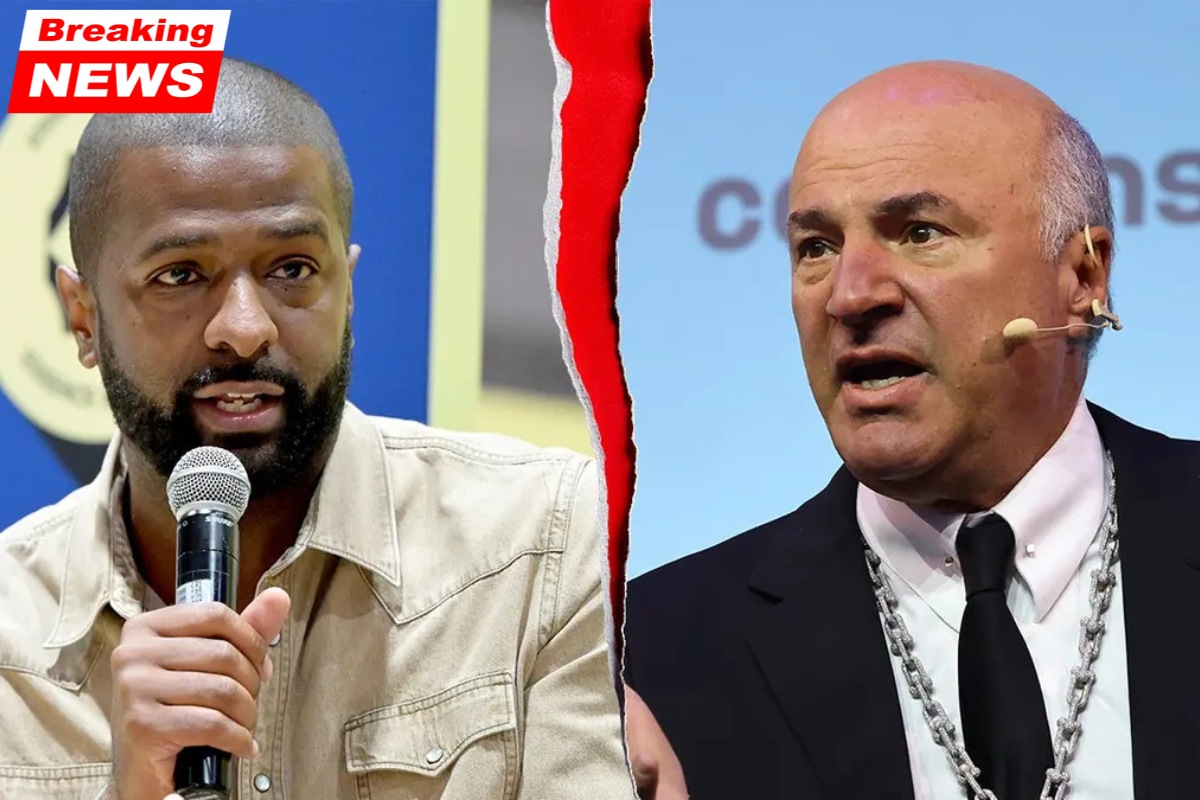
CNN political commentator Bakari Sellers had a heated exchange with “Shark Tank” star Kevin O’Leary on Monday during a panel discussion, following the Supreme Court’s decision regarding Alabama’s congressional map.
The ruling paves the way for the state to eliminate one of its two majority Black districts ahead of the 2026 midterm elections, raising concerns about voter representation in minority communities.
O’Leary’s comments on the Supreme Court’s ruling sparked a strong response from Sellers, who was quick to push back on O’Leary’s stance, calling his remarks “utterly disrespectful.”
The Supreme Court’s Ruling and O’Leary’s Reaction
On Monday, the Supreme Court delivered a ruling that allowed Alabama to implement a new House map ahead of the 2026 elections, which would reduce the number of majority-Black districts.
The decision effectively weakened the provision in the Voting Rights Act that aims to protect minority voters when states redraw district lines.
O’Leary, reacting to the ruling, remarked that the court had upheld the principle of “one person, one vote,” suggesting that the matter was about “map wars” rather than racial fairness. He argued that states should decide districting issues at the state level, in line with constitutional principles.
“The state decides at the state level. It’s in the Constitution. Get over it,” O’Leary added, implying that the court’s decision was simply part of the natural political process.
Sellers Pushes Back: A Personal and Emotional Defense of Voting Rights
Sellers immediately countered O’Leary’s statement, bringing a deeply personal and historical perspective to the conversation. He referenced landmark Supreme Court cases, such as Brown v. Board of Education, which overturned Plessy v. Ferguson, and shared a poignant personal story about his family’s role in the civil rights movement.
“My mother was born in 1951. She desegregated schools. My father was shot in the civil rights movement,” Sellers said, using these experiences to underline the ongoing struggle for voter equality. He accused O’Leary of being disrespectful and not understanding the significance of the fight for voting rights, which has resulted in lives lost and sacrifices made.
“So, what I’m telling you is that there are people in this country who fought, died, and bled for the right to vote,” Sellers continued. “Don’t be a d—, just understand.”
The Escalation of the Debate
As the conversation grew more tense, O’Leary attempted to shift the focus back to the Constitution, questioning whether Sellers had a problem with it.
However, Sellers wasn’t backing down. He emphasized that the right to vote wasn’t just a matter of political theory—it was something that had been fought for with blood and sacrifice.
“There’s a price that was paid for this right. There is a price that we uphold,” Sellers said, making it clear that he saw the fight for voting rights as one of the most significant battles in American history.
The conversation reached a boiling point as Sellers said, “Whether or not you value that or not, there are people who bled, sweat, and died, and were in prison for access to the ballot box.
What we’re seeing throughout the South is that their voice, their vote, their representation, and people who have lived experiences to represent them are not being sent to Congress.”
O’Leary, attempting to dismiss Sellers’ concerns, retorted that people still had access to the ballot box, further downplaying the voter suppression concerns that Sellers was highlighting.
The Court’s Limiting of the Voting Rights Act
The Supreme Court’s decision sharply limited how race can be used as a factor when drawing congressional districts, particularly when it comes to creating majority-minority districts.
In a 6-3 decision, the court ruled that Louisiana’s 2024 congressional map, which aimed to create a second majority-Black district, constituted an “illegal” racial gerrymander.
This ruling has been seen as a major setback for the Voting Rights Act, especially Section 2, which was intended to protect the rights of minority voters in redistricting efforts.
By narrowing the scope of this section, the decision could have lasting implications for minority representation in the U.S. House of Representatives, particularly in states with large Black populations.
A Broader Debate on Voter Rights and Representation
The debate between Bakari Sellers and Kevin O’Leary illustrates the sharp divisions in the American political landscape regarding voting rights and districting.
Sellers’ impassioned defense of the Voting Rights Act and minority representation contrasts with O’Leary’s more detached, constitutional viewpoint on state control over districting.
The Supreme Court’s ruling has intensified this debate, with many activists and lawmakers questioning whether this decision will further disenfranchise communities of color, particularly in the South.
While the court may have upheld certain constitutional principles, the impact on voter rights remains a contentious issue, with major implications for the 2026 elections and beyond.
As the discussion continues, the emotional and historical stakes surrounding voter representation remain at the forefront of this national debate.