
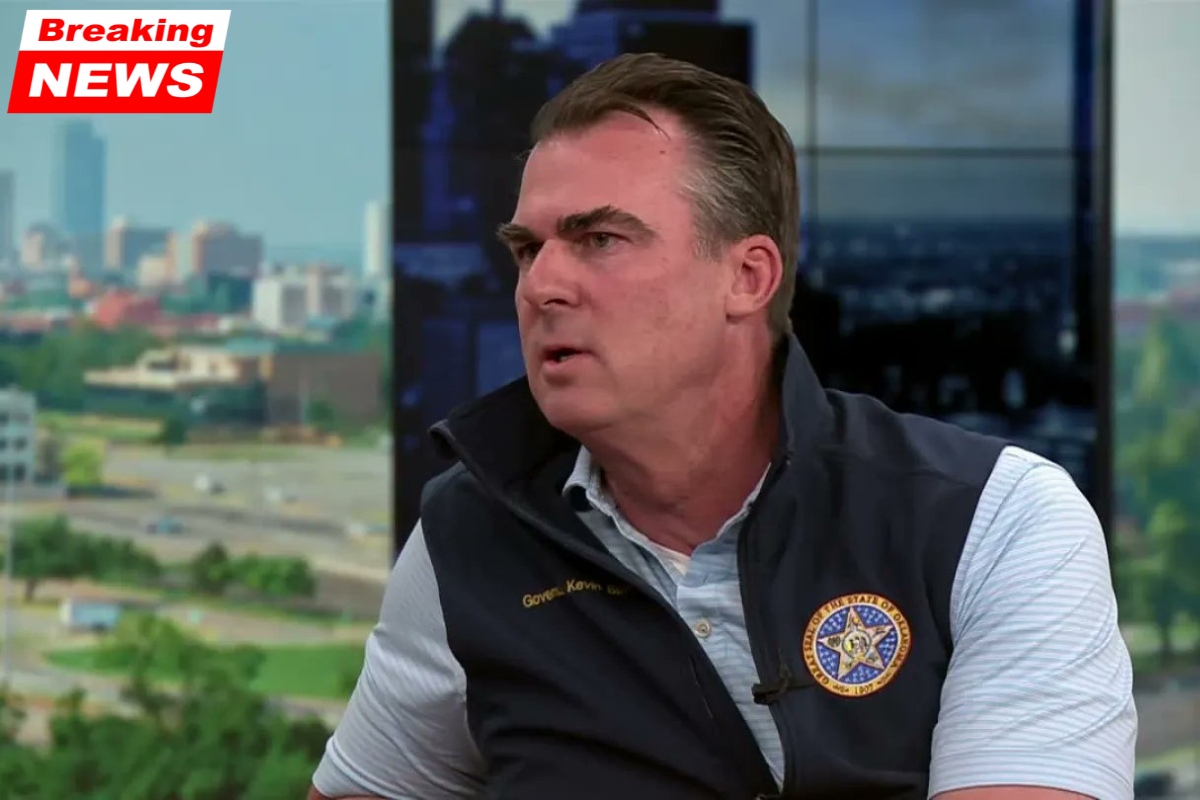
Oklahoma Governor Kevin Stitt has vehemently denied any wrongdoing after a multi-county grand jury report raised concerns about his involvement in the early release of Sara Polston, who was convicted for a DUI crash that left Micaela Borrego with severe, life-changing injuries.
The investigation accused Stitt of showing political favoritism toward Polston, who was sentenced to eight years but released after serving only 73 days.
Background of the Case: The Tragic 2023 DUI Crash
The incident that sparked this controversy occurred in February 2023, when Sara Polston was driving at 66 mph in a 25 mph zone with a blood alcohol level nearly twice the legal limit. Polston collided with Micaela Borrego’s vehicle, causing Borrego to suffer a traumatic brain injury.
Borrego was placed in a coma and had to relearn basic abilities, including speaking, eating, and walking. The crash left Borrego with long-term physical and cognitive impairments, leading to significant ongoing therapy.
MCGJ Report
In December 2025, Polston was sentenced to eight years in prison for her role in the crash. However, just 73 days into her sentence, she was placed under the Oklahoma Department of Corrections’ (DOC) GPS monitoring program and released early.
This decision raised concerns among the public and Borrego’s family, who expressed frustration over the perceived leniency in Polston’s sentence.
The Allegations: Favoritism and Political Influence
The grand jury report cited “rank political favoritism,” especially due to Polston’s connections with Stitt and the contributions made by Polston’s family to Stitt’s campaigns.
The investigation found that Polston’s early release on GPS monitoring was fast-tracked, with allegations that Stitt made multiple calls to DOC officials on her behalf.
The report mentioned Polston’s family using their connections to benefit her, with recorded phone calls where they referred to Stitt as “the guy,” “our friend,” and “our buddy,” while discussing how to leverage those connections for Polston’s advantage.
The grand jury’s investigation also suggested that Polston’s case had been handled with preferential treatment, pointing to expedited DOC transports and other signs of favoritism.
The jury criticized the handling of the GPS program, calling the approval process “shockingly mechanical and unilateral,” and said that it subverted the decisions of judges and dismissed the voices of victims.
Stitt’s Denial and Response
Governor Stitt responded to the grand jury’s findings, dismissing them as politically motivated. Stitt denied any special treatment for Polston, saying, “I did zero favors for this inmate.”
He also emphasized that the grand jury did not find any criminal wrongdoing by his office or the DOC, saying, “The grand jury said there is no criminal wrongdoing from the Department of Corrections, from the governor’s office, from anybody.”
When asked about his involvement, Stitt explained that he made phone calls after learning of Polston’s release on an ankle monitor. “When I found out that she was going on an ankle monitor, I called to say, ‘This is weird. Are you sure this is right?’” Stitt said. “I never called to say put her on an ankle bracelet.”
Stitt also expressed sympathy for Micaela Borrego and her family, stating, “My heart goes out to the victim, Micaela Borrego, and her family.
This is a family whose lives are changed forever. She was severely injured. Justice got it right; the inmate should be punished. One hundred percent, my heart breaks for that victim.”
Polston’s Release and the GPS Program Controversy
Polston’s early release and placement on the GPS program were in line with changes made to the state’s law in 2021.
Previously, offenders with sentences of five years or less could be considered for GPS release after serving 90 days, provided they had no criminal history and participated in treatment programs.
The law was expanded in 2021 to include sentences of up to ten years and eliminated the 90-day minimum.
Polston qualified for the GPS program due to her lack of prior criminal history, no disqualifying criteria, and her completion of treatment programs. The DOC approved her placement for GPS monitoring in February 2026, with her release scheduled for February 19.
Public and Legislative Response
Micaela Borrego’s family has expressed frustration with the early release, arguing that it is unjust, given the severity of Borrego’s injuries. Krista Borrego, Micaela’s mother, called the decision “unfair,” criticizing the system for exploiting loopholes. “There’s no real justice. It’s just loopholes and pivoting and maneuvering,” she said.
In response to growing concerns about the GPS program, Oklahoma legislators passed Senate Bill 137 in late April 2026. The bill makes DUI offenses resulting in great bodily injury ineligible for GPS release and requires that anyone currently on the program for such offenses be returned to prison.
However, defense attorneys have argued that the bill is unconstitutional because it applies retroactively to those who were already in the criminal justice system before the law was passed.
Governor Stitt has defended the bill, stating that he ensured it became law to address the concerns raised by cases like Polston’s. He acknowledged that the 73-day sentence was too short and agreed that the system needed reform.
Calls for Reform and Accountability
The controversy surrounding Sara Polston’s early release and the role of political connections in the decision has put a spotlight on the GPS program and its effectiveness in ensuring fair treatment within the criminal justice system.
While Governor Stitt denies any wrongdoing, the case has highlighted the need for reforms in how the state handles the release of offenders and ensures accountability in the justice system.
As the situation continues to unfold, the public and lawmakers will be closely watching the implementation of Senate Bill 137 and any further actions to address concerns about favoritism and transparency in Oklahoma’s criminal justice process.






