
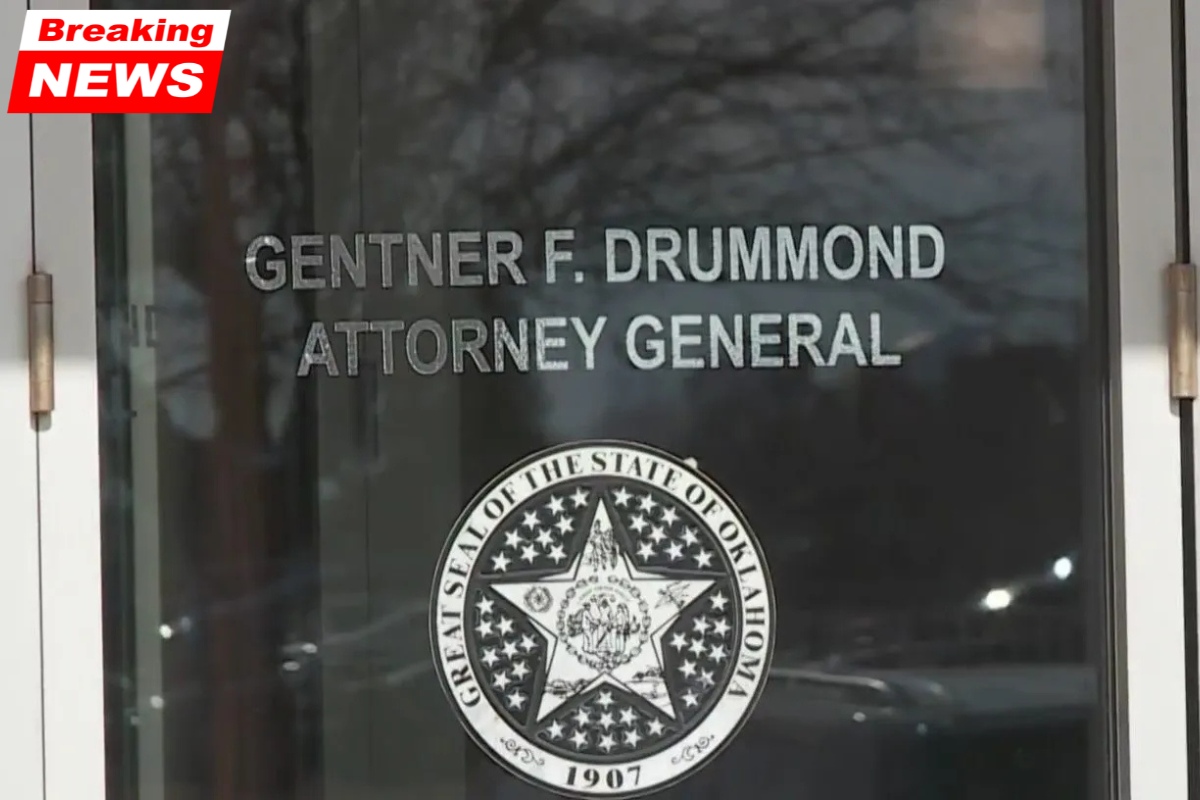
The office of Oklahoma Attorney General Gentner Drummond has launched an investigation into the state’s Department of Corrections’ (DOC) Global Positioning System (GPS) surveillance program, following a grand jury report that raises serious concerns about favoritism and procedural flaws in high-profile cases.
The investigation centers around the controversial early release of Sara Polston, who served only 73 days of an 8-year sentence for causing a crash that left Micaela Borrego, now 23, with brain damage and life-altering injuries.
The Controversy: Sara Polston’s Release and Allegations of Favoritism
Sara Polston was sentenced to 8 years in prison for causing an accident in 2023 while driving under the influence. The crash resulted in severe injuries to Micaela Borrego, who suffered brain damage.
Despite the severity of the case, Polston was released from prison early and placed under the GPS surveillance program after serving just 73 days.
The case has gained further attention due to Polston and her husband, Rod, making substantial financial contributions to the campaign of Governor Kevin Stitt.
The grand jury investigation report alleges that the Polstons used their political connections to influence Polston’s early release, with multiple recorded phone calls from the Cleveland County Jail where they referred to the governor as “the guy,” “our friend,” and “our buddy.”
The report claims that Gov. Stitt made several calls to the DOC on Polston’s behalf, leading to suspicions of preferential treatment.
Grand Jury Findings and Criticisms of the GPS Program
The grand jury’s investigation into the DOC’s GPS program found significant flaws in its policies and procedures. According to the report, the approval process for GPS transfers was “shockingly mechanical and unilateral,” with no meaningful oversight or ethical guidelines.
The report criticized the DOC for its lack of qualifications in approving offenders for the GPS program, stating that the current system “reduces the criminal justice system to a purely administrative exercise” that undermines judicial decisions and silences the voices of victims.
One key criticism was that Micaela Borrego and her family were not consulted before Polston was placed on the GPS program, leading to concerns about the fairness of the process.
The grand jury’s report emphasized that the criminal justice system should be impartial, with no special treatment given based on wealth, political connections, or social status.
Recommendations for Reform
The grand jury’s report offered several recommendations to address the systemic issues uncovered during the investigation:
- Legislative action to establish minimum time served requirements for offenders.
- Victim notification and board or committee oversight of GPS transfers.
- Revised DOC policies to ensure fairness and transparency in the release and transfer of inmates.
- New training programs for DOC administrators and staff.
- More limited discretion for DOC administrators when making decisions regarding the release or transfer of offenders before they have completed their sentences.
In response to these findings, Oklahoma legislators recently passed Senate Bill 137 (SB 137), which tightens the eligibility requirements for the GPS program.
Governor Stitt’s Response to the Investigation
Governor Kevin Stitt responded publicly to the grand jury’s report, dismissing the allegations as politically motivated. He expressed his sympathy for Micaela Borrego and her family but emphasized that he had not personally intervened in Polston’s case.
“My heart goes out to the victim, Micaela Borrego, and her family. This is a family whose lives are changed forever. She was severely injured.
Justice got it right; the inmate should be punished. One hundred percent, my heart breaks for that victim. Drunk driving does not belong in the state of Oklahoma,” Stitt said.
The governor further stated that neither he nor his office provided any special treatment to Polston, pointing out that the grand jury found no criminal wrongdoing by either the DOC or the Governor’s Office. “What you have basically is political gossip and a political statement for a guy running for governor,” Stitt concluded.
A Call for Reform and Accountability
The grand jury’s investigation has put a spotlight on the flaws in Oklahoma’s GPS surveillance program and the potential for favoritism in the release of inmates.
While the investigation has led to calls for significant reform, it also raises questions about transparency and accountability in the state’s criminal justice system.
As the case continues to evolve, both legal and political leaders will need to address these issues to ensure that the system remains fair and just for all Oklahomans.
If you want to listen to the jail call recordings, click here.
Click to read the full report.






