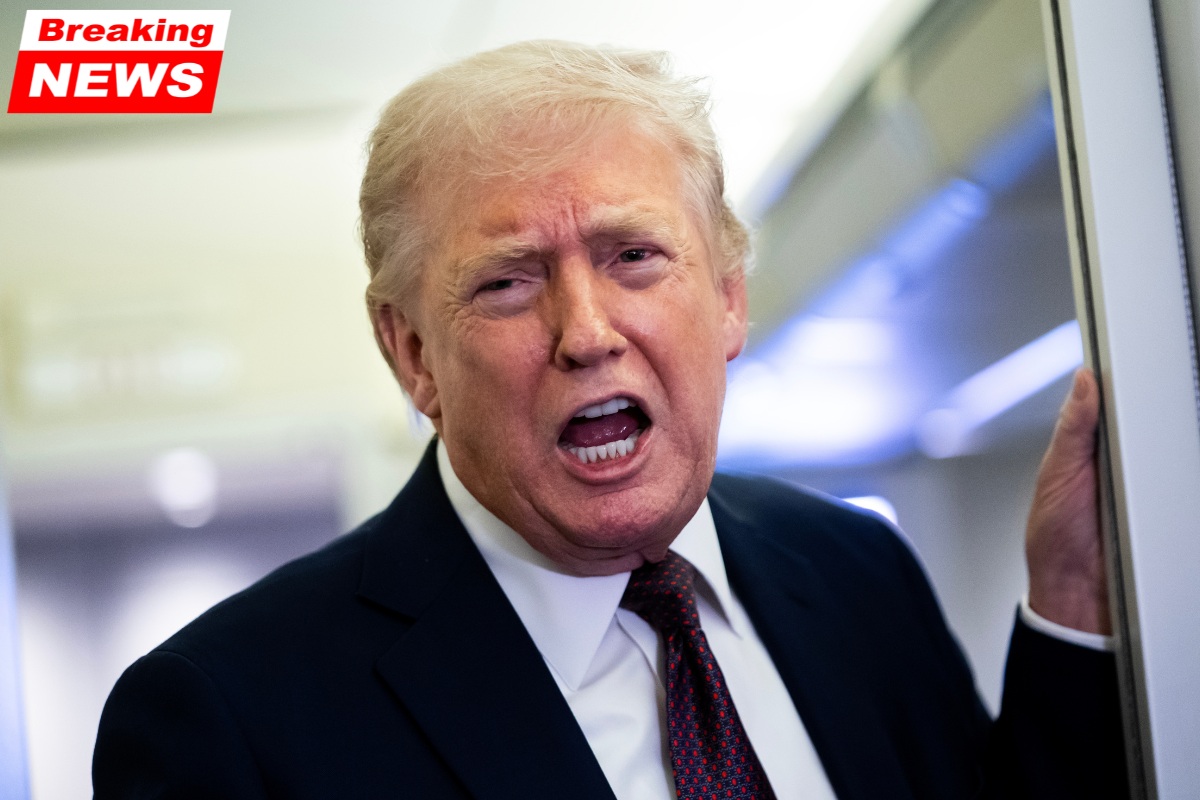
In a startling admission during a press conference, President Donald Trump revealed that the U.S. military has no knowledge of where its weapons ended up after being sent to arm Iranian protesters.
The disclosure comes as the Iran conflict continues to escalate, with the cost of the war projected to reach a staggering $40–50 billion. The missing weapons, combined with the high financial toll, raise serious concerns about accountability in the conflict and its broader implications for U.S. foreign policy.
Trump’s Frustration and Weapon Losses
The admission about the missing U.S. weapons occurred while Trump was addressing the situation with Kurdish groups and the failed attempt to ignite an uprising in Iran. In a candid moment, Trump stated, “A small amount of weapons were sent, and we’ll see who has them.”
The lack of information on the whereabouts of military assets, including some of the U.S. military’s most advanced equipment, has left serious questions about what happened to these critical supplies.
The U.S. military has lost billions of dollars worth of high-tech equipment since the start of the Iran conflict. Among the most notable losses are an F-35A Lightning II stealth fighter, which Iran claims to have shot down, and a dozen MQ-9 Reaper drones, each valued at around $30 million.
The total financial loss is significant, with some estimates putting the cost of the war at $25 billion by the end of the conflict, while others expect the figure could be much higher, reaching up to $50 billion.
Accountability Issues and Military Disorder
The fact that the U.S. military has lost track of its own weapons points to deeper accountability issues in the ongoing war in Iran. Despite having access to some of the most advanced military technology, the U.S. military’s ability to monitor and control its equipment has been severely compromised.
Lawmakers and the public are understandably alarmed by the massive sums of taxpayer money being spent on a conflict where accountability appears to be lacking.
The loss of military assets, such as the stealth fighter and Reaper drones, is compounded by the growing financial costs of the war, raising concerns about transparency and oversight. Critics argue that the lack of clear accountability in this conflict undermines public trust in how taxpayer dollars are being used in military operations.
U.S. Treasury Warning and Sanctions Concerns
Alongside the weapon loss controversy, U.S. Treasury Secretary has issued a warning regarding the Strait of Hormuz. The U.S. has declared that individuals or companies paying a “toll” to Iran for passage through the strait could risk violating U.S. sanctions.
The key shipping channel, which is vital for global oil transport, has been closed to most ships for several weeks, causing significant economic disruption around the world.
The economic impact of the conflict is not limited to the costs of the war itself. The closure of the Strait of Hormuz has intensified the already volatile economic climate, raising concerns about the broader global economy and U.S. relations with other nations.
Legal Concerns Over the War Powers Resolution
The ongoing conflict in Iran has also sparked debate over its legality under the War Powers Resolution. The 1973 law requires the president to end the use of U.S. armed forces unless Congress formally declares war or grants an extension.
Trump has argued that the deadline for legislative approval has been paused due to a ceasefire with Iran, suggesting that the conflict is not yet concluded.
However, many legal experts and lawmakers have expressed skepticism about this argument. Professor Heather Brandon-Smith, a law professor at Georgetown University, stated that a ceasefire does not permanently end a conflict.
According to Brandon-Smith, only Congress or the courts can bring a formal end to the war, meaning the legal questions surrounding the Iran conflict may persist long after the fighting ends.
Legal and Financial Fallout for the Trump Administration
The fallout from the war in Iran is not confined to military and economic losses. On a separate legal front, the Trump administration is also facing growing pressure from legal challenges. The Supreme Court’s ruling against Trump’s tariff policies has added another layer of strain to an already beleaguered administration.
Legal experts argue that these rulings, combined with the unresolved legal questions surrounding the war in Iran, indicate that Trump’s policies are increasingly facing legal scrutiny.
The cost of the war, the loss of U.S. military assets, and the uncertainty surrounding the war powers debate are contributing to an increasingly complicated political landscape for the Trump administration.
Accountability and Oversight in the Iran War
As the cost of the Iran war continues to grow and the location of U.S. weapons remains unknown, serious questions about accountability and oversight are becoming more urgent. With billions of dollars spent, military assets lost, and legal challenges mounting, the conflict in Iran has raised important issues for U.S. foreign policy, military strategy, and the legal boundaries of presidential war powers.
The public admission by President Trump that the U.S. does not know where its weapons have gone is a stark reminder of the complexities and dangers of modern warfare. As the situation continues to evolve, the need for transparent oversight and legal clarity remains paramount for the future of U.S. military operations abroad.