A major legal development has emerged involving former FBI leadership, as new charges have been filed that have quickly drawn national attention and political reactions.
James Comey charged in new federal case
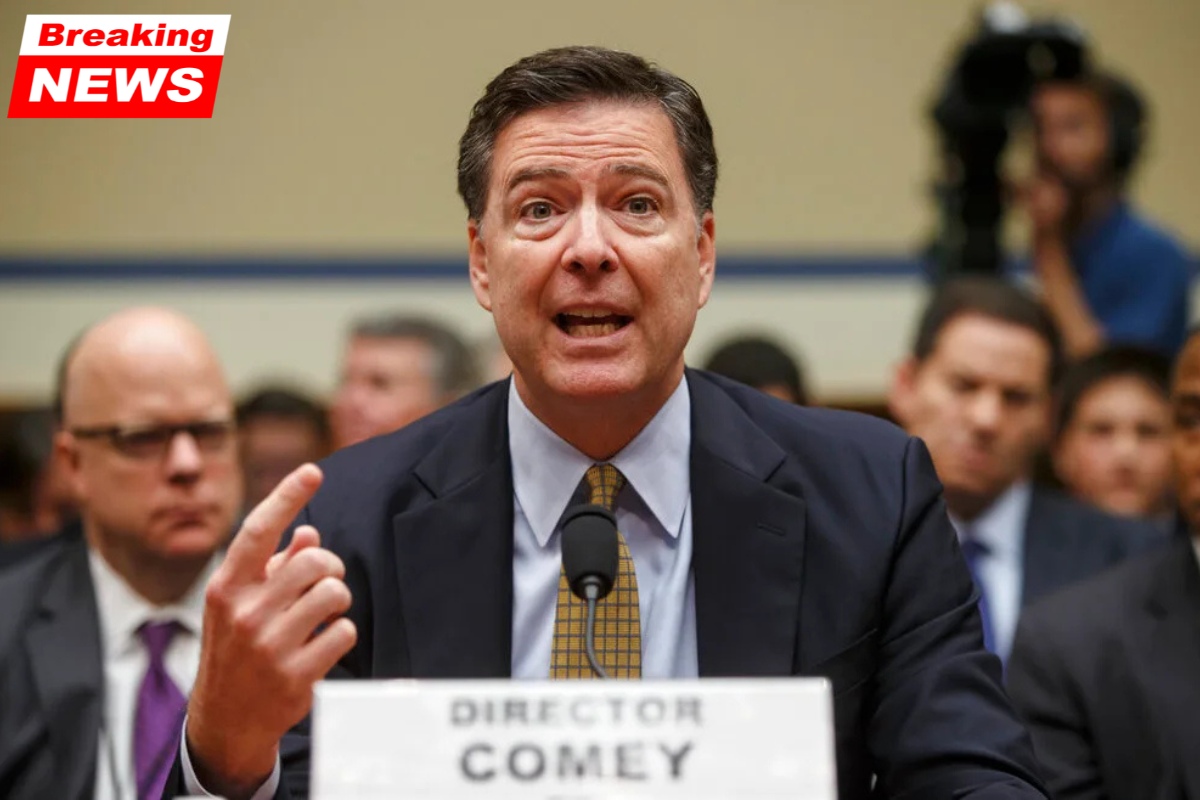
Former FBI director James Comey has been charged with allegedly threatening the life of Donald Trump, according to a newly released federal charging document.
The case was filed in the Eastern District of North Carolina, and a court clerk has issued an arrest warrant in connection with the charges. This marks the second indictment against Comey within a year by the current administration.
Social media post at the center of controversy
The charges are linked to a social media post in which Comey allegedly arranged seashells to form the numbers “86 47.”
Investigators claim this message could be interpreted as a threat, with “86” sometimes used as slang for removing or harming someone, and “47” referring to the 47th president.
According to the document, authorities believe a reasonable person familiar with the context could interpret the image as a serious expression of intent to harm the president.
Details outlined in charging documents
The official filing states that on or about May 15, 2025, James Comey knowingly and willfully made a threat against the president by posting the image on Instagram.
It further alleges that he transmitted this communication through interstate and foreign commerce, which is a key element in federal threat-related charges. The language in the document emphasises that the post was public and accessible, increasing its potential impact.
Investigation timeline and agency response
Current FBI director Kash Patel said during a press conference that the case had been under investigation for several months, roughly between nine to eleven months. This suggests that authorities had been reviewing the situation carefully before deciding to move forward with formal charges.
Previous indictment and dismissal
This is not the first time James Comey has faced legal action recently. He was previously indicted last September on allegations of lying to Congress. However, that case was later dismissed by a federal judge. The dismissal was based on a legal issue regarding the appointment of the prosecutor handling the case.
Court ruling on earlier case
U.S. District Court Judge Cameron McGowan Currie ruled that the interim U.S. attorney, Lindsey Halligan, had not been lawfully appointed. The judge stated that the appointment violated both federal law and the Constitution’s Appointments Clause, making the indictment invalid. As a result, the earlier charges were dropped.
Legal and political implications
The new charges against Comey are likely to have significant legal and political implications. Given his past role as FBI director and his involvement in major national investigations, the case is expected to draw intense scrutiny from both legal experts and political observers.
The indictment of James Comey over an alleged threat marks a serious and complex legal development. With the case now moving forward in federal court, attention will focus on how prosecutors prove intent and how the defence responds to the interpretation of the social media post.
As more details emerge, the outcome could have broader implications for how online expressions are treated under federal law, especially when they involve high-profile public figures.