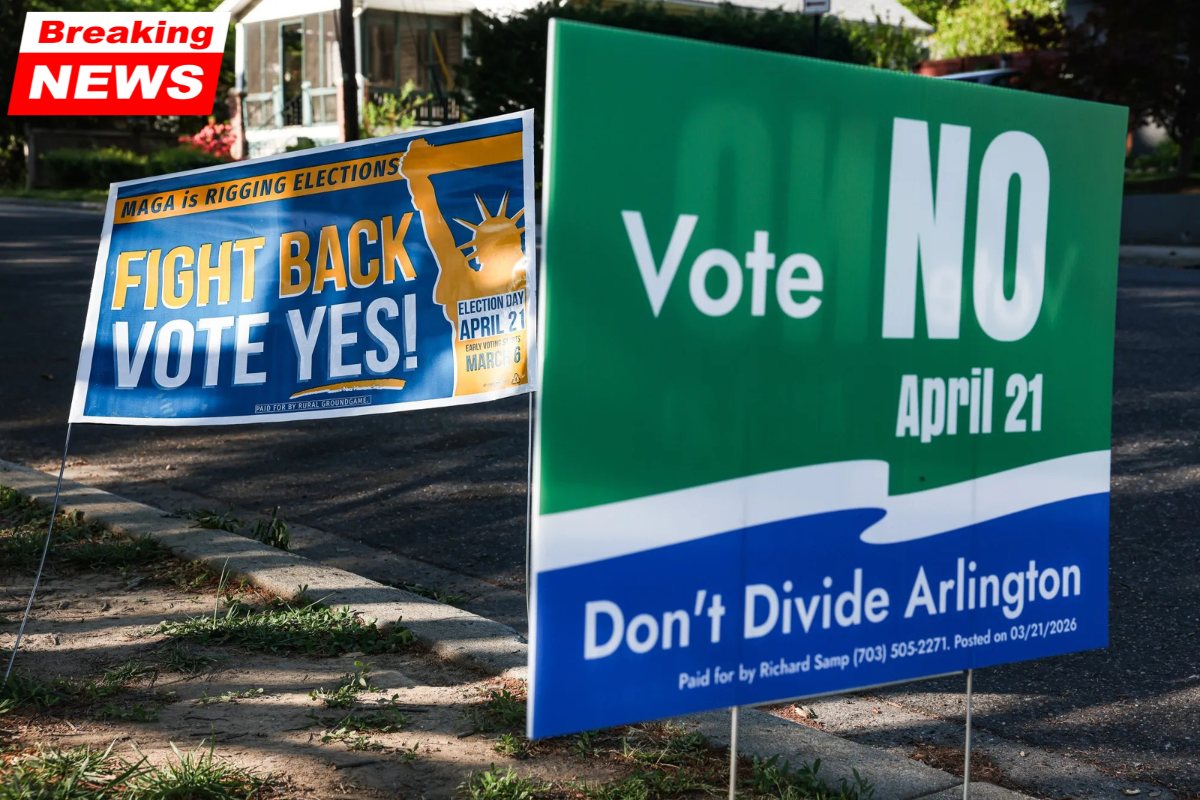
A major legal fight has broken out in Virginia just after voters approved a new redistricting plan. A state judge has stepped in to stop the process, creating uncertainty over the state’s political map and its impact on upcoming elections. The decision has sparked strong reactions from both Democrats and Republicans, showing how important and controversial redistricting has become across the United States.
Court Blocks Redistricting Referendum
On Wednesday, Judge Jack Hurley from Tazewell County ruled that the recent referendum could not move forward. He declared that all votes from Tuesday’s election were “ineffective” and stopped officials from approving or acting on the results.
The judge said the referendum broke several rules in the Virginia Constitution. According to him:
- It did not follow the required 90-day public notice period
- The wording of the ballot question was “misleading”
- The process used by lawmakers was not legally valid
Because of this, the new congressional maps cannot be used for now.
Democrats Plan to Fight Back
Virginia Attorney General Jay Jones strongly disagreed with the ruling. He announced that the state would appeal the decision immediately.
In his statement, he argued that voters had already made their choice and that a single judge should not be able to override the will of the people. Many Democrats see this referendum as an important step to balance political power in the state.
The plan had support from big Democratic figures like Barack Obama and Eric Holder, as well as Virginia Governor Abigail Spanberger.
Republicans Call It a Victory
Republicans, on the other hand, welcomed the court’s decision. The Republican National Committee (RNC), which helped challenge the referendum, called it a big win.
RNC Chair Joe Gruters said the plan was an unfair attempt by Democrats to gain more power by changing district boundaries. Republicans believe the new maps would weaken their voters’ influence, especially in rural and conservative areas.
What the Referendum Was About
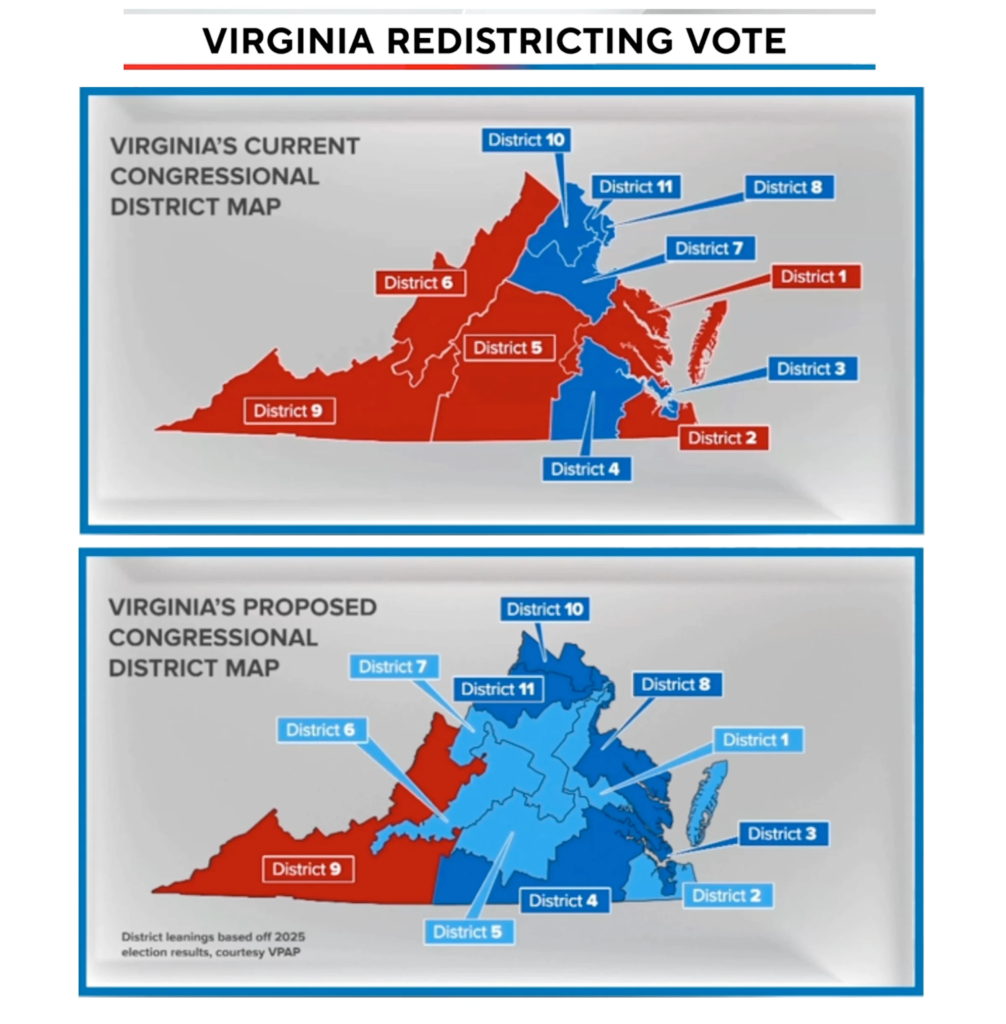
The referendum aimed to change Virginia’s constitution so lawmakers could redraw congressional districts. This would replace a system created in 2020 that used a bipartisan commission to handle redistricting.
Key points of the proposed changes:
- Lawmakers would regain control over drawing maps
- The current bipartisan system would be bypassed
- New maps would likely favor Democrats
The General Assembly had already passed a new map earlier this year.
If the plan had gone ahead, 10 out of Virginia’s 11 congressional districts would likely lean Democratic. Right now, the state has 6 Democrats and 5 Republicans in the House.
A Larger National Battle
Virginia is not alone. Redistricting fights are happening across the country, especially before midterm elections.
Examples include:
- Texas Republicans reshaping districts to benefit the GOP
- California voters approving changes backed by Gavin Newsom
- Missouri and North Carolina adjusting districts slightly
These efforts often lead to legal challenges, but so far, most have been allowed to continue. Even the U.S. Supreme Court has refused to block similar changes in other states.
Why Redistricting Matters
Redistricting decides how voters are grouped into districts, which directly affects election results. When one party controls the process, it can draw boundaries in a way that helps its candidates win more seats. This is often called gerrymandering.
Supporters of the referendum say it was needed to counter similar moves by Republican-led states. Critics argue it damages fair representation and weakens trust in the system.
The situation in Virginia shows how intense and complicated redistricting has become in American politics. While voters approved the referendum, the court’s decision has put everything on hold. Now, the final outcome will depend on higher courts and ongoing legal battles.
This case could also influence how other states handle redistricting in the future. As both parties continue to fight for an advantage, the bigger question remains—how to ensure fair representation while keeping the system transparent and constitutional.