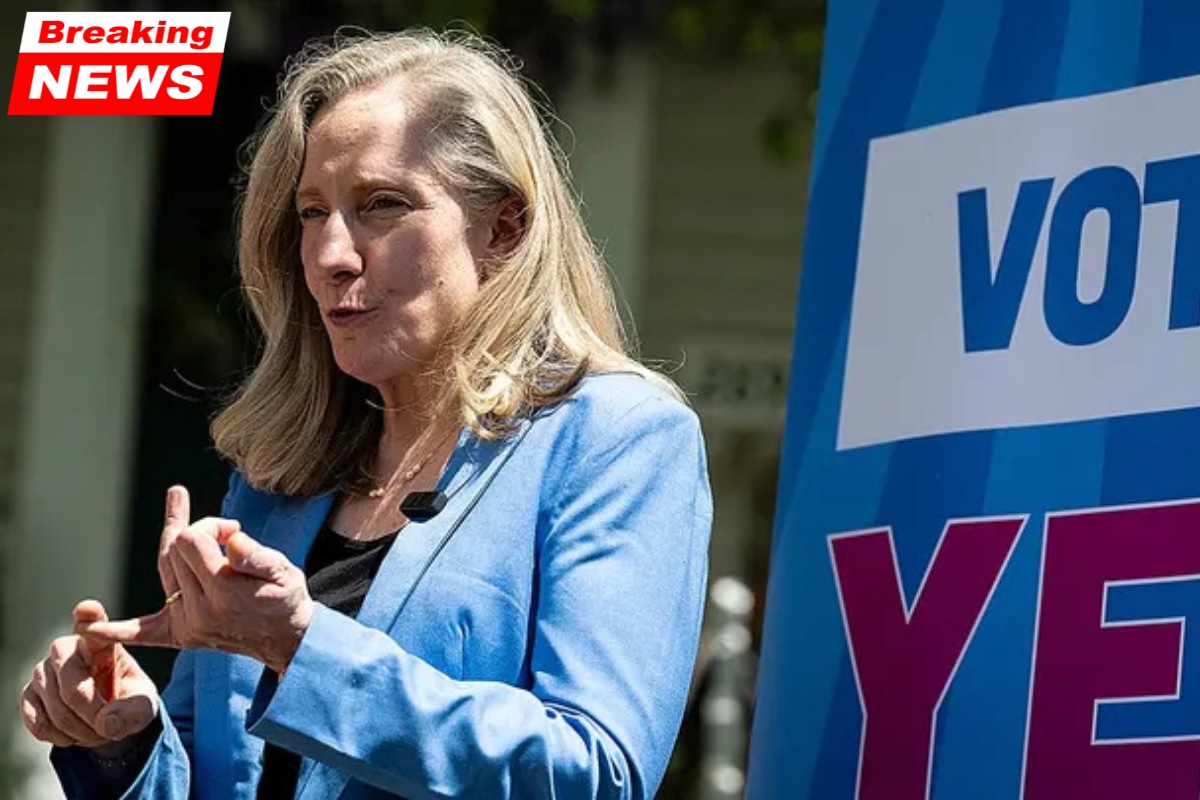
Democrats secured a major political victory as Virginia voters narrowly approved a high-stakes redistricting referendum. The decision could reshape the balance of power in Congress and significantly impact the upcoming midterm elections.
The Associated Press projected the result Tuesday evening, marking a turning point in the broader national fight over congressional district maps. At its core, the referendum temporarily shifts redistricting authority from a nonpartisan commission to the Democrat-controlled state legislature through 2030.
What the Referendum Does
The approved measure allows Virginia’s legislature to redraw congressional district maps, replacing the current independent system. This change could dramatically alter the state’s political landscape.
If implemented as expected, Democrats could expand their current 6–5 advantage in Virginia’s congressional delegation to a potential 10–1 majority.
That shift alone could deliver up to four additional Democratic-leaning U.S. House seats, a major boost as the party attempts to reclaim control of the chamber from Republicans, who currently hold a razor-thin majority.
Why This Matters Nationally
The Virginia vote is not happening in isolation. It is part of a much larger national strategy battle over redistricting, triggered in part by efforts tied to Donald Trump.
Trump had pushed for mid-decade redistricting, encouraging Republican-led states to redraw maps ahead of elections to strengthen GOP control in Congress.
Democrats argue that Virginia’s move is a direct response to those efforts, aimed at leveling the playing field.
Former President Barack Obama backed the referendum, urging voters to support it as a way to counter Republican advantages and protect fair representation.
Democratic Leaders Celebrate the Outcome
Virginia Governor Abigail Spanberger, who became the public face of the campaign, framed the result as a direct response to national political pressure.
She stated that voters rejected outside influence and chose to act through democratic means.
Similarly, Democratic National Committee Chair Ken Martin emphasized that voters refused to allow manipulation of congressional representation.
Democrats maintain that the measure is temporary and designed to preserve fairness in response to aggressive redistricting moves in other states.
Republicans Warn of Gerrymandering and Legal Battles
Republicans strongly opposed the referendum and immediately raised concerns about fairness and constitutionality.
Representative Richard Hudson argued that the close vote reflects Virginia’s status as a politically divided state and warned against what he called a severe partisan gerrymander.
Virginia GOP Chairman Jeff Ryer criticized the ballot language, claiming it misled voters and could make Virginia one of the most gerrymandered states in the country.
Former Governor Glenn Youngkin went further, calling the effort “immoral” and an “unconstitutional power grab.”
He urged the Supreme Court of Virginia to block the measure.
Legal Challenges Still Loom
Even though voters approved the referendum, the legal fight is far from over.
The Virginia Supreme Court previously allowed the vote to proceed after a lower court attempted to block it. However, lawsuits filed by groups including the Republican National Committee and the National Republican Congressional Committee remain unresolved.
These challenges could still prevent the new maps from taking effect, meaning the final outcome depends heavily on court decisions in the coming months.
A Heated Campaign with Massive Spending
The referendum campaign became one of the most intense political battles in Virginia in recent years.
Key highlights include:
- Massive fundraising gap: Pro-referendum groups outspent opponents roughly 3-to-1
- Over $70 million raised, much of it from undisclosed “dark money” sources
- High early voting turnout, reflecting strong public engagement
- Months of court battles and political clashes
Despite the funding advantage, the vote remained extremely close, underscoring deep divisions among voters.
Republican Counterarguments and Messaging
Republicans focused heavily on the argument that the new maps would distort representation.
Former Attorney General Jason Miyares criticized the proposal, claiming it would silence millions of voters and accusing Democrats of overreach.
Republicans also pointed to comments from Tim Kaine, who acknowledged that the new maps would not reflect the state’s actual partisan balance.
Their central message was simple:
A “yes” vote equals unfair maps, while a “no” vote protects fair representation.
The Bigger National Redistricting War
Virginia is just one battleground in a growing nationwide struggle over congressional maps.
Key developments across the U.S.:
- Texas: Redistricting push backed by Greg Abbott
- California: Voters passed Proposition 50, shifting map control to Democrats
- Missouri, Ohio, North Carolina: GOP-led redistricting efforts underway
- Utah: Court-approved map creates a Democratic-leaning district
- Indiana: Republicans blocked a Trump-backed redistricting plan
- Florida: Gov. Ron DeSantis planning new map push
At the center of this nationwide fight is the looming Supreme Court case Louisiana v. Callais, which could reshape how voting districts are drawn.
If the Court weakens parts of the Voting Rights Act, it could lead to widespread redrawing of majority-minority districts, potentially benefiting Republicans.
Key Facts Summary
| Category | Details |
|---|---|
| Referendum Outcome | Passed narrowly |
| Main Change | Legislature gains redistricting power until 2030 |
| Current Delegation | 6 Democrats – 5 Republicans |
| Potential Outcome | Up to 10 Democrats – 1 Republican |
| Seats at Stake | +4 Democratic-leaning House seats |
| Legal Status | Still under court challenge |
| Spending | $70M+, with 3:1 Democratic advantage |
| Key Issue | Gerrymandering vs fair representation |
| National Impact | Could influence House control |
The Virginia redistricting referendum marks a critical moment in the fight over political power in the United States. By approving the measure, voters have potentially handed Democrats a powerful tool to reshape congressional representation ahead of the midterms.
However, the narrow margin, ongoing legal challenges, and intense partisan divide show that the issue is far from settled. With similar battles unfolding across the country and a major Supreme Court decision on the horizon, redistricting is quickly becoming one of the defining political fights of this election cycle.
What happens next in Virginia could influence not just one state, but the balance of power in Washington for years to come.