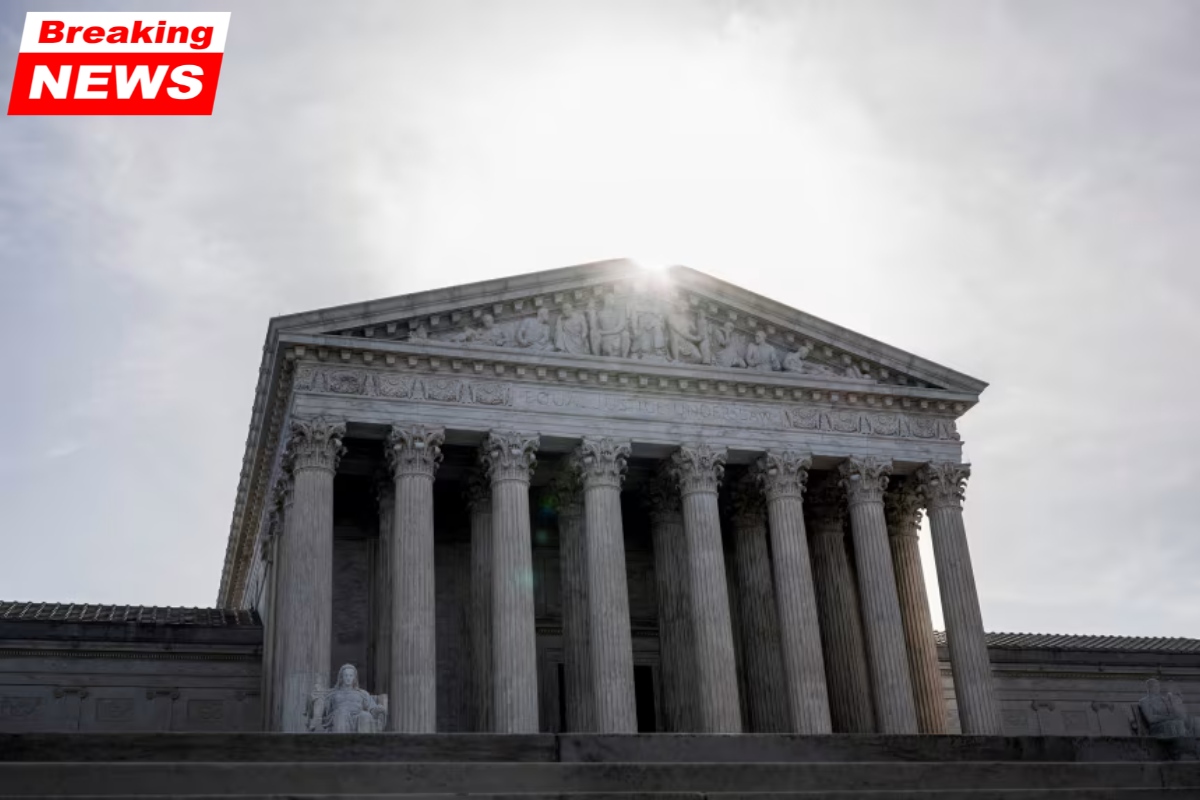
The U.S. Supreme Court has agreed to review a major case involving a Colorado law that requires preschools receiving public funding to accept children of same-sex couples. This sets up a significant constitutional debate over the balance between religious freedom and anti-discrimination protections for LGBTQ families.
At the same time, the court declined to hear a separate parental rights case from Massachusetts involving gender identity issues in schools. Together, these developments show how the court is increasingly becoming a central arena for disputes involving religion, education, and LGBTQ rights.
Colorado Preschool Law at the Center of the Case
In 2020, Colorado voters approved a universal preschool program funded by taxpayers. The program allows both public and private schools to participate, including religious institutions.
The law includes a nondiscrimination clause requiring participating schools to provide equal access regardless of sexual orientation, gender identity, religion, or race.
Two Catholic parishes and a family challenged this requirement, arguing that it violates the First Amendment’s Free Exercise Clause. They say the law forces them to act against their religious beliefs about marriage and family structure (Supreme Court filing).
At its core, the case asks whether religious schools can accept public funding while declining to follow certain nondiscrimination rules.
Religious Freedom vs Anti-Discrimination Laws
The dispute ties into long-standing legal precedent, especially Employment Division v. Smith. That ruling allows laws that affect religion as long as they apply broadly and do not target religious practices specifically.
Religious groups in the Colorado case argue that the preschool law is not neutral. They point to exceptions in the program, such as preferences for low-income children or children with disabilities, to show that the law does not apply evenly.
They also reference Obergefell v. Hodges, which legalized same-sex marriage nationwide. In that decision, the court acknowledged that religious groups may continue to disagree with same-sex marriage.
According to the Catholic parishes, the Constitution should protect that disagreement in real-world decisions, not just in principle (court brief).
A Conservative Court’s Likely Approach
The current 6–3 conservative majority on the court has often sided with religious institutions in recent years.
In several decisions, the court has ruled that religious schools cannot be excluded from public funding programs simply because they are religious. It has also emphasized that government rules must treat religious and non-religious groups equally.
This pattern suggests the court may be open to the arguments from the Catholic parishes. At the same time, the Justice Department warned that weakening nondiscrimination protections could limit enforcement of LGBTQ rights across the country (Justice Department brief).
A hearing is expected in the fall, with a decision likely next year.
Parental Rights Case Declined by the Court
While agreeing to hear the Colorado case, the court declined to take up a separate dispute involving parental rights and gender identity in schools.
The case involved a Massachusetts couple who said their child’s middle school began recognizing the student as genderqueer without informing them. The school allowed the child to use a different name, access multiple bathrooms, and use different pronouns at school.
The parents argued this violated their rights, citing moral and scientific concerns rather than religious ones.
By declining the case, the Supreme Court left lower court rulings in place and avoided directly addressing the issue for now.
Gender Identity Policies in Schools
The declined case reflects a wider debate across the United States about how schools handle gender identity.
Some state guidelines allow schools to respect a student’s gender identity without always notifying parents. These policies are often based on concerns that students may not feel safe sharing this information at home.
The student in the Massachusetts case identified as genderqueer, a term used for people whose gender identity does not fit within traditional male-female categories.
The Supreme Court has recently touched on similar issues. In a separate emergency ruling, the conservative majority indicated that religious parents challenging such policies may have a strong case under the Free Exercise Clause.
Key Issues at Stake
| Issue | Description | Potential Impact |
|---|---|---|
| Religious Freedom | Whether schools can follow religious beliefs while receiving public funds | Could expand protections for religious institutions |
| LGBTQ Protections | Enforcement of nondiscrimination laws in education | May reshape equal access policies |
| Legal Precedent | Future of Employment Division v. Smith | Could redefine First Amendment interpretation |
| Parental Rights | Role of parents in school gender identity decisions | Remains unresolved and evolving |
The Supreme Court’s decision to hear the Colorado preschool case sets up a major legal and cultural moment. The outcome will shape how far religious institutions can go in maintaining their beliefs while participating in public programs.
At the same time, the court’s refusal to hear the parental rights case shows a more selective approach, choosing when to engage directly with sensitive social issues.
The ruling in the Colorado case could influence not just education policy, but the broader balance between religious freedom and anti-discrimination protections in the United States.