
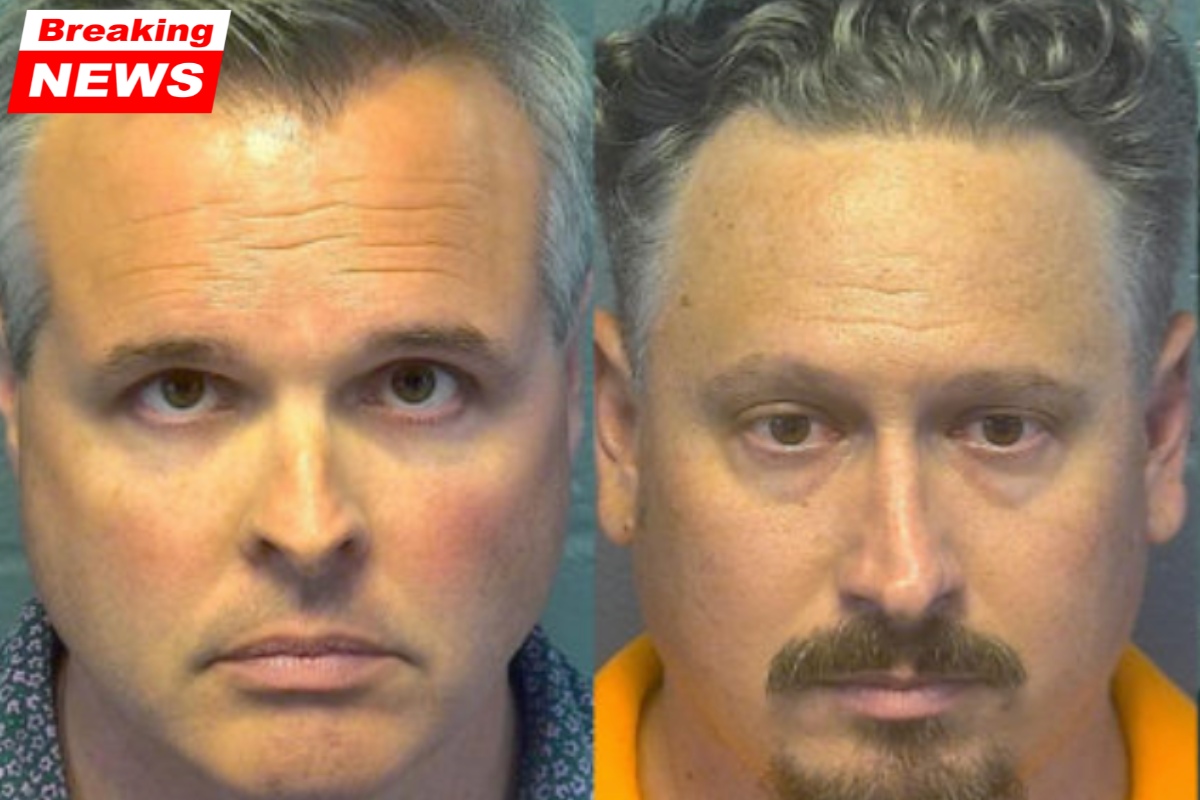
The IRS has quietly delivered a split verdict on one of the most controversial charter school sagas in the country—and it’s the kind that leaves everyone a little uneasy. Epic Charter Schools, once a political lightning rod in Oklahoma, gets to keep its nonprofit status. But the story doesn’t end there. Federal investigators are still circling millions of dollars in transactions that, frankly, don’t pass the smell test.
IRS Lets Epic Keep Nonprofit Status—But Flags Serious Concerns
In a January 2025 notice that’s now trickling into public view, the Internal Revenue Service essentially told Epic: you can stay a nonprofit, but we’re not done with you yet.
That’s not as reassuring as it sounds.
The agency identified what it calls “potential excess benefit transactions” between Epic and its founders’ for-profit arm, Epic Youth Services (EYS). Under Section 4958 of the Internal Revenue Code—you can dig into it directly on the IRS website (https://www.irs.gov/charities-non-profits/charitable-organizations/intermediate-sanctions-excess-benefit-transactions)—this is serious territory. It means insiders may have been paid more than fair market value.
And when that happens? The IRS doesn’t just wag a finger. It can impose penalties ranging from 25% to a staggering 200% of the questionable payments.
Bill Mahaffey, a tax attorney who’s spent years watching charter school finance models, put it bluntly: this is about forcing people to “disgorge” money they shouldn’t have received.
Follow the Money: Student Funds Under the Microscope
At the heart of the issue is something called “student learning funds.” On paper, these are meant to support education—supplies, curriculum, maybe a laptop.
But testimony in Oklahoma courtrooms paints a different picture.
According to a forensic audit presented by the Oklahoma State Auditor and Inspector (https://www.sai.ok.gov/), roughly $144 million in these funds flowed into accounts tied to EYS. Founders Ben Harris and David Chaney have argued those funds were legitimately theirs. The problem? They allegedly didn’t report them as income.
That’s where things get messy—legally and ethically.
Here’s a snapshot of the allegations tied to those funds:
| Category | Alleged Use |
|---|---|
| Student learning funds | $144 million routed to EYS accounts |
| Political contributions | Funded through school-related money |
| Personal expenses (CFO Josh Brock) | $1.1 million in credit card charges |
| Personal expenses (Chaney) | $375,000 charged |
| Out-of-state school costs | California charter school expenses covered |
If even part of this holds up, it raises a fundamental question: where does public education funding end and private gain begin?
The Legal Storm Isn’t Over
While the IRS continues its slow, methodical review, the state case is moving at a much more urgent pace.
Harris and Chaney are facing 15 criminal counts, including embezzlement, money laundering, and computer crimes. The case, filed back in 2022, is finally approaching a निर्णायक moment—whether it proceeds to full trial.
Their former CFO, Josh Brock, has already struck a plea deal and is cooperating with prosecutors. That alone shifts the dynamics significantly.
The case is being handled in Oklahoma County District Court, and records from the Oklahoma State Courts Network (https://www.oscn.net/) show the proceedings have stretched for years, partly due to the complexity of financial evidence.
And there’s a lot of it.
Inside the IRS Investigation: 1,100 Files and Counting
This isn’t a surface-level audit. The IRS has gone deep—really deep.
Public records reveal investigators have requested and reviewed more than 1,100 documents, including:
- Bank statements dating back over a decade
- Board meeting minutes
- Contracts with EYS and tech vendors
- Tax filings and internal financial reports
- Student learning fund records
- Even school brochures and governance policies
It’s the kind of exhaustive review you’d expect in a case where governance itself—not just transactions—is under scrutiny.
And that’s key. Because this isn’t just about money. It’s about whether Epic’s board exercised proper oversight.
Governance Failures—or Just Aggressive Business?
One of the more uncomfortable angles here is the role of board members.
Even if they didn’t personally profit, IRS rules say they can still be penalized if they approved—or failed to question—dubious arrangements.
Mahaffey explains it in plain terms: board members have a duty to review contracts and ensure fairness. If they don’t, they’re not off the hook.
This is where many charter schools across the U.S. are feeling heat. The model—nonprofit schools outsourcing operations to for-profit companies—has always lived in a gray area.
The U.S. Department of Education (https://www.ed.gov/) has previously flagged concerns about accountability in such setups, especially when public funds are involved.
Epic may just be the most high-profile example of that tension playing out.
Epic’s Internal Shake-Up
To be fair, the school didn’t sit still while all this unfolded.
In 2021, new board leadership—led by Paul Campbell—cut ties with the founders and opened the doors to investigators. That’s not a small move. It signals an attempt to reset governance and regain credibility.
But whether that’s enough to satisfy regulators—or the public—is still an open question.
Former finance deputy superintendent Jeanise Wynn said the school felt a sense of relief after the IRS confirmed its nonprofit status would remain intact. Still, she resigned in 2025 amid a budget crisis, adding another layer of instability.
What Happens Next?
Here’s where things stand right now:
| Issue | Status |
|---|---|
| IRS nonprofit status | Retained |
| IRS excess benefit probe | Ongoing |
| Potential IRS penalties | Pending determination |
| State criminal case | Awaiting trial decision |
| Internal governance reforms | Partially implemented |
So yes, Epic avoided the nuclear outcome—losing its tax-exempt status.
But the financial and legal exposure hasn’t gone away. Not even close.
If the IRS ultimately concludes that excess benefit transactions occurred, individuals—not the school—could face steep financial penalties. And depending on how the state case unfolds, criminal consequences could follow.
Zoom out for a second, and this case starts to look less like an isolated scandal and more like a stress test for the charter school model itself.
Can a publicly funded nonprofit safely rely on a for-profit operator without blurring ethical lines?
That’s the billion-dollar question—literally.
Because if Epic’s structure allowed insiders to extract outsized gains, regulators may start looking harder at similar arrangements nationwide.
And trust me, there are plenty.
Wrap-Up
Epic Charter Schools is in a strange limbo—cleared in one sense, but still under a cloud in another. The IRS didn’t shut the door; it just left it slightly open, with investigators still peering inside.
Meanwhile, the state’s criminal case is barreling forward, and that outcome could reshape everything—from financial liability to public perception.
For now, Epic survives. But the story? Far from over.






