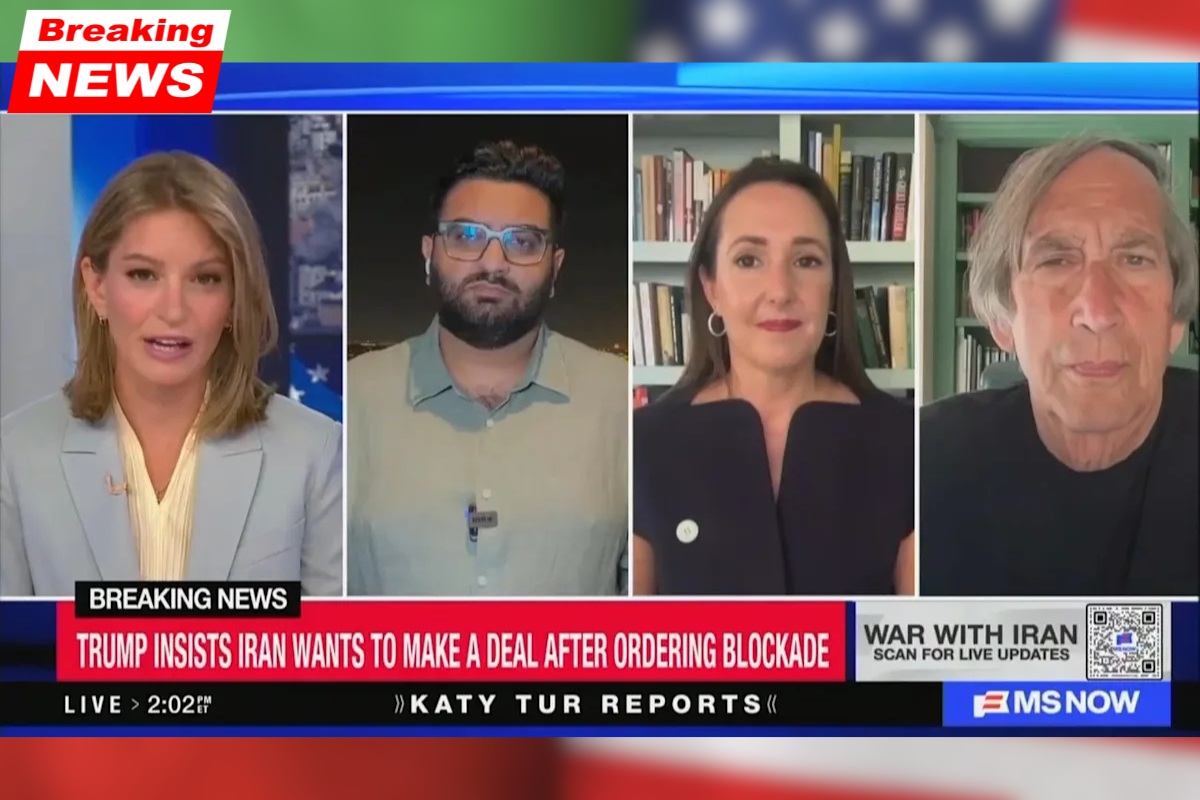
Tensions around the Strait of Hormuz are becoming more serious as global powers openly react to the ongoing situation. During a recent news segment, journalist Inzamam Rashid shared important updates, including a strong message from China directed at the United States.
Uncertainty Around the U.S. Blockade Plan
Speaking to anchor Katy Tur, Rashid explained that several U.S. Navy ships are currently positioned near the entrance of the Strait of Hormuz. However, he pointed out that there is still a lot of confusion about how this blockade will actually work in real life. He questioned whether the U.S. plans to stop and seize ships, or simply block entry and exit by maintaining a strong naval presence near Iran’s coastline. Iran and sit there and threaten any ships from leaving or coming in?” Rashid replied, adding:
There are big question marks about the actual logistical military operation, and hopefully some of your guests can clear a bit of that up. But right now we are currently in a state of, as you put it, Katie, who blinks first. It’s essentially a standoff, and yes, we already had an Iranian blockade on the overall Strait of Hormuz — a selective one, where they were allowing only selective vessels to pass through. Then now we’ve got this US blockade on ports on the coastline of Iran. And then also tonight, Iran has responded, saying that they will implement their own blockade on ports right across the Gulf states, just like this one behind me.
This is Jebel Ali port, one of the largest ports in the Middle East — a huge logistical hub, incredibly important for the UAE in particular. And so if Iran goes through with their retaliation of essentially blocking off ports around the Gulf, well, of course, that’s just going to have even further impact on the global economy.
But we are now in this situation where, essentially, if President Trump’s Navy vessels go towards the Iranian coastline, this could get very, very messy because, Katie, we could essentially see combat on that very narrow stretch of water where usually 20 percent of the world’s oil passes through. But for the past six weeks, that’s been pretty redundant. In fact, it’s only really been Iranian oil that’s been going out of Iran, and they’ve doubled their export numbers, mainly going to the likes of China.
China Issues Strong Warning
One of the most important developments is China’s response. According to Rashid, China has clearly stated that its ships will continue to travel through the Strait of Hormuz without interruption. Chinese officials emphasised that they have ongoing trade and energy agreements with Iran and intend to honour those commitments.
Iran, in retaliation, called the specific measures that President Trump introduced today, a few hours ago, ridiculous and laughable, and said that Iran very much still controls the Strait of Hormuz.
I think the big question is this: if we do get into some specific fighting as a result — if there will be attacks from Iran towards US Navy vessels and then retaliation from the US on the ports of Iran, and also some of their Navy assets there — then the ceasefire that we’re in, this fragile ceasefire, which is still going on for another nine days or so, will effectively break down. And there’s no doubt that fighting will resume.
All the while, we still see huge major impacts on the global economy. And now, with this move from both the US and potentially Iran tonight as well, there are just no real signs of it letting up.
The message from China also included a warning that other countries should not interfere in its affairs. Chinese authorities stressed that Iran controls the strait and has allowed their ships to pass, which they believe gives them the right to continue operations without outside pressure.
Growing Global Tension
This situation has added another layer of complexity to an already tense environment. With the United States enforcing a blockade under Donald Trump and China openly challenging it, the risk of conflict or misunderstanding has increased.
The Strait of Hormuz is extremely important for global trade, especially for oil and natural gas. Any disruption can impact fuel prices, supply chains, and economies around the world. Now, with multiple powerful countries involved, even a small incident could lead to bigger problems.