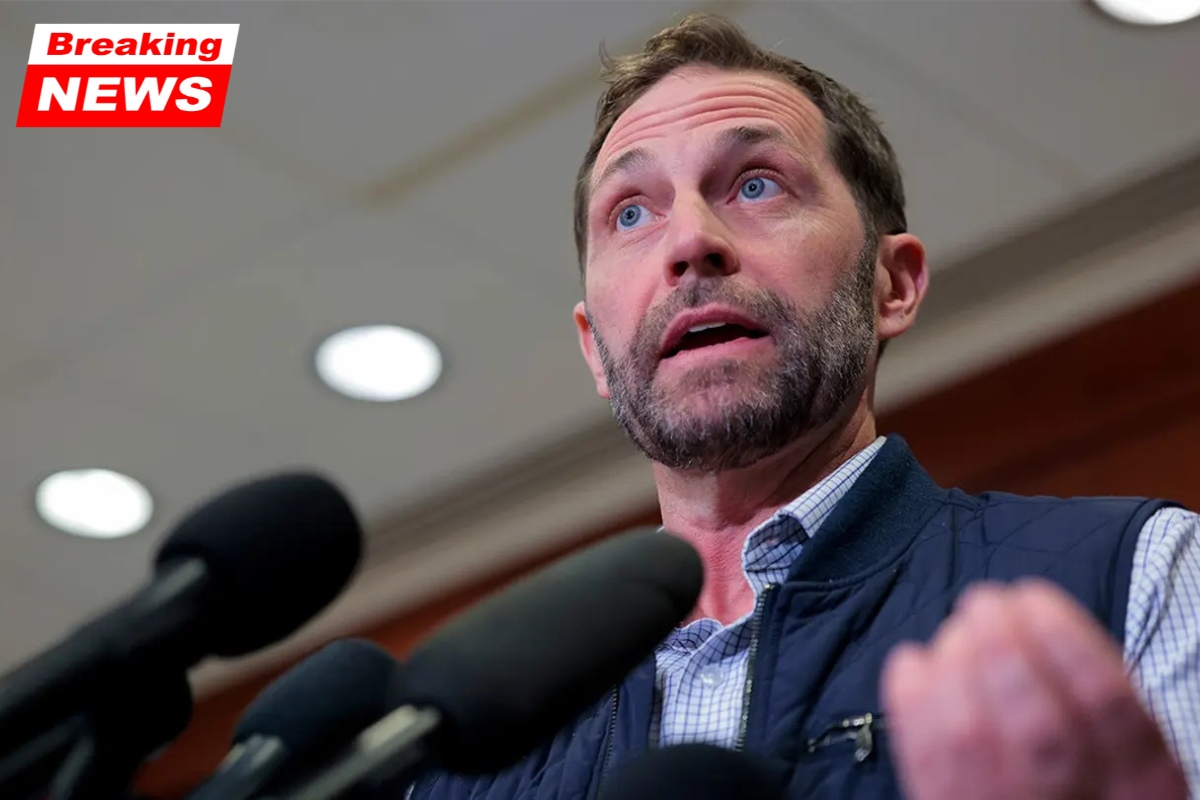
Rep. Jason Crow (D-Colo.) made waves on Tuesday when he stated that he was “taking names” and compiling a list of individuals within the Trump administration who should be held accountable.
This statement came after MS NOW’s Ari Melber pressed him on how Democrats were planning to respond to what MS NOW reported as an “enemies” list from the Trump Department of Justice (DOJ).
The report referenced Crow’s participation in a video urging U.S. military personnel to refuse orders that could be deemed illegal by the Trump administration.
Crow’s Response to Accountability and Oversight
The conversation began after Melber displayed a graphic of what MS NOW identified as the “enemies” list from the DOJ. In a pointed exchange, Melber questioned Crow about the actions Congress would take regarding officials such as Pam Bondi and Todd Blanche, who have been involved in controversial aspects of the Trump administration’s approach to law enforcement.
Melber pressed Crow on how Congress would respond to these individuals and the potential for selective prosecution within the DOJ.
Crow responded by emphasizing the importance of strong leadership and accountability in the current political climate. “We are taking names. I’m creating my own lists of people that need to have oversight and accountability,” Crow stated.
He further explained that it is vital for people within the administration to understand that they will not escape judgment if they violate the law or their constitutional oath. “You cannot escape it forever,” Crow warned.
Accountability and the Duty to Uphold the Constitution
The Democratic representative stressed that holding members of the Trump administration accountable is not just a right but a responsibility. He continued, “It’s our duty to make sure that we are enforcing the law, and we are upholding the guardrails of our democracy, and I will not shirk from that duty.”
Crow’s strong language and commitment to accountability reflect the ongoing tension between lawmakers and the Trump administration regarding the rule of law and oversight. His comments also highlight the broader concern about potential abuses of power within the administration and the need for Congress to take a proactive stance in ensuring that officials are held to account.
The Controversial Video and Military Defiance
Crow’s comments were linked to a controversial video posted by a group of Democratic lawmakers in November 2025. The video called on U.S. military personnel to refuse illegal orders from the federal government, specifically urging members of the military and intelligence community to defy unlawful commands.
This video featured six prominent Democratic lawmakers, including Crow, Sen. Elissa Slotkin (D-Mich.), Sen. Mark Kelly (D-Ariz.), and Reps. Chris Deluzio (D-Pa.) and Chrissy Houlahan (D-Pa.), as well as Maggie Goodlander of New Hampshire.
The video stirred considerable debate, as it raised concerns about defying executive orders in situations where they may conflict with legal or ethical standards. The Justice Department launched an investigation into the video, attempting to indict the lawmakers for their actions.
However, a grand jury in Washington, D.C., ruled against the DOJ’s attempt to proceed with charges in February 2026, ultimately deciding not to indict the group of lawmakers involved.
Legal and Political Fallout from the DOJ’s Investigation
The investigation into the video and the subsequent grand jury ruling raised important questions about free speech, the role of the military in political matters, and the limits of executive authority.
Crow and his colleagues in the video argued that military personnel should have the moral obligation to defy illegal orders, a principle grounded in historical precedents such as the Nuremberg Trials.
Their stance reflects a broader conversation about the proper relationship between the military, elected officials, and the rule of law.
Rep. Jason Crow’s commitment to holding members of the Trump administration accountable reflects the ongoing tensions within the U.S. government regarding issues of law enforcement, military defiance, and constitutional integrity.
Crow’s “list” of individuals who need to be held accountable is a clear indication that Democratic lawmakers are focused on oversight and accountability, especially in the context of controversial actions by administration officials.
The debate surrounding the military’s role in defying illegal orders will likely continue to shape political discourse, with implications for both the executive and legislative branches of government. As Crow pointed out, “accountability will come, sooner or later,” and it is clear that the push for transparency and justice remains at the forefront of Congressional priorities.