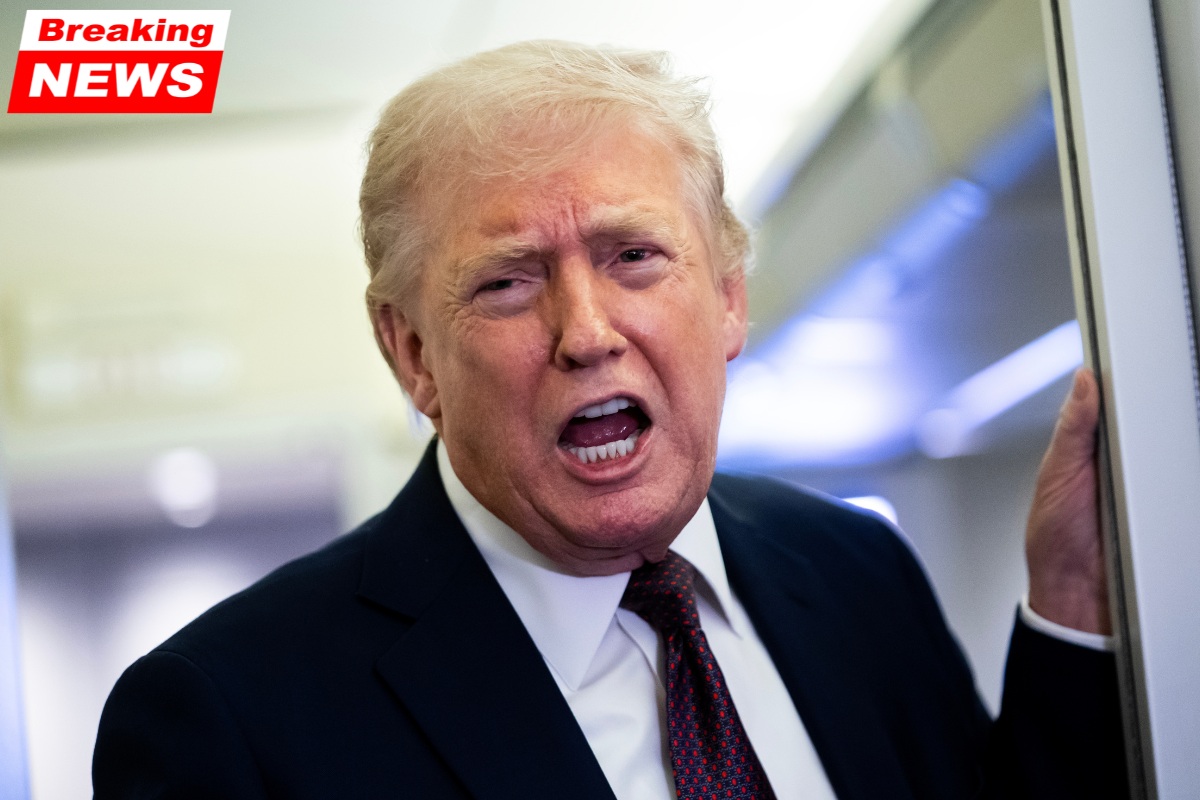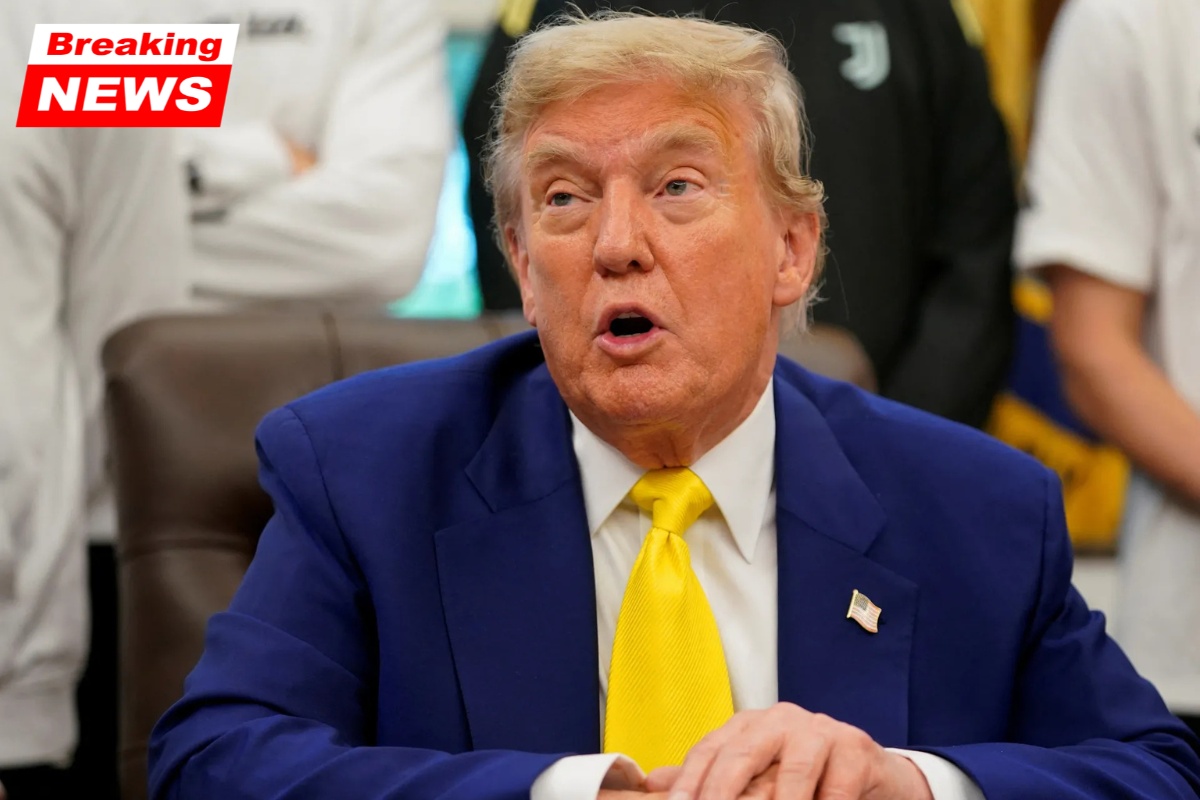
In a dramatic turn of events, President Donald Trump announced at 6:32 PM US Eastern time on Tuesday that he was suspending his planned bombing of Iran, just 90 minutes before the deadline he had set for 8 PM.
The move came after Trump had issued a stark warning earlier in the day, stating that “a whole civilization will die tonight” if Tehran did not comply with his demands. Minutes after Trump’s announcement, air raid sirens sounded across Israel, signaling the start of missile strikes from Iran.
Pakistan’s Diplomatic Intervention
Trump credited Pakistan for brokering the temporary halt to military action, naming Prime Minister Shehbaz Sharif and Field Marshal Asim Munir for their diplomatic efforts. The suspension of U.S. military action came with one key condition: Iran had to **reopen the Strait of Hormuz, a vital shipping route for global oil transport.
Trump’s statement on Truth Social read:
“Based on conversations with Prime Minister Shehbaz Sharif and Field Marshal Asim Munir, of Pakistan, and wherein they requested that I hold off the destructive force being sent tonight to Iran, and subject to the Islamic Republic of Iran agreeing to the COMPLETE, IMMEDIATE, and SAFE OPENING of the Strait of Hormuz, I agree to suspend the bombing and attack of Iran for a period of two weeks.”
Iran’s Response and Temporary Ceasefire
In response, Iran’s Foreign Minister, Abbas Araghchi, confirmed the tentative agreement and thanked Pakistan for its last-minute intervention. Araghchi wrote:
“If attacks against Iran are halted, our Powerful Armed Forces will cease their defensive operations.” He also mentioned that, for the next two weeks, safe passage through the Strait of Hormuz would be coordinated with Iran’s Armed Forces, with due consideration of technical limitations. Iran’s Supreme National Security Council indicated that the ceasefire could be extended if further negotiations are successful, with discussions set to take place in Islamabad.
Israel’s Reaction and Missile Strikes
Despite the ceasefire announcement, Israel was hit with a wave of incoming strikes almost immediately. Mediaite reported that air raid alerts began sounding in Tel Aviv just minutes after Trump’s post.
One reporter live from Tel Aviv described the missile strikes, including the interception of an Iranian missile, with shrapnel landing outside Jerusalem. He also reported cluster bombs exploding over Tel Aviv, and by the time of his report, at least seven missiles had been counted, with one missile reportedly failing mid-flight.
While Israel has reportedly agreed to the ceasefire, no official statement has been issued. Israeli officials, however, expressed dissatisfaction with Iran’s ten-point proposal, feeling that the terms did not adequately address military objectives before agreeing to the pause.
Despite this, Israeli officials acknowledged that the decision to suspend military action was Trump’s to make and that they would adhere to the ceasefire terms.
The Broader Context of the Conflict
This conflict began on February 28, when Israel and the United States launched a joint military offensive against Iran. Both Trump and Israeli Prime Minister Benjamin Netanyahu argued that the offensive was necessary to eliminate Iran as a regional threat and prevent it from acquiring nuclear weapons.
However, many legal experts have described the offensive as an unprovoked attack and a violation of international law.
The human toll of the conflict has been significant. According to reports, 2,076 people have been killed in Iran, and 28 more deaths have occurred in nearby Gulf states. In addition, 13 U.S. military personnel have died, and 26 people have been killed in Israel.
The economic consequences have also been severe, with Iran restricting traffic through the Strait of Hormuz, which handles nearly 20% of the world’s oil and gas. This disruption has led to a sharp rise in fuel prices worldwide, drawing domestic criticism toward Trump, even from his conservative base.
Scrutiny of Trump’s Strategy
Trump’s strategy regarding the Strait of Hormuz has been met with increasing scrutiny due to its economic consequences. Experts are now questioning how durable the ceasefire will be, particularly regarding Israel’s compliance.
Trita Parsi, a foreign policy expert at the Quincy Institute for Responsible Statecraft, noted that while the U.S. has the ability to restrain Israel, doing so could carry significant political risks for Trump. Parsi commented:
“I don’t think that these Israelis actually can sustain themselves in a war with Iran without active American support. And if they’re doing it against American wishes, then, obviously, they would take a huge risk of seeing potentially the United States stay out of that war.”
Parsi also noted that the scenario of Israel facing Iran alone is something that Israeli officials would likely seek to avoid.
Trump’s Optimism Amidst the Chaos
Despite the volatile situation, Trump declared victory, calling the announcement of the ceasefire a “double-sided CEASEFIRE.” He claimed that, “Almost all of the various points of past contention have been agreed to between the United States and Iran.”
The President’s claim of success comes amid a tense situation in which the full implications of the ceasefire and the diplomatic agreement remain unclear. As negotiations continue, all eyes will be on whether the ceasefire holds and if further talks in Islamabad can lead to a lasting resolution.
Table Summary
| Topic | Details |
|---|---|
| Ceasefire Announcement | President Trump suspends planned bombing of Iran after diplomatic intervention by Pakistan. |
| Pakistan’s Role | Prime Minister Shehbaz Sharif and Field Marshal Asim Munir brokered the ceasefire with the condition that Iran reopens the Strait of Hormuz. |
| Iran’s Response | Iran agrees to a two-week ceasefire and safe passage through the Strait of Hormuz, contingent on further negotiations. |
| Missile Strikes on Israel | Israel faces a wave of missile strikes shortly after the ceasefire announcement, with some missiles intercepted. |
| Human Cost | Over 2,000 deaths in Iran, 28 in Gulf states, 13 U.S. military casualties, and 26 deaths in Israel. |
| Economic Impact | Disruption of traffic in the Strait of Hormuz causes a rise in global fuel prices and domestic backlash against Trump. |
| Expert Opinions | Trita Parsi questions Israel’s ability to fight Iran without U.S. support and its potential consequences for Trump. |
| Trump’s Optimism | Trump calls the ceasefire a victory, claiming that most points of contention have been agreed to between the U.S. and Iran. |
The Future of the Ceasefire
As the ceasefire unfolds, there are significant questions regarding its durability, particularly in terms of Israel’s compliance and Iran’s ability to meet the terms set by the United States. Despite Trump’s optimism, the human toll and economic consequences of the conflict remain stark reminders of the complex geopolitical landscape in the Middle East.
The coming weeks will be crucial in determining whether this fragile peace can hold, or whether tensions will once again escalate into full-scale conflict.