
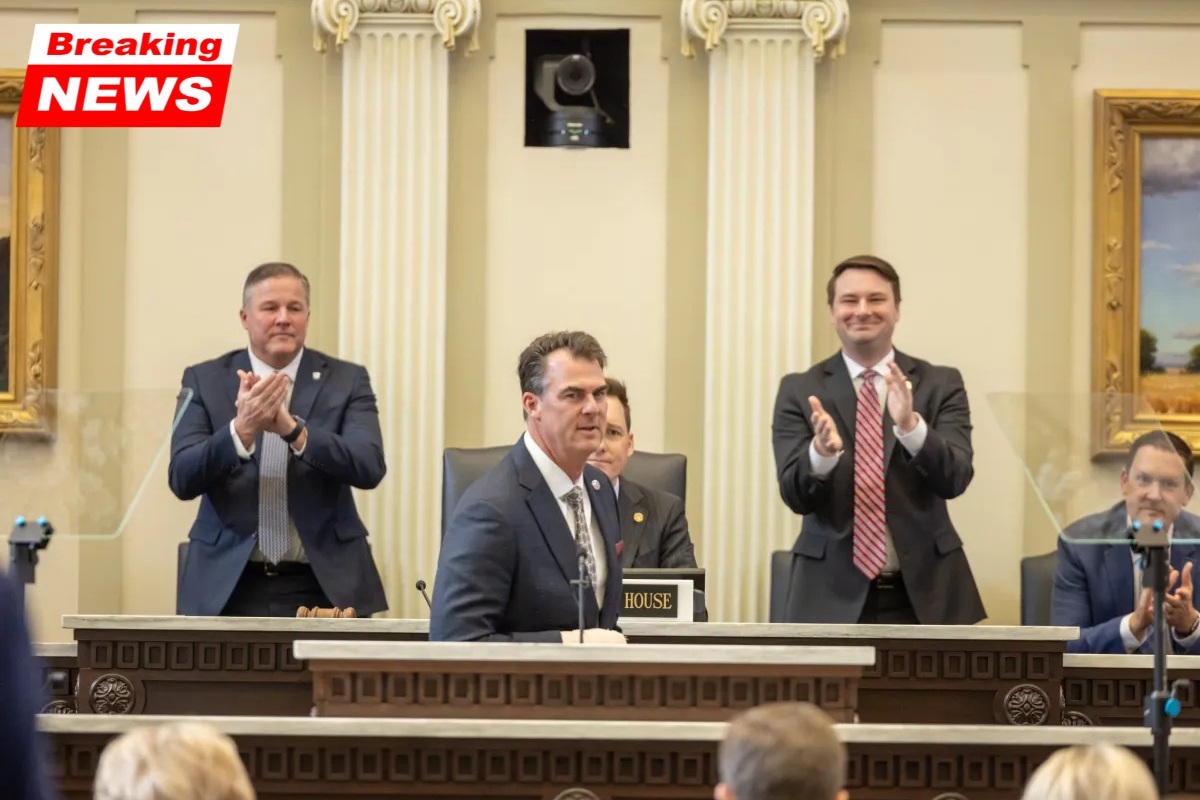
As Oklahoma’s August primary runoff election approaches, Republican lawmakers are working to push several state questions onto the ballot, many of which are tied to Governor Kevin Stitt’s priorities in his final term.
These state questions, which include proposals regarding Medicaid expansion, property tax assessments, and voter identification laws, are set to appear on a primary runoff ballot that is expected to have a Republican-dominated turnout.
The Push for State Questions in an Unconventional Election
Unlike traditional election cycles, where state questions typically appear on November general election ballots, Republicans in Oklahoma are seeking to place these issues on the August 2026 primary runoff ballot, which historically sees lower voter turnout.
This unusual move is aimed at securing support from the GOP base, which will be highly engaged due to multiple Republican gubernatorial candidates. The primary on June 16, 2026 is expected to result in a runoff election on August 25, making the runoff a critical point for both the gubernatorial race and state question votes.
Key State Questions Under Consideration
Among the most notable state questions on the ballot are several related to Medicaid, property taxes, and voter identification:
- Medicaid Expansion:
Following State Question 802 in 2020, which narrowly approved Medicaid expansion in Oklahoma, two new measures could curtail the program.- HJR 1067 would allow the state to refuse funding for Medicaid if the federal government’s matching rate falls below 90%.
- HB 4440 would remove Medicaid expansion from the state constitution, making it easier for lawmakers to modify or eliminate it.
- Property Tax Limitations:
- SJR 39 proposes to reduce the rate at which property tax assessments can grow, capping homestead property tax growth to 1% per year, down from 3%. This change would also cap annual growth for other real property at 3%.
- Voter Identification:
- SJR 47 seeks to turn Oklahoma’s existing voter ID law into a constitutional amendment, strengthening the requirement that voters provide identification at the polls, which was first approved by voters in State Question 746 in 2010.
These state questions are being framed as necessary reforms, but they have also raised concerns from some lawmakers and political groups about the potential impact on voter engagement and democratic participation.
The Impact of Low Turnout and Party Strategy
Andy Moore, the CEO of civics group Let’s Fix This, has expressed concerns about the low turnout expected in the August primary runoff, where participation often hovers around 10% to 12%. Moore suggests that the timing of these state questions, coupled with the closed primary system, could undermine democratic processes by pushing issues onto the ballot during a time when fewer voters are paying attention.
Democratic leaders such as House Democratic Leader Cyndi Munson have criticized the timing and nature of these state questions. Munson suggested that the GOP is deliberately targeting conservative voters and trying to undo the will of the people, particularly regarding Medicaid expansion, which was passed by voters in 2020.
“They’re strategically working really hard to undo the will of the people,” Munson said, referencing Republican efforts to challenge voter-approved initiatives like Medicaid expansion and medical marijuana legalization.
Challenges to the Initiative Petition Process
This push for state questions in a primary runoff also highlights growing tensions around the initiative petition process in Oklahoma. Recent Republican-led proposals have made it more difficult for citizens to gather signatures to place state questions on the ballot.
For example, State Question 836, which sought to establish open primaries, failed to qualify for the ballot after falling short of the required number of signatures due to new laws making it harder to verify signatures.
These legislative actions, alongside attempts to fast-track certain state questions, have prompted accusations that the Republican-controlled Legislature is trying to restrict public input and concentrate power in the hands of a small group of voters.
Bipartisan Efforts to Streamline Elections
Despite the push for state questions in the primary runoff, Oklahoma has seen some bipartisan efforts to streamline the election process and expand early voting. However, these reforms stand in contrast to the Republican-led initiatives that aim to place controversial state questions on the August ballot, further complicating the state’s election calendar.
Summary Table
| Key Event | Details |
|---|---|
| State Questions on Ballot | Medicaid, property taxes, voter identification |
| Election Date | August 25, 2026, primary runoff election |
| State Questions to Be Considered | Medicaid funding changes, property tax caps, constitutional amendment for voter ID |
| Turnout Expectations | Historically low, with participation expected to range from 10%-12% |
| Republican Influence | GOP-driven ballot initiatives likely to sway conservative voters |
| Concerns from Democrats | Criticism of the timing and impact of state questions |
A Critical Election Cycle Ahead
With Oklahoma’s August primary runoff just months away, the state’s political landscape is gearing up for a heated battle over key state questions. Whether voters will approve the proposals regarding Medicaid, property taxes, and voter identification remains to be seen. As the debate continues, one thing is clear: the decisions made in the next few months will shape the future of the state’s laws and the role of voters in the democratic process.






