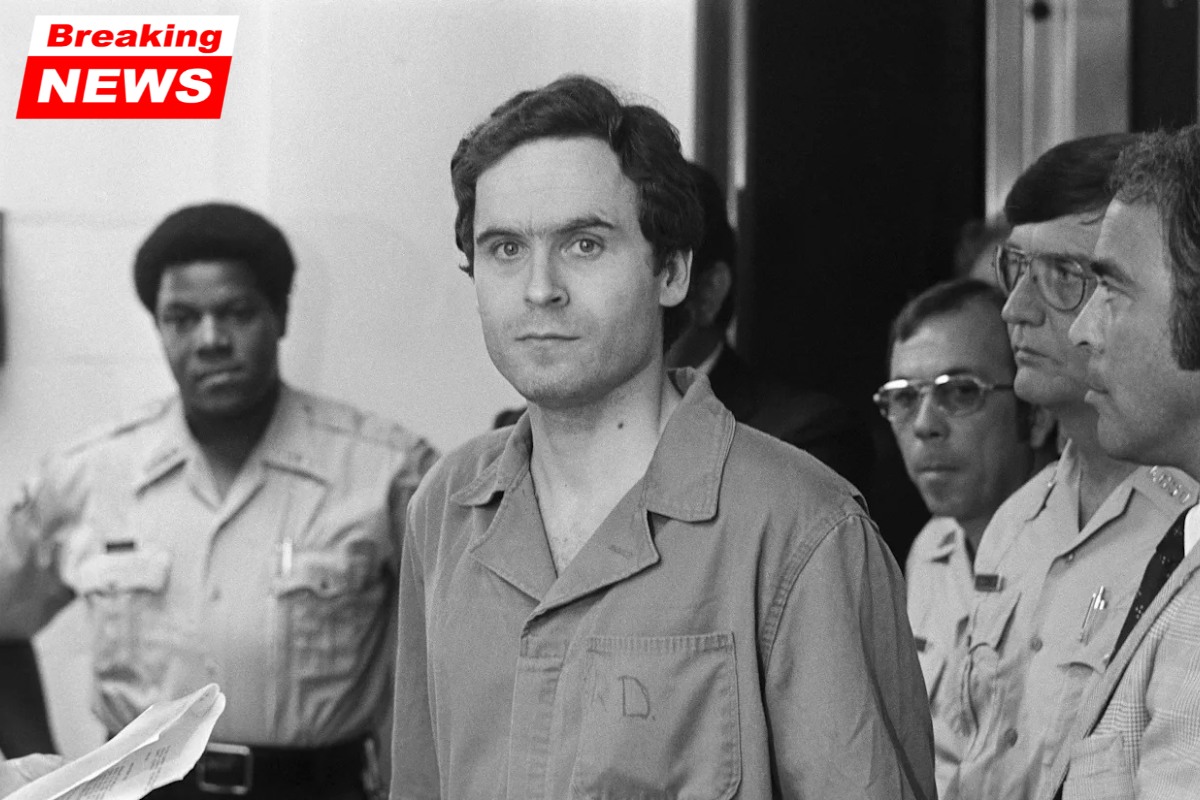
New DNA testing has officially confirmed that Ted Bundy was responsible for the 1974 murder of Utah teenager Laura Ann Aime. The case, which remained unresolved for over five decades, has now been definitively linked to one of the most notorious serial killers in U.S. history.
The announcement was made by local authorities in Salt Lake City, bringing long-awaited answers to a case that had haunted investigators and the victim’s family for 51 years.
Key Details at a Glance
| Aspect | Details |
|---|---|
| Victim | Laura Ann Aime (17 years old) |
| Year of Crime | 1974 |
| Location | American Fork Canyon, Utah |
| Perpetrator | Ted Bundy |
| Breakthrough | Modern DNA testing |
| Status | Case now officially solved |
What Happened to Laura Ann Aime?
Laura Ann Aime disappeared on Halloween night in 1974 after leaving a party alone to visit a nearby convenience store. She never returned home.
About a month later, hikers discovered her body along a highway in American Fork Canyon. Authorities reported that she had been bound, beaten, and left without clothing. Evidence suggested she may have been kept alive for several days following her abduction.
Her death shocked the local community and remained one of Utah’s most disturbing unsolved cases for decades.
How DNA Evidence Solved the Case
Although investigators had long suspected Ted Bundy, they lacked conclusive forensic proof at the time. Bundy himself had reportedly acknowledged involvement before his execution in 1989, but that admission alone was not enough to officially close the case.
Advancements in DNA technology allowed investigators to re-examine evidence. The new testing provided definitive confirmation, finally closing the case after more than half a century.
This breakthrough highlights how modern forensic science continues to solve cold cases that were once thought impossible to resolve.
Who Was Ted Bundy?
Ted Bundy is widely regarded as one of the most infamous serial killers in American history. He is linked to the deaths of at least 30 women and girls across multiple states during the 1970s.
His crimes spanned locations such as Washington, Utah, Idaho, and Colorado, often targeting young women, including college students. Bundy’s outward charm and intelligence made him particularly unsettling, as he did not fit the typical image of a violent criminal.
At the time of Laura Aime’s murder, Bundy was studying law at the University of Utah.
Bundy’s Arrest and Escapes
Bundy was first arrested in 1975 after police discovered suspicious items in his vehicle, including rope, handcuffs, and a ski mask.
In 1976, he was convicted of kidnapping and assault in Utah. However, his criminal story took an even more dramatic turn in 1977 when he escaped custody twice.
During one escape in Aspen, Colorado, he jumped from a courthouse window. After being recaptured, he later escaped again by breaking through a jail ceiling.
He then fled across the country, eventually arriving in Florida, where his crimes continued.
The Final Crimes and Capture
In early 1977, Bundy carried out one of his most infamous attacks at a sorority house at Florida State University. He killed two women and severely injured others.
Shortly after, he abducted and murdered 12-year-old Kimberly Leach, believed to be his final victim.
Bundy was eventually arrested in Florida after being pulled over while driving a stolen vehicle. He was later convicted and executed in 1989.
The Impact on the Victim’s Family and Community
Laura Ann Aime’s family described her as a free-spirited teenager who loved the outdoors and found joy in life’s simple moments.
Local authorities acknowledged that while the DNA confirmation brings some measure of resolution, it cannot erase decades of grief. Officials emphasized that the goal was not just closure, but also recognition of the victim and the pain endured by her family.
The case serves as a reminder of the lasting impact of violent crime and the importance of continued efforts to seek justice, even decades later.
Why This Case Matters Today
This case underscores the growing importance of DNA technology in modern criminal investigations. Cold cases across the United States are increasingly being revisited with advanced forensic tools, leading to long-overdue answers.
It also reinforces the historical scope of Ted Bundy’s crimes, showing that even decades after his execution, new details about his victims continue to emerge.
For law enforcement, the resolution of this case represents both a scientific achievement and a commitment to justice that does not expire with time.
The confirmation that Ted Bundy was responsible for Laura Ann Aime’s 1974 murder closes a painful chapter that remained open for more than 50 years. While the outcome cannot undo the tragedy, it provides long-awaited clarity and accountability.
This breakthrough demonstrates the power of modern forensic science and the persistence of investigators who continue to pursue truth, no matter how much time has passed.