
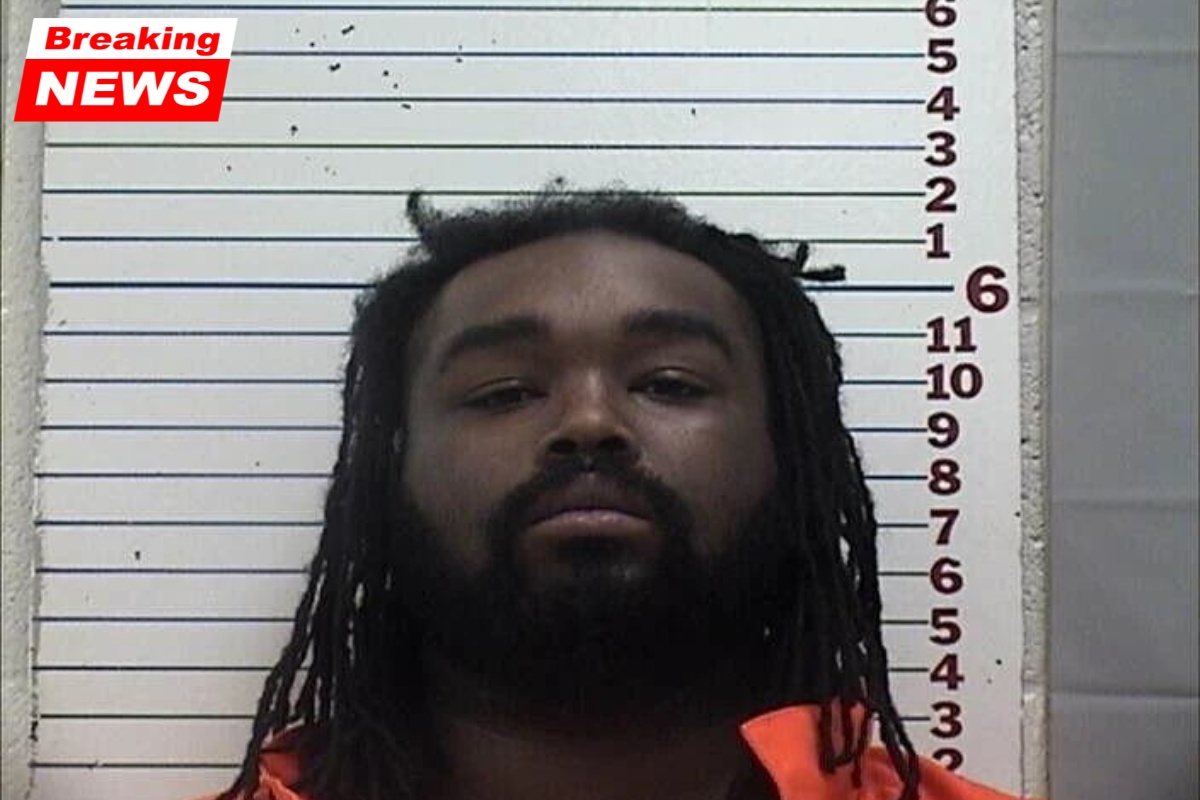
What started as a night out at a Lawton bar has now turned into a murder case—with surveillance footage, conflicting statements, and a missing weapon all at the center of it.
What Happened at Red Dirt Reloaded
The shooting took place on March 21 at Red Dirt Reloaded Bar and Grill, leaving one person dead and three others injured.
The victim has been identified as Terrell Roberts.
Now, nearly two weeks later, police say they’ve identified and arrested the man they believe is responsible: 27-year-old Juan Edward Johnson.
The Charge—and What It Means
Johnson is facing second-degree murder, a serious felony that typically implies:
- Intent to cause serious harm
- Actions showing a disregard for human life
- But not necessarily premeditated planning
If convicted, he could face up to life in prison.
He’s currently being held on a $750,000 bond, with a preliminary hearing set for April 23.
Surveillance Footage: A Key Piece of Evidence
According to investigators, security video from inside the bar played a major role in identifying Johnson.
Police say the footage shows:
- Johnson present at the scene
- Firing a weapon in the direction of Roberts
That kind of visual evidence can be powerful in court—especially when paired with witness accounts.
Johnson’s Statement—and the Inconsistencies
When questioned, Johnson admitted to having a 9mm handgun that night—but claimed he only fired it in response to another armed individual.
His version of events:
- He saw someone else with a gun near Roberts
- That person allegedly fired first
- He fired in response
But investigators say his story didn’t hold steady.
Here’s how it reportedly changed:
| Version | Claim |
|---|---|
| Initial | Gun was at his residence |
| Later | Driver who brought him had the gun |
| Final | He threw the gun into a creek |
That shifting narrative is now a central issue for prosecutors.
The Missing Weapon
Johnson ultimately told police he threw the gun out of a vehicle window into a creek near West Gore Boulevard and Northwest 53rd Street.
Officers searched the area for about 90 minutes—but came up empty.
That leaves a gap in the case:
- No recovered weapon
- No ballistic confirmation (at least publicly)
- Greater reliance on video and testimony
Missing weapons aren’t unusual in cases like this—but they do add complexity.
Additional Charge: Gun in a Bar
Beyond the murder charge, Johnson also faces a misdemeanor for carrying a weapon in a place where alcohol is served.
In Oklahoma, that alone is illegal in many circumstances—even before any violence occurs.
What Investigators Are Likely Building
From what’s been released, the case appears to hinge on three pillars:
| Evidence Type | Role |
|---|---|
| Surveillance footage | Places Johnson at scene, allegedly firing |
| Statements | Highlight inconsistencies in his account |
| Circumstantial evidence | Timeline, presence, behavior after shooting |
Without the weapon, prosecutors will likely lean heavily on video and credibility—especially the contrast between Johnson’s claims and what footage shows.
The Bigger Question: Self-Defense or Not?
Johnson’s claim that someone else fired first introduces a key legal question: self-defense.
For that argument to hold, his legal team would need to establish:
- He reasonably believed he was in immediate danger
- His response was proportionate
- He did not escalate the situation
If prosecutors can show otherwise—especially through video—that defense becomes much harder to sustain.
A Scene That Escalated Fast
Four people shot. One dead.
Incidents like this often unfold in seconds—crowded environments, alcohol involved, multiple individuals, and very little time to process decisions.
That makes reconstructing exactly what happened both critical and challenging.
What Happens Next
The next major step is the preliminary hearing on April 23, where:
- Prosecutors will present initial evidence
- A judge will determine if there’s enough to proceed to trial
From there, the case could move toward:
- Plea negotiations
- Or a full jury trial
The Takeaway
Right now, the case against Juan Edward Johnson is built on what police say the cameras show—and how his own story has shifted.
But with no weapon recovered and claims of another shooter, this is likely to become a case defined by interpretation as much as evidence.
And in a courtroom, that’s where things often get complicated.






