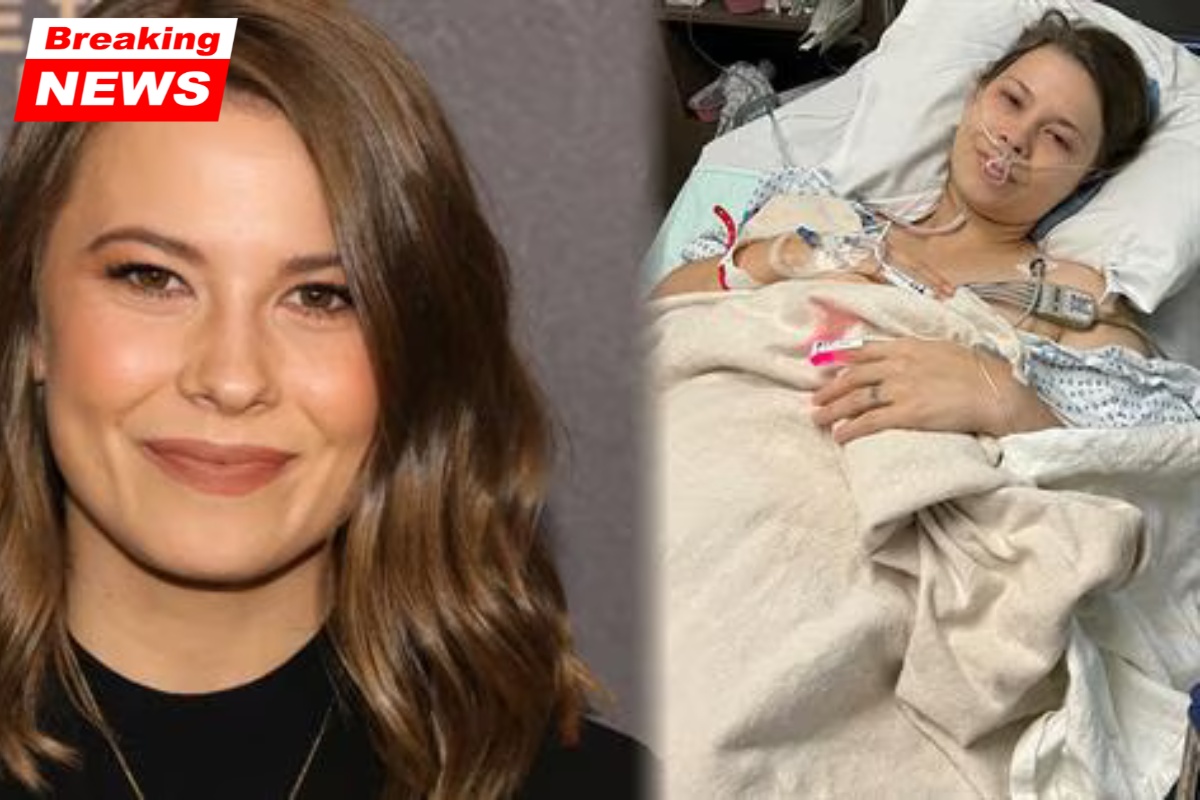
It wasn’t a headline anyone expected, but maybe that’s the point. Bindi Irwin—wildlife warrior, daughter of the late Steve Irwin, and someone the public has watched grow up—has quietly been fighting a battle most people never saw. And when she finally put it into words this week, it landed hard.
At just 27, she revealed she’s undergone surgery to remove more than 50 endometriosis lesions, along with a cyst, appendix, and hernia complications. Not a one-off procedure. A years-long, exhausting medical journey that she says left her in “inescapable pain.”
A Decade of Pain, Dismissed
Bindi’s story isn’t just about illness—it’s about how long it took to be taken seriously.
For ten years, she says, her symptoms were brushed off. Doctors reportedly told her the pain was “just part of being a woman,” a phrase that echoes far beyond her case. It’s something millions of women globally have heard in one form or another.
Endometriosis, despite affecting an estimated 1 in 10 women of reproductive age, often takes years to diagnose. According to the UK’s National Health Service (https://www.nhs.uk/conditions/endometriosis/) and organizations like the Endometriosis Foundation (https://www.endofound.org/), delayed diagnosis is one of the biggest barriers to treatment.
Bindi described feeling “trapped” in her own body—words that carry weight when you consider how active and outward-facing her life has always been.
What Exactly Did She Go Through?
Her Instagram post wasn’t vague. It was detailed, almost clinical in parts—and that’s what made it so striking.
Here’s a breakdown of what she revealed:
| Medical Issue | Details |
|---|---|
| Endometriosis lesions | Over 50 surgically removed |
| Chocolate cyst | Caused ovary to adhere to body wall |
| Additional procedures | Appendectomy + hernia repair |
| Duration of illness | ~10 years undiagnosed |
| Recent treatment window | Last 3 years |
That “chocolate cyst” she mentioned? Medically known as an ovarian endometrioma—it’s a severe form of endometriosis where cysts form on the ovaries, often filled with old blood. Painful doesn’t quite cover it.
What Is Endometriosis, Really?
It’s one of those conditions people think they understand… until they don’t.
Endometriosis happens when tissue similar to the lining of the uterus grows outside of it—on ovaries, fallopian tubes, even the bowel or bladder. Each month, that tissue behaves like it would during a menstrual cycle: thickening, breaking down, bleeding.
But here’s the catch—it has nowhere to go.
That trapped blood leads to inflammation, scar tissue, and often debilitating pain.
Common symptoms include:
| Symptom | Description |
|---|---|
| Pelvic pain | Often severe, especially during periods |
| Pain during/after sex | Deep internal discomfort |
| Heavy periods | Or irregular bleeding |
| Fatigue | Chronic exhaustion |
| Fertility issues | Difficulty conceiving |
And here’s the tricky part: the severity of symptoms doesn’t always match the severity of the condition. Someone with mild endometriosis might be in extreme pain, while another with advanced stages might barely notice symptoms.
The Bigger Issue: “Invisible Illness”
Bindi called it exactly what many patients feel it is—an invisible illness.
You can look fine. Smile for cameras. Go to work. Show up for life. Meanwhile, internally, your body is in constant distress.
That disconnect often leads to skepticism—from doctors, employers, even friends and family.
In the U.S., the Office on Women’s Health (https://www.womenshealth.gov/a-z-topics/endometriosis) has repeatedly highlighted how underdiagnosed and under-discussed the condition is, especially compared to its prevalence.
And that’s where stories like Bindi’s matter. Not because she’s famous—but because visibility shifts conversations.
Why Her Timing Matters
She shared her story at the tail end of Endometriosis Awareness Month (March), and that wasn’t accidental.
For years, awareness campaigns have struggled to break through. It’s not a “headline-friendly” illness. There’s no simple narrative, no quick fix.
But when someone like Bindi Irwin—who’s largely stayed away from controversy—opens up in such raw detail, it cuts through the noise.
Her message wasn’t polished PR. It was direct:
- She believes others who are in pain
- She urges people to seek answers
- She acknowledges how hard that journey is
That last part might be the most important. Because getting diagnosed isn’t just medical—it’s emotional, frustrating, and often isolating.
Inside the Medical Debate: Treatment Matters
Bindi’s mother, Terri Irwin, added an interesting layer to the conversation—pointing out the importance of excision surgery over ablation.
That’s not just a technical detail. It’s a real debate in the medical community.
| Treatment Type | Approach | Key Difference |
|---|---|---|
| Excision surgery | Cuts out endometriosis tissue | More thorough, lower recurrence |
| Ablation | Burns surface tissue | May leave deeper tissue behind |
Specialists, including those at centers like the Endometriosis Foundation, often advocate for excision as the more effective long-term solution—but access to trained surgeons remains limited.
The Public Reaction: Support, Relief, Recognition
The response was immediate—and deeply personal.
Thousands of comments poured in, many from women who saw themselves in her story. Not just sympathy, but recognition.
That’s the thing about endometriosis—it’s incredibly common, yet rarely talked about openly.
For some, Bindi’s post wasn’t just an update. It was validation.
The Quiet Shift Happening
There’s a broader shift underway in how women’s health is discussed—slow, uneven, but real.
Conditions that were once dismissed or minimized are now getting more attention:
- Endometriosis
- PCOS
- Hormonal disorders
- Chronic pelvic pain
But awareness alone isn’t enough. Diagnosis times are still long. Access to specialists is uneven. And stigma hasn’t fully disappeared.
Bindi’s story doesn’t solve those problems—but it adds pressure. The kind that builds change over time.
The Takeaway
Strip away the headlines, and what you’re left with is something pretty simple—and pretty uncomfortable.
A globally recognized public figure lived with severe pain for a decade before getting answers.
That’s not rare. That’s the system working exactly as it currently does.
And maybe that’s why her words hit as hard as they did—not because they were shocking, but because they weren’t.