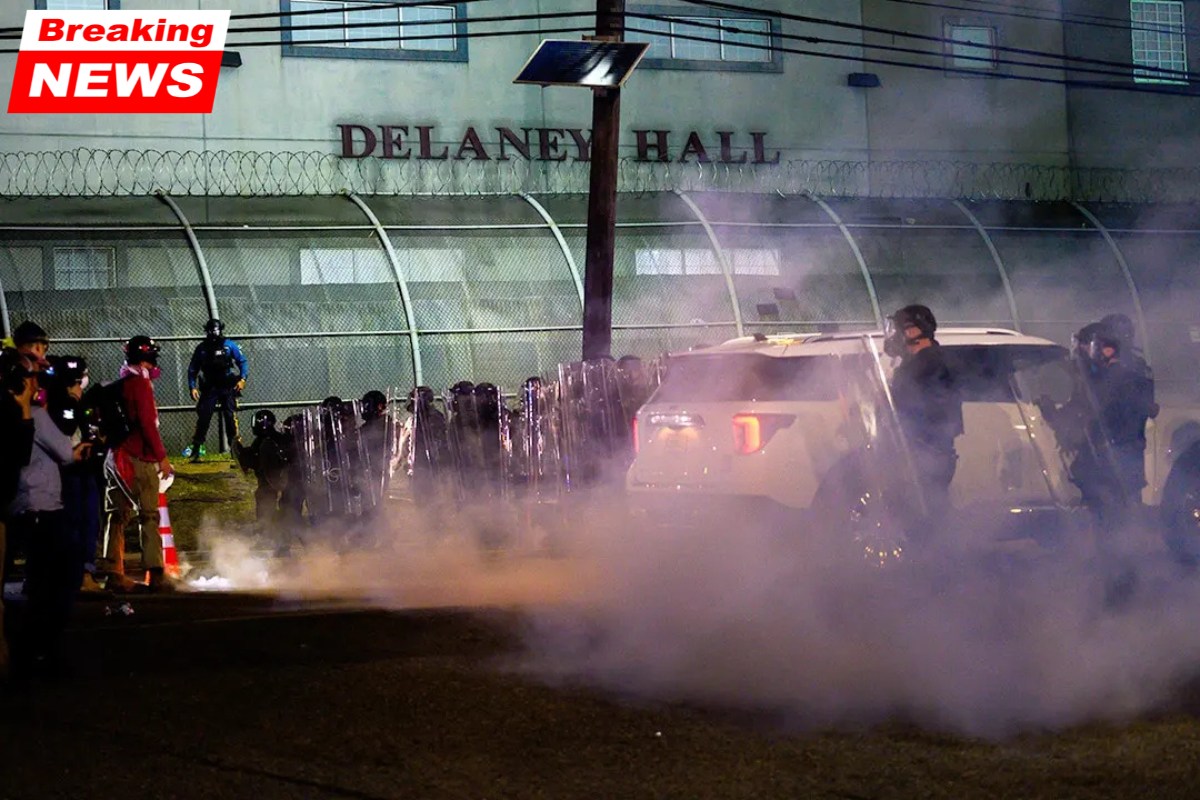
A federal judge has issued a scathing 69-page ruling against the Trump administration, condemning the conditions for immigration detainees at a Minnesota federal facility as both “inhumane” and “unconstitutional”.
The ruling, delivered by U.S. District Judge Nancy E. Brasel, a Trump appointee, converts a temporary restraining order into a preliminary injunction, effectively halting certain enforcement tactics used during “Operation Metro Surge” at the Bishop Henry Whipple Federal Building.
Judge Brasel’s Constitutional Rebuke
In her ruling, Judge Brasel sharply criticized the Department of Homeland Security (DHS) and Immigration and Customs Enforcement (ICE), emphasizing that due process rights under the Fifth Amendment apply to all individuals within U.S. borders, regardless of their immigration status. She highlighted that:
- “The right to access counsel is critical to due process; without it, all other rights become illusory.”
This ruling stems from a lawsuit brought forward by The Advocates for Human Rights, a nonprofit organization, which claims that the government has systematically denied detainees access to legal representation and fundamental constitutional protections during recent immigration enforcement sweeps.
“Operation Metro Surge” Under Fire
The lawsuit specifically targets “Operation Metro Surge”, an enforcement operation carried out by ICE in which thousands of detainees were affected. Judge Brasel concluded that the government’s planning for this operation showed disregard for the constitutional rights of detainees.
Despite the government’s claims of improving conditions since the litigation began in January, the judge expressed skepticism regarding their true intentions.
The court noted that before judicial intervention, the government had continued to claim it was honoring Fifth Amendment rights, but a “mountain of evidence” indicated the opposite, particularly in the handling of detainees’ access to counsel.
Key Mandates of the Injunction
The preliminary injunction imposes several important requirements on federal agencies, especially regarding the treatment of detainees at the Whipple Federal Building:
- Ban on Rapid Transfers: ICE is now prohibited from transferring detainees out of state within the first 72 hours of their arrival at the facility. Previously, “blind” transfers often left detainees’ attorneys unable to locate their clients.
- Immediate Communication: Detainees must be granted free, private, and unmonitored telephone access within one hour of being taken into custody.
- Language Access: Legal aid materials and contact lists must be provided in five languages. The court further mandated that ICE must provide interpreters when necessary.
- Access to Counsel: The facility must facilitate confidential calls between detainees and their legal representation at no charge.
Investigative Context and Shift in Protocol
Judge Brasel’s ruling also noted a significant shift in the protocols at the Whipple facility. Before Operation Metro Surge, agents had successfully collaborated with attorneys to ensure detainees could communicate with their legal representatives.
However, the recent “isolation” of detainees was an unprecedented consequence of the administration’s aggressive enforcement strategy, according to the judge.
The ruling also grants class-action status to the case, allowing the case to move forward on behalf of all individuals affected by the violations of due process and immigration policies.
The Ongoing Legal Battle
The preliminary injunction will remain in effect indefinitely unless overturned or stayed by an appellate court. This ruling is a major victory for immigrant rights groups and a sharp rebuke to the Trump administration’s immigration policies.
It marks a rare legal setback for ICE, especially in the context of immigration enforcement operations like Operation Metro Surge, and underscores the importance of due process for all individuals, regardless of their immigration status.
As the legal challenges continue, this case could set significant precedents for the treatment of immigration detainees and due process rights in the future. For now, the Bishop Henry Whipple Federal Building and its associated immigration detention protocols are under heavy scrutiny, and the ruling has brought further attention to the treatment of detainees in the U.S. immigration system.