The Trump administration’s push to limit birthright citizenship is facing significant legal and constitutional challenges, with the administration citing a historical case, Elk v. Wilkins (1884), to support its stance. In a legal battle with far-reaching implications, the Supreme Court is set to hear arguments on President Trump’s executive order to redefine who qualifies for U.S. citizenship under the 14th Amendment.
Historical Context: Elk v. Wilkins
The case of Elk v. Wilkins, decided in 1884, has come to the forefront of the current debate. In this case, John Elk, a Native American man from the Winnebago Tribe of Nebraska, sought to vote after arguing that he had severed ties with his tribe and subjecting himself to the authority of the United States.
The Supreme Court ruled against him, stating that Native Americans born in U.S. territory were not granted birthright citizenship, equating their status to that of children born to foreign nationals within the U.S.
In a move that has sparked controversy, the Trump administration now references Elk v. Wilkins to argue that birthright citizenship should not automatically apply to the children of undocumented immigrants or those with temporary legal status, such as work visa holders.
Solicitor General D. John Sauer pointed to Elk to suggest that citizenship applies only to those “subject to the political jurisdiction” of the United States.
Trump’s Executive Order and Birthright Citizenship
On January 20, 2025, President Trump signed an executive order titled “Protecting the Meaning and Value of American Citizenship”, seeking to limit birthright citizenship.
Under this order, children born in the U.S. would not be automatically granted citizenship unless at least one parent is a U.S. citizen or a legal permanent resident. The order is currently blocked by lower courts, but the Supreme Court is set to determine its legality in an upcoming case.
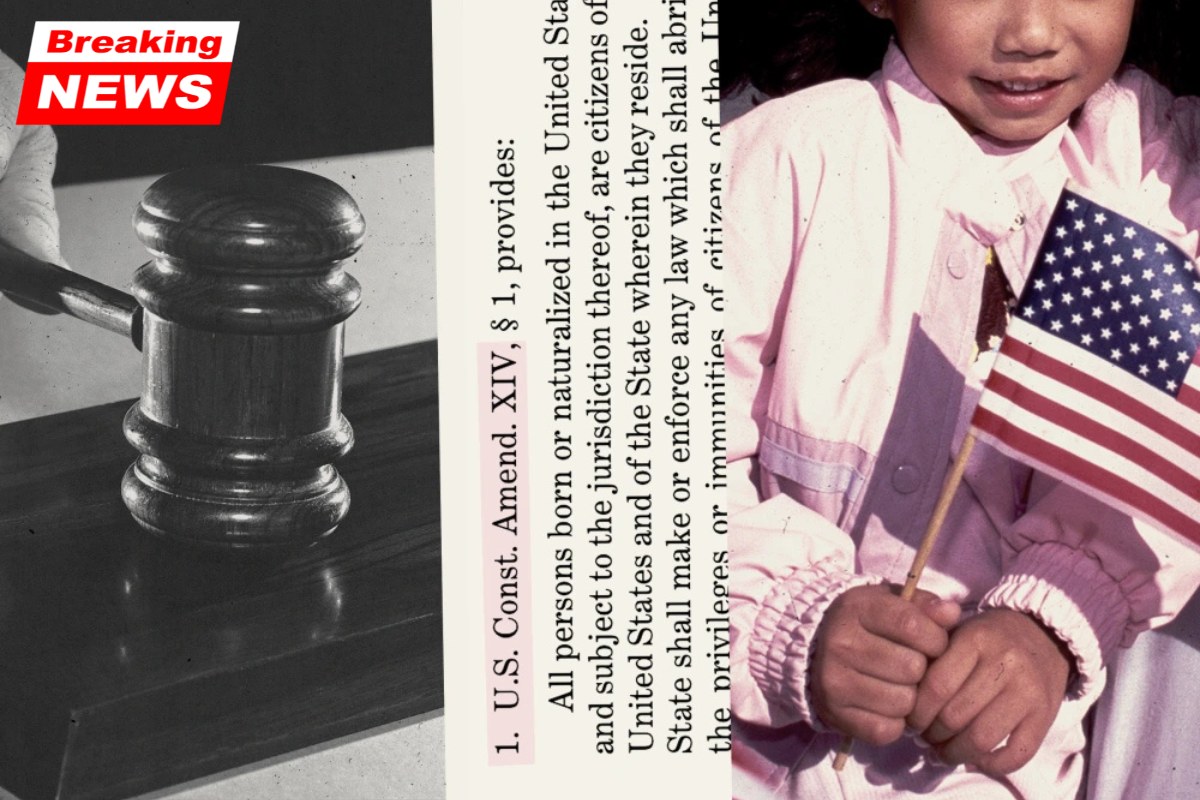
- The Trump administration argues that the 14th Amendment‘s “subject to the jurisdiction thereof” clause excludes children of those who are in the country without legal permission.
- Opponents argue that such a shift contradicts the long-standing interpretation of the 14th Amendment, which has historically guaranteed birthright citizenship to anyone born on U.S. soil, regardless of parental status.
The Controversial Use of Elk v. Wilkins
The administration’s reliance on Elk v. Wilkins is being contested, particularly by Native American legal experts. The case, they argue, was specific to Native American tribes and should not be used to redefine birthright citizenship for children of immigrants. Critics argue that tribal sovereignty and legal status are distinct from the legal status of immigrants in the U.S.
- Bethany Berger from the University of Iowa and Gregory Ablavsky from Stanford Law School, who filed briefs supporting the challengers to Trump’s order, argued that Elk should not be applied to modern immigration policy.
- Leonard Fineday, general counsel for the National Congress of American Indians, stated that tribal status is unique and should not be conflated with the status of immigrants.
The Legal Status of Native Americans
Notably, Native Americans have been guaranteed birthright citizenship since 1924, when the Indian Citizenship Act granted citizenship to all Native Americans born in the U.S. This makes the Elk case largely irrelevant to current discussions around immigration, as Native Americans have long had citizenship rights under U.S. law.
Some experts argue that tribal status and the sovereignty of Native American nations are distinct from the immigration laws that apply to non-Native immigrants.
Monte Mills, a law professor specializing in Native American law, cautioned against misapplying the Elk ruling, emphasizing that tribal nations have a complex legal status that should not be treated as interchangeable with the status of immigrant populations.
Historical Precedent: Wong Kim Ark (1898)
The case of United States v. Wong Kim Ark (1898) is also relevant to the current debate. In that case, the Supreme Court ruled that a man born in the U.S. to Chinese parents who were permanent residents was a U.S. citizen.
The decision in Wong Kim Ark has been cited by those who oppose Trump’s executive order, asserting that birthright citizenship has historically applied to anyone born in U.S. territory, regardless of parental status.
- In his brief, Sauer downplayed the Wong Kim Ark ruling, suggesting that it only applied to children of permanent residents and not undocumented immigrants. However, legal scholars argue that Wong Kim Ark firmly established the principle of universal birthright citizenship within the United States.
Implications for the 14th Amendment
The 14th Amendment, ratified in 1868, was designed to guarantee citizenship to the children of freed slaves, ensuring that everyone born in the U.S. is a citizen. The amendment has long been interpreted as guaranteeing birthright citizenship to all individuals born in the country, with limited exceptions such as children born to diplomats or foreign invaders.
If the Supreme Court rules in favor of the Trump administration’s interpretation, it would mark a radical departure from nearly 150 years of precedent under the 14th Amendment and could significantly redefine citizenship for future generations of immigrants.
A Pivotal Supreme Court Decision
The Supreme Court’s upcoming decision on Trump’s executive order could have profound implications for immigration law and birthright citizenship in the United States.
The case has already sparked widespread debate, with advocates and critics of the policy invoking historical precedents and constitutional principles. As the legal challenge unfolds, it is clear that the outcome will play a critical role in shaping the future of U.S. citizenship and immigration policy.