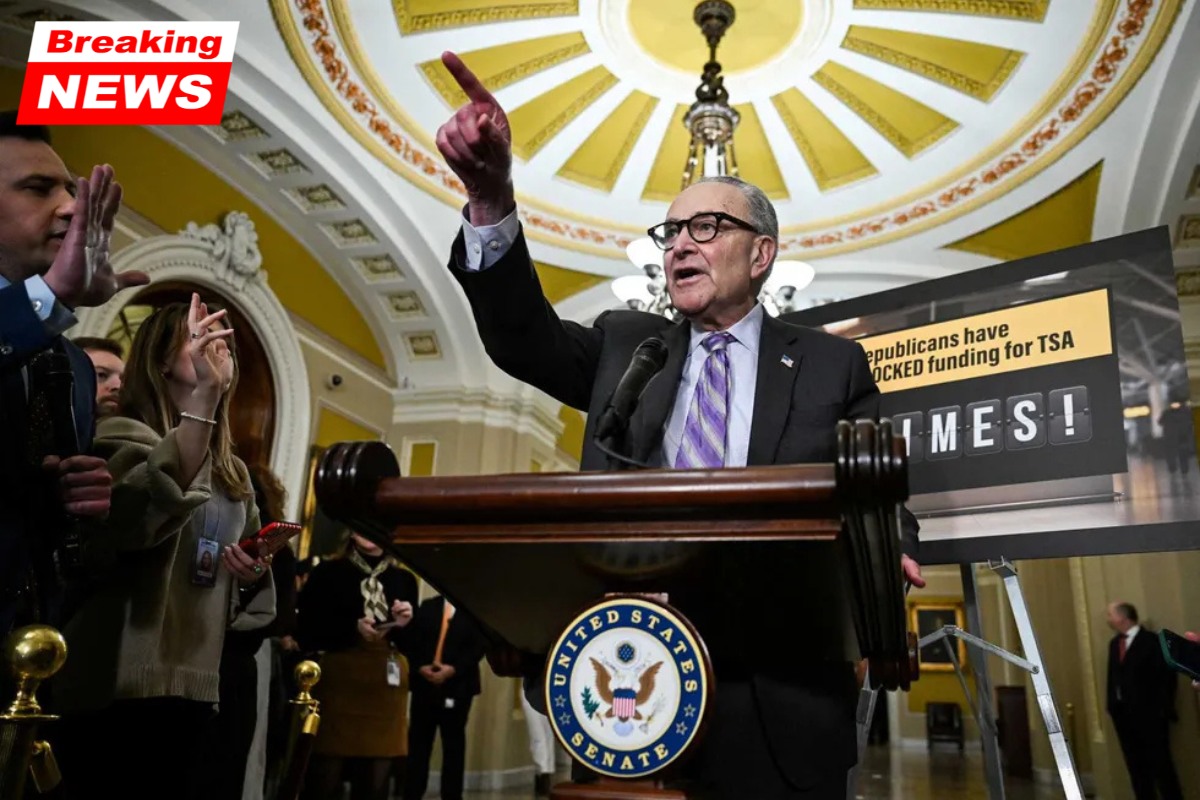
The US government has taken an important step toward ending the ongoing Department of Homeland Security (DHS) shutdown, but the situation also highlights a major political win for Democrats and a shift in Republican strategy.
What the Senate Approved
The Senate passed a funding bill early Friday that will reopen most DHS agencies after a 41-day partial shutdown. However, the bill does not include funding for two key immigration agencies — Immigration and Customs Enforcement (ICE) and Customs and Border Protection (CBP).
This selective funding approach was strongly pushed by Chuck Schumer and Senate Democrats, who refused to approve full funding without reforms in immigration enforcement.
The vote happened in the early hours, showing urgency to resolve disruptions caused by the shutdown.
Why Democrats Consider This a Win
Democrats see this outcome as a clear victory because they managed to pass a plan they had been demanding for weeks. Their main goal was to keep DHS running while blocking additional funds for ICE and CBP unless changes were made to how these agencies operate.
Schumer praised his party for staying united and not giving in during negotiations. According to him, holding a firm position forced Republicans to eventually accept the compromise.
What Caused the Shutdown
The shutdown began in February when Democrats refused to support DHS funding without reforms. They raised concerns about aggressive and sometimes controversial immigration enforcement actions carried out by ICE and CBP.
Republicans, on the other hand, insisted on full funding without conditions, leading to a deadlock that caused parts of DHS to shut down.
Over time, the impact of the shutdown became more visible, especially at airports, where staffing shortages caused long delays and confusion for travellers.
Republicans Shift Their Position
Initially, Republicans strongly opposed any bill that excluded ICE and CBP funding. However, as pressure increased due to public disruptions, some Republicans — and even Donald Trump — appeared willing to accept the temporary solution.
This shift suggests that practical concerns, like airport chaos and public frustration, played a role in changing their stance.
What Happens Next
The bill now moves to the House of Representatives. If approved there without major changes, it will go to the president for final approval.
There is still uncertainty, as some House Republicans may resist the idea of not funding key immigration agencies. This means the final outcome is not fully guaranteed yet.
Impact on Daily Life
The shutdown has already affected everyday services, especially air travel. Reduced staffing at security checkpoints has led to long waiting times at airports, creating inconvenience for passengers across the country.
Ending the shutdown would help restore normal operations, at least for most DHS agencies.
The Senate’s decision marks a major step toward ending the DHS shutdown, but it also reflects deep political divisions over immigration policy. Democrats have managed to push through their preferred approach, while Republicans have had to adjust under pressure.
Although this deal may bring temporary relief, the larger debate over immigration enforcement and funding is far from settled. The next move by the House will decide whether this progress turns into a full resolution or leads to further political conflict.