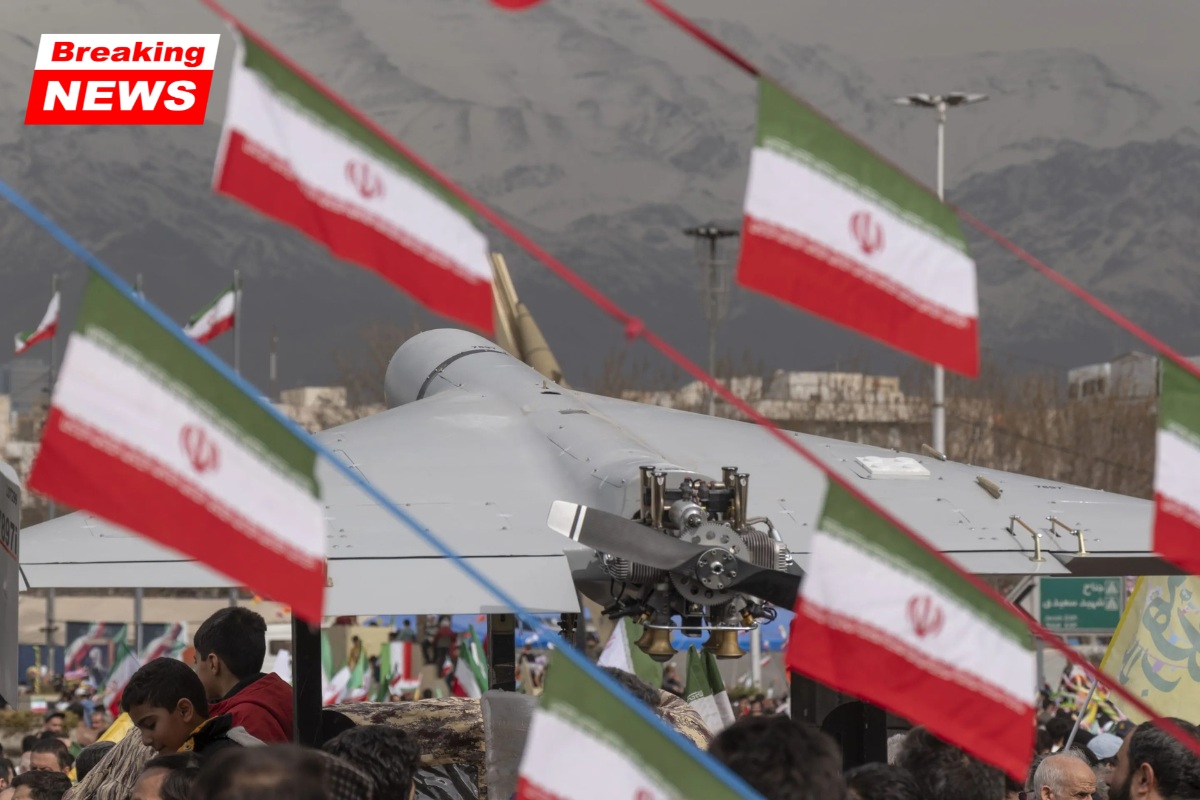
The U.S. and Israel’s military campaign against Iran has significantly affected political and economic dynamics. While soaring oil prices, driven by the conflict, have put pressure on President Donald Trump politically, the military situation is reportedly improving. According to the Institute for the Study of War (ISW), the U.S. military’s efforts to degrade Iran’s strategic assets are progressing well, despite Iran’s attempts to cause disruption through drone and missile attacks.
U.S. and Israel’s Military Success in Iran
The military campaign is currently in a phase marked by positive military developments for the U.S. and Israel. The U.S. military has made strides in dismantling Iran’s most critical tools for warfare—namely, drone and missile technology. This military momentum is weakening Iran’s strategic position, a key factor in the evolving conflict.
ISW’s latest report highlights a significant reduction in the pace of Iranian drone and missile attacks, suggesting that Iran’s military capability is diminishing. For instance, drone attacks on the United Arab Emirates (UAE) dropped from 332 on the second day of the war to just six by Sunday. Likewise, ballistic missile strikes have fallen sharply, from 137 on the war’s first day to just four on the most recent day.
Impact of U.S.-Israeli Bombardment
The U.S.-Israeli bombardment has decimated hundreds of Iranian launchers, with reports of Iranian missile force troops demoralized, deserting, and even refusing orders. While some individual drone attacks have successfully evaded air defenses and caused notable damage to oil infrastructure, the overall trend shows a steady decline in the frequency and effectiveness of Iranian attacks.
ISW indicates that there is no strong evidence to suggest that Iran is withholding its projectiles to launch more powerful strikes later in the conflict. Such a strategy would be highly risky, given the loss of launchers and the disruption of Iran’s command and control systems.
Decline in Attacks and Geopolitical Fallout
The reduction in Iranian attacks is noticeable, particularly in the Strait of Hormuz, where the last recorded Iranian attack on merchant shipping occurred on March 11. It remains uncertain whether this drop is a result of reduced traffic in the Strait or the deterioration of Iran’s military capabilities.
Despite these military losses, Iran’s political and economic strategy is still active. By causing damage to oil infrastructure and disrupting shipping, Iran aims to push up crude oil prices, thereby increasing economic pressures on the U.S. and its Gulf allies. This could fuel inflation and generate political backlash ahead of the U.S. midterm elections.
Iran’s Strategy: Economic Pain and Political Pressure
Iran’s primary goal in the conflict is not to defeat the U.S. militarily but to create political and economic pain. By leveraging various methods, including disrupting oil shipments, activating proxies, and launching cyberattacks, Iran aims to force the U.S. to reconsider its objectives and potentially bring the war to an end without a clear victory.
The report from ISW suggests that Iran hopes to force a political decision from the U.S. and Israel through these disruptions, calculating that the rising oil prices and political instability could prompt a shift in U.S. foreign policy.
Challenges in the Strait of Hormuz
One of the key geopolitical flashpoints remains the Strait of Hormuz, a critical chokepoint for global oil transportation. Despite calls from President Trump for other countries to assist in safeguarding shipping lanes, no nations have agreed to join the effort. The U.S. Navy continues to work on reopening the Strait, which officials describe as a “kill box” fraught with numerous threats, but the risk tolerance of global markets will ultimately determine the length of the disruption.
Is the U.S. Winning the Military Campaign?
Although Iran has suffered significant losses, the U.S. must still navigate the broader political and economic pressures Iran is exerting through its strategy. The U.S. and Israel have successfully targeted key military assets, but the campaign has not yet reached its conclusion.
ISW concludes that while the campaign has thus far been successful in achieving military objectives, it is premature to declare victory. The degradation of Iranian drone and missile capabilities suggests that the military trajectory remains positive, but the full objectives of the campaign are still in progress.