The US economy slowed down sharply at the end of last year, mainly due to the 43-day government shutdown and rising global tensions. According to new data from the Commerce Department, economic growth was much weaker than earlier estimated. This has raised fresh concerns about jobs, consumer spending, and the overall direction of the economy in 2025.
US Economy Slows to 0.7% Growth
The Commerce Department reported that the US economy grew at just a 0.7% annual rate between October and December. This was a major drop from:
- 4.4% growth in the third quarter
- 3.8% growth in the second quarter
- An earlier estimate of 1.4% for the fourth quarter
Economists had expected the revised figure to show stronger growth, not weaker.
For the full year 2025, the economy grew by 2.1%, slightly lower than the earlier estimate of 2.2%.
Impact of the Government Shutdown
The biggest reason behind the slowdown was the 43-day federal government shutdown last fall.
Government spending and investment dropped at a huge 16.7% rate during the fourth quarter. This alone reduced overall economic growth by 1.16 percentage points.
When the government shuts down:
- Federal agencies slow operations
- Contracts are delayed
- Workers are furloughed
- Public spending decreases
All of this directly affects economic activity.
Consumer Spending and Business Investment
Consumer spending, which is the backbone of the US economy, also slowed.
- Consumer spending grew at 2% in Q4
- It had grown 3.5% in the previous quarter
Business investment (excluding housing) grew at 2.2%. While still healthy, this was lower than 3.2% in the third quarter.
Experts believe part of this business investment reflects spending on artificial intelligence and automation technologies.
War and Global Tensions Add Pressure
Donald Trump’s policies, including import tariffs and deportation measures, have shaped the economic landscape. Recently, the war with Iran has added more uncertainty.
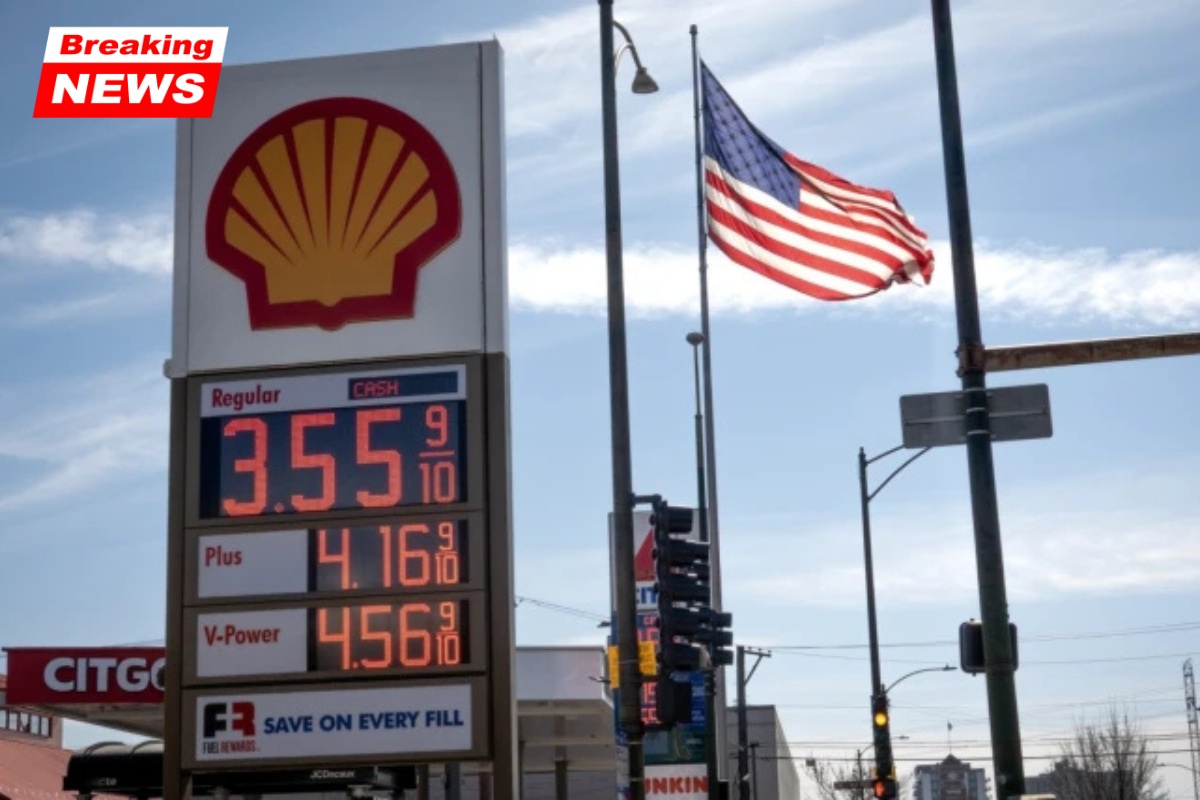
The conflict has pushed oil and gas prices higher. Rising fuel costs often lead to:
- Higher transport costs
- Increased food prices
- Pressure on household budgets
This creates uncertainty for both businesses and consumers.
Job Market Shows Weakness
One of the biggest concerns right now is the labour market.
Recent data shows:
- 92,000 jobs were cut last month
- Fewer than 10,000 jobs were added per month in 2025
- This is the weakest hiring pace outside recession years since 2002
Economists are now debating what this means.
There are three main possibilities:
- Hiring may increase later to match overall economic growth.
- Economic growth could slow further to reflect weak job creation.
- Advances in artificial intelligence and automation may allow growth without many new jobs.
If technology replaces certain roles, GDP may grow even without strong hiring numbers.
GDP Snapshot
| Category | Latest Data |
|---|---|
| Q4 Growth | 0.7% |
| Q3 Growth | 4.4% |
| Full Year 2025 | 2.1% |
| Government Spending Drop | -16.7% |
| Consumer Spending | 2% |
| Monthly Job Cuts | 92,000 |
The final GDP estimate for the fourth quarter is expected on April 9.
What Does This Mean for Americans?
Slower growth does not automatically mean a recession. However, it signals caution.
If job creation remains weak and fuel prices stay high, households could feel more financial pressure in the coming months. On the other hand, strong business investment in AI and technology may support long-term growth.
The key question is whether the economy can continue growing without strong job creation.
The latest GDP numbers show that the US economy lost momentum at the end of last year. The government shutdown, weaker consumer spending, and global tensions all played a role in the slowdown. While overall growth for 2025 remains positive, the sharp drop to 0.7% in the fourth quarter raises important questions.
The labour market is currently the biggest concern. If hiring does not improve, economic growth may struggle to stay strong. At the same time, investments in technology and artificial intelligence could reshape how growth happens in the future. As the final GDP report approaches, businesses, policymakers, and families will be watching closely to see whether this slowdown is temporary or a sign of deeper challenges ahead.