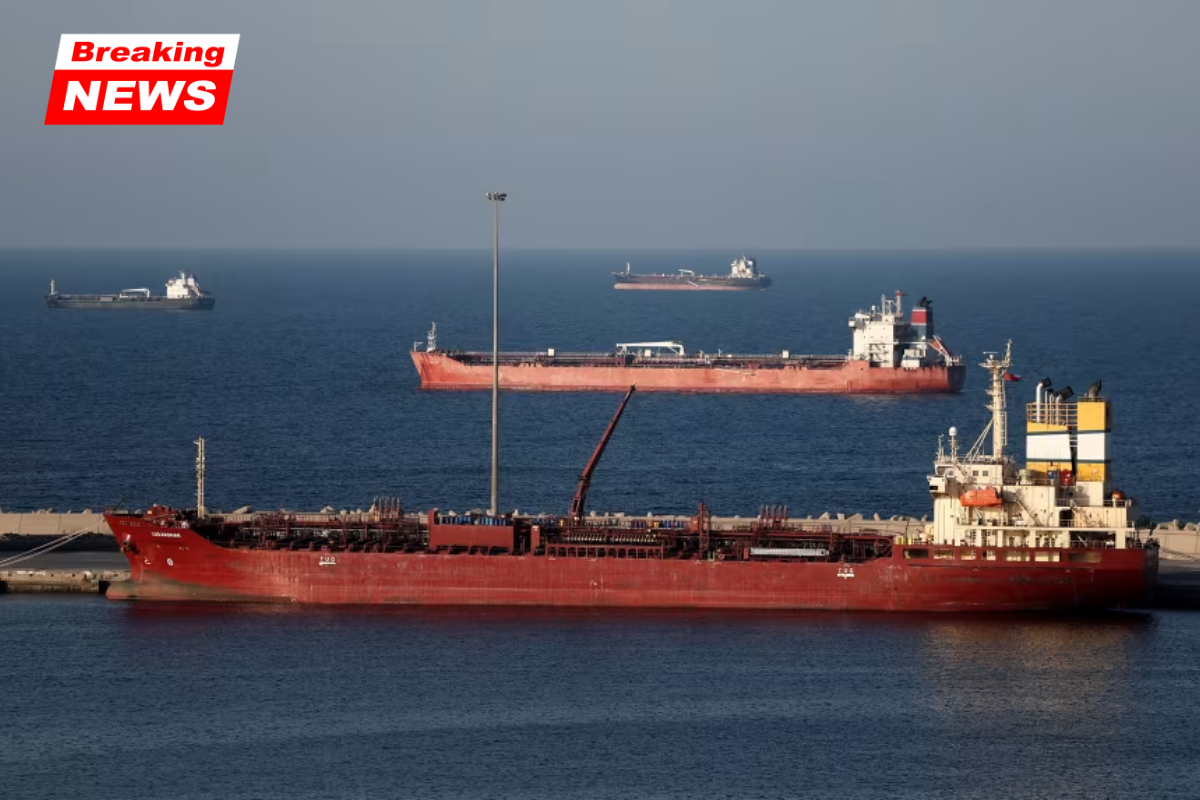
Iran has reportedly begun placing naval mines in the Strait of Hormuz, a critical global shipping route responsible for transporting a significant portion of the world’s oil supply. The development has raised major concerns among international observers and energy markets, as the waterway plays a vital role in global energy trade.
U.S. officials say the mining activity is currently limited but warn that Iran has the capability to escalate quickly.
Iran Reportedly Deploys Mines in the Strait of Hormuz
According to U.S. intelligence sources, Iran has started placing naval mines in the Strait of Hormuz in recent days.
Officials familiar with the intelligence reports say that only a few dozen mines have been deployed so far.
However, analysts warn that Iran still retains most of its mine-laying capability, meaning the number of mines could increase significantly if the situation escalates.
One source said Iran still has between 80% and 90% of its small boats and mine-laying vessels available for operations.
Why the Strait of Hormuz Is So Important
The Strait of Hormuz is one of the most critical energy transit routes in the world.
Approximately one-fifth of global crude oil passes through the narrow waterway each day.
Key facts about the strait include:
| Energy Flow Through Strait of Hormuz | Estimated Amount |
|---|---|
| Crude oil transported daily | About 15 million barrels |
| Refined fuels transported daily | About 4.5 million barrels |
| Share of global oil supply | Around 20% |
Many oil-producing countries in the Persian Gulf depend heavily on the strait to export their energy supplies.
Countries such as Iraq and Kuwait have few alternative routes for shipping their oil.
Iranian Forces Capable of Large-Scale Mine Deployment
The Islamic Revolutionary Guard Corps (IRGC) plays a major role in controlling the Strait of Hormuz alongside Iran’s conventional navy.
According to military analysts, the IRGC has the ability to deploy multiple types of threats in the region.
These include:
- Mine-laying vessels
- Small explosive boats
- Shore-based missile systems
Experts say these assets could be used together to create a dangerous environment for commercial ships attempting to pass through the waterway.
Trump Warns Iran to Remove Mines
President Donald Trump addressed the situation in a message posted on social media.
Trump said the United States had not confirmed the presence of mines but warned Iran that they must be removed immediately if they were deployed.
He also stated that failure to remove the mines could lead to severe consequences.
At the same time, Trump suggested that removing the mines would be viewed as a positive step toward easing tensions.
US Military Takes Action in the Region
Following Trump’s statement, Defense Secretary Pete Hegseth announced that U.S. Central Command had taken action against Iranian naval assets.
According to Hegseth, U.S. forces targeted vessels believed to be involved in mine-laying operations.
Later reports indicated that U.S. military forces destroyed several Iranian ships near the Strait of Hormuz, including multiple mine-laying vessels.
Military officials said the strikes were intended to prevent further attempts to block the vital shipping route.
Shipping Through the Strait Becomes Highly Dangerous
The ongoing conflict has made shipping through the Strait of Hormuz extremely risky.
Iran previously warned that ships attempting to pass through the waterway could be attacked.
As a result, commercial shipping traffic has dropped significantly since the start of the conflict.
Some officials have described the strait as a “death valley” for vessels due to the high level of danger.
U.S. officials say the Navy has not yet begun escorting ships through the strait, though such options are reportedly being considered.
Oil Supply Disruptions Impact Global Markets
The disruption in the Strait of Hormuz has created serious uncertainty in global energy markets.
With millions of barrels of oil unable to move through the region, global supply has been affected.
According to reports:
| Oil Supply Impact | Estimated Amount |
|---|---|
| Crude oil stranded in the Gulf | About 15 million barrels per day |
| Refined fuels affected | About 4.5 million barrels per day |
This uncertainty has led to sharp fluctuations in oil prices.
On Tuesday, oil prices moved rapidly between above $90 per barrel and below $80 per barrel within a short period of time.
G7 Countries Consider Emergency Oil Measures
Major world economies are monitoring the situation closely.
The G7 group of industrialized nations has indicated it may consider releasing additional oil reserves to stabilize global markets if shortages continue.
Such actions could help reduce price spikes and maintain energy supply while the situation in the Gulf remains unstable.