
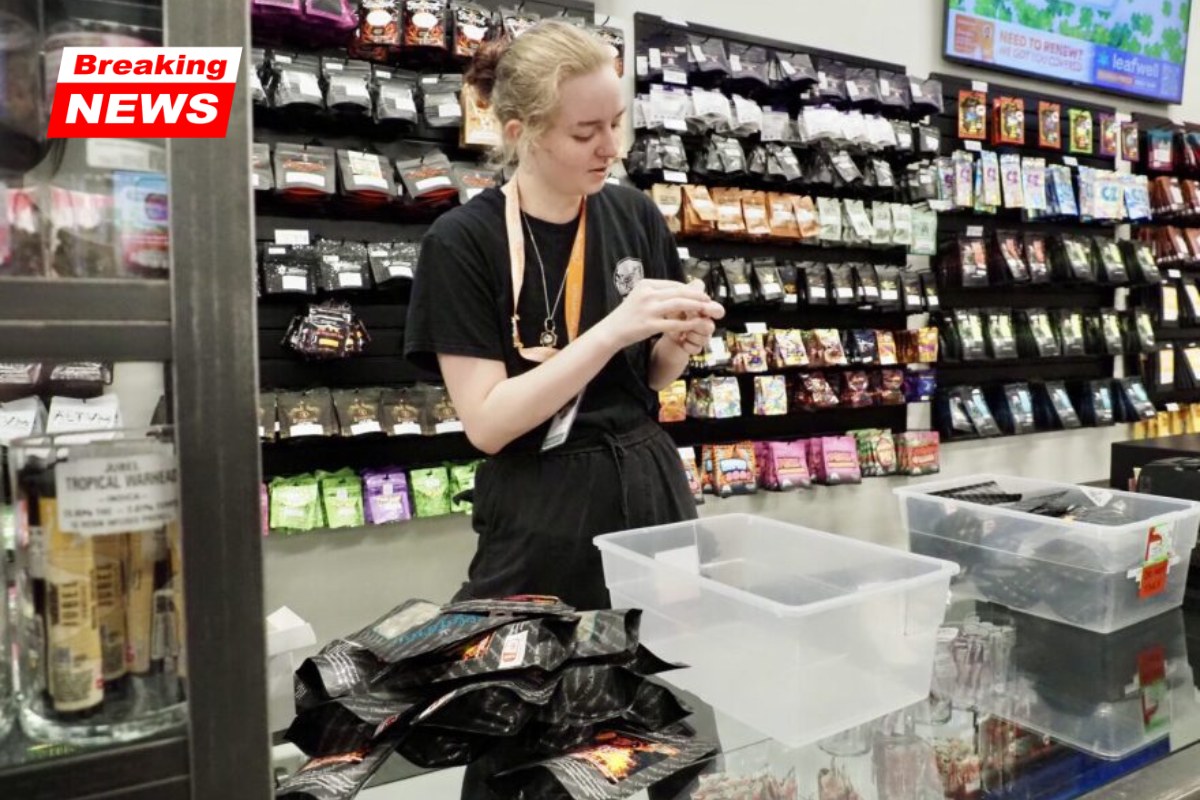
Oklahoma’s medical marijuana industry, one of the largest in the United States, is facing renewed political pressure after Gov. Kevin Stitt suggested shutting it down entirely. The proposal has sparked strong reactions from business owners, lawmakers, and patient advocates who say the industry supports thousands of jobs and provides medical treatment to hundreds of thousands of residents.
Since voters approved medical marijuana in 2018, the industry has grown rapidly across the state. Today, thousands of licensed businesses operate in Oklahoma, contributing hundreds of millions of dollars in tax revenue and supporting a wide network of employees and patients.
Medical Marijuana Businesses Expand Across Oklahoma
Entrepreneurs like Mike Khemmoro helped build the industry after the 2018 legalization vote. Khemmoro is the co-founder and chief operations officer of Mango Cannabis, a company that now operates multiple dispensaries across Oklahoma.
The business has expanded to locations in cities including:
| City | Mango Cannabis Presence |
|---|---|
| Oklahoma City | Dispensary |
| Tulsa | Dispensary |
| Norman | Dispensary |
| Edmond | Dispensary |
| Lawton | Dispensary |
| Enid | Dispensary |
| Bixby | Dispensary |
| Catoosa | Dispensary |
The company now employs more than 300 people.
Across Oklahoma, more than 4,300 licensed marijuana businesses operate under the state’s medical cannabis program.
Governor Calls for Shutting Down the Industry
During his recent State of the State address, Gov. Kevin Stitt proposed sending a new ballot measure to voters that would make medical marijuana illegal and effectively shut down the industry.
Stitt has argued that the industry has become a public safety concern.
According to his office, some communities have experienced issues related to illegal marijuana operations, including concerns about organized crime and unregulated growing facilities.
The governor said the decision about the future of the industry should ultimately be made by Oklahoma voters.
Industry Leaders Push Back
Business owners and industry advocates strongly disagree with the proposal.
Many say years of work have gone into building the current system, including regulations designed to control licensing, production, and distribution.
Jed Green, director of Oklahomans for Responsible Cannabis Action, said dismantling the industry would undo years of legislative and business efforts.
He noted that many patients rely on medical marijuana to treat conditions such as:
- Cancer-related pain
- Epilepsy
- Chronic pain
- Opioid addiction recovery
More than 315,000 Oklahomans currently hold active patient licenses.
Legal and Financial Challenges
Legal experts warn that eliminating the industry could create major legal challenges for the state.
Oklahoma Attorney General Gentner Drummond said shutting down the program could potentially qualify as a “taking” under constitutional law.
This occurs when government action effectively destroys the economic value of legally established businesses.
If that were determined to be the case, the state might be required to compensate business owners for their losses.
With thousands of licensed businesses operating in Oklahoma, the potential financial liability could be extremely large.
Some Business Owners Already Leaving the Industry
While some operators are fighting to keep the program alive, others say constant regulatory changes have made it difficult to stay profitable.
Bruce Williams, a marijuana business owner from Blanchard, said his family invested more than $1 million into their operations, which included dispensaries, grow facilities, and testing labs.
However, he decided to surrender all of his licenses earlier this year.
Williams said frequent rule changes and regulatory costs made the industry increasingly difficult to sustain.
He now plans to convert his former grow operation into a self-sustaining farm.
Medical Marijuana Generates Major Revenue
Despite the challenges, the medical marijuana program continues to produce significant economic activity.
According to the Oklahoma Medical Marijuana Authority (OMMA), the industry reported:
| Category | 2025 Figures |
|---|---|
| Medical marijuana retail sales | Over $670 million |
| Wholesale marijuana sales | More than $1.1 billion |
| State and local sales tax revenue | Over $60 million |
| Excise tax revenue | About $47 million |
Tax revenue from the program supports public education, substance abuse treatment programs, and local government budgets.
Lawmakers Signal Limited Support for Shutdown
Some state lawmakers say they do not expect the proposal to gain enough support to move forward.
Senate President Pro Tempore Lonnie Paxton said the Legislature should focus on improving enforcement rather than eliminating the program.
He noted that voters originally approved medical marijuana through a statewide ballot initiative.
House Speaker Kyle Hilbert also said lawmakers should respect the distinction voters made between medical and recreational marijuana when shaping future policies.






