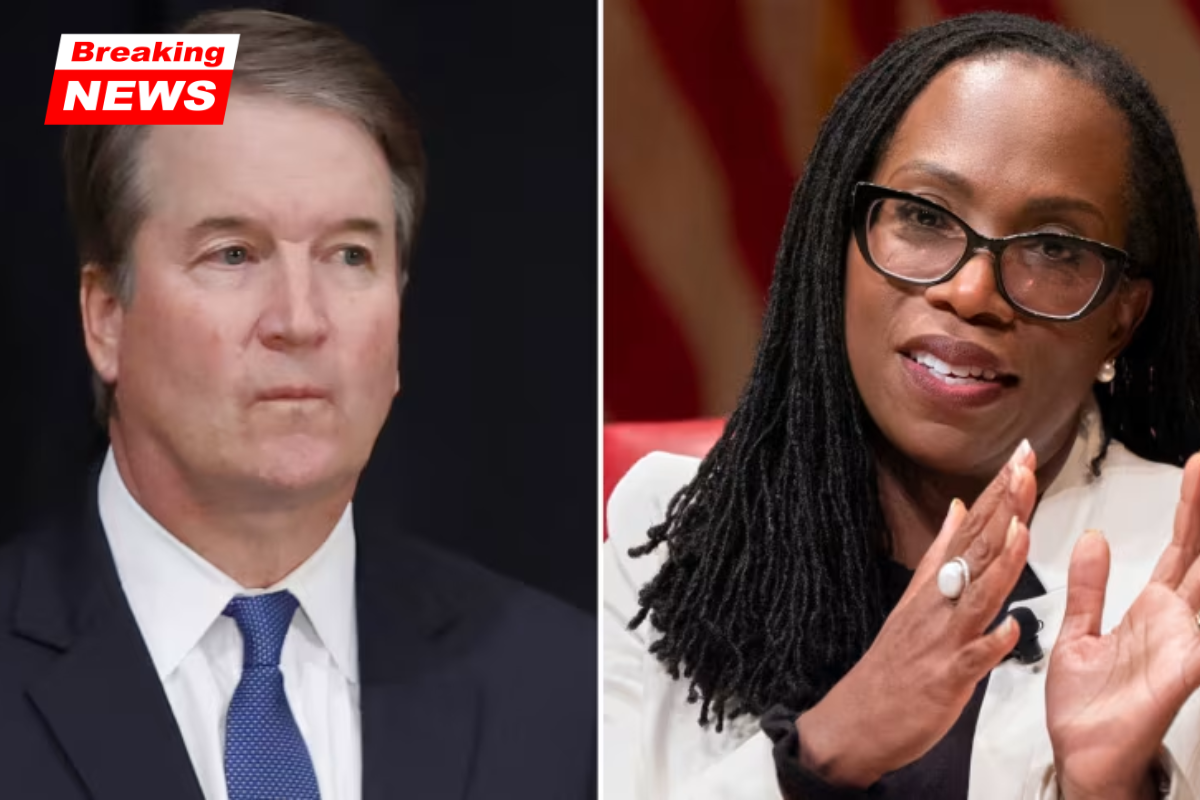
The debate around the US Supreme Court’s emergency decisions, often called the “shadow docket,” has become a hot topic in recent years. Justice Ketanji Brown Jackson recently raised concerns about how the court is handling these urgent cases.
She believes the current process is creating problems and may be affecting how major decisions are perceived even before full hearings happen. Her comments highlight a growing discussion inside the court about transparency, fairness, and the increasing use of emergency rulings.
Justice Jackson Criticizes the Supreme Court’s Emergency Case Process
Justice Ketanji Brown Jackson said that the Supreme Court’s handling of emergency cases has created what she described as a “warped” process. According to her, the court’s growing willingness to step into urgent legal disputes may send signals about the final outcome of major cases even before they are fully heard.
She made these remarks during an event at a federal courthouse in Washington, DC. The gathering included judges and lawyers, and Justice Brett Kavanaugh was also present at the discussion.
Jackson explained that the sharp increase in emergency cases being handled by the court is concerning.
Key points from her remarks include:
- The Supreme Court is increasingly handling urgent appeals through the emergency docket.
- These decisions are often made quickly and without full arguments.
- The process may influence how major controversies are viewed before final rulings.
She described the trend as “unfortunate” and said it may not be benefiting either the court or the country.
Difference in Views Between Jackson and Kavanaugh
During the discussion, Justice Brett Kavanaugh shared a different perspective on why emergency cases have increased.
According to Kavanaugh, the rise in such cases is partly due to political realities. In situations where Congress cannot pass legislation because of political gridlock, presidents often rely on executive actions to push their policies forward.
When these executive actions are challenged in lower courts, the disputes quickly reach the Supreme Court as emergency appeals.
Kavanaugh also suggested that criticism of the court’s emergency docket may not always be fair. He pointed out that both Republican and Democratic administrations have used emergency appeals when lower courts block their policies.
He noted that the Biden administration also frequently approached the Supreme Court in urgent legal situations.
What the “Shadow Docket” Means
The term “shadow docket” refers to emergency rulings made by the Supreme Court outside the regular process used for major cases.
These decisions usually involve urgent questions about whether a policy or law should remain in effect while courts continue reviewing its legality.
Unlike regular Supreme Court cases, emergency docket rulings typically:
- Do not involve full written arguments from both sides
- Rarely include oral arguments
- Are decided much faster than standard cases
Because of this faster process, critics say the rulings sometimes lack transparency.
Rising Frustration Among Liberal Justices
Jackson’s comments reflect growing frustration among the court’s liberal justices. They have raised concerns that the conservative-majority court has been using emergency rulings to resolve major policy disputes too quickly.
In recent years, several emergency decisions have favored policies from former President Donald Trump’s administration.
These rulings have included decisions allowing the administration to:
- Increase immigration enforcement
- Remove leaders of independent federal agencies
- Reduce certain government spending programs approved by Congress
Reports indicate the Supreme Court has ruled in favor of the Trump administration in about 80% of these emergency cases. This rate is significantly higher than the share of emergency rulings that favored the Biden administration.
A Heated Moment During the Discussion
The discussion between the justices became slightly tense when US District Judge Paul Friedman asked them directly about the emergency docket.
Jackson responded by suggesting that the Supreme Court itself bears some responsibility for the rise in these cases. She argued that the court’s willingness to consider emergency motions encourages more of them to be filed.
Jackson also noted that when she and Kavanaugh worked as clerks about two decades ago, the court handled emergency requests differently.
According to her, the court did not feel obligated to entertain every emergency motion simply because it was filed.
Kavanaugh responded calmly, saying Jackson had explained the situation well. However, he added that the court must remain consistent regardless of which president is in power.
Jackson agreed with that point.
Recent Emergency Decisions Spark Debate
The conversation came shortly after the Supreme Court issued two controversial emergency rulings.
In one decision, the court blocked a California education policy that limited teachers from informing parents about a student’s gender identity or expression.
In another case, the court approved an emergency request from a Republican congresswoman in New York. She had asked the court to stop a redrawing of her congressional district.
Both rulings triggered strong dissent from the court’s liberal justices.
Justice Elena Kagan wrote that the decisions showed how the emergency docket can sometimes malfunction.
She argued that the court appeared too eager to act quickly instead of waiting for a full review of the cases.