Global financial markets are reacting sharply as the conflict between the United States, Israel, and Iran enters its second week with no signs of slowing down. Investors are increasingly preparing for a longer and more dangerous conflict, driving major shifts in oil prices, stock markets, and global economic outlooks.
Markets React as War Appears Likely to Continue
Just over a week after the start of the U.S.-Israeli war with Iran, financial markets are adjusting to the possibility that the conflict could last longer than initially expected.
Earlier hopes for a quick resolution have faded as both sides expand their military actions. Analysts say the growing scope of attacks on infrastructure and strategic targets is raising concerns about further escalation across the Middle East.
As a result, investors have started pricing in the economic impact of a prolonged conflict.
Oil Prices Surge Above $100
One of the most immediate effects of the war has been a sharp rise in global oil prices.
U.S. oil futures climbed 24.6%, reaching $113.30 per barrel, while Brent crude increased 23.4% to $114.38 per barrel. This marks the first time oil prices have crossed the $100 mark since 2022.
Rising oil costs are expected to quickly impact consumers, especially through higher fuel prices.
Patrick De Haan, head of petroleum analysis at GasBuddy, said there is now about an 80% chance that gasoline prices in the United States could exceed $4 per gallon within the next month.
Stock Markets Drop Amid Uncertainty
The conflict has also shaken stock markets as investors react to economic uncertainty.
Key futures markets experienced major declines:
| Market Index | Change |
|---|---|
| Dow Jones Futures | Down 1,011 points (2.13%) |
| S&P 500 Futures | Down 2.01% |
| Nasdaq Futures | Down 2.31% |
These declines reflect growing fears that the conflict could disrupt global trade, energy supplies, and financial stability.
Currency and Commodity Movements
Other financial markets also showed notable changes as investors shifted assets in response to the conflict.
- Gold prices dropped 1.3% to $5,029 per ounce
- Silver fell 2.1% to $82.50
- The 10-year U.S. Treasury yield rose to 4.198%
- The U.S. dollar strengthened against both the euro and the Japanese yen
Rising Treasury yields suggest investors expect higher inflation as energy costs continue to climb.
Strait of Hormuz Closure Raises Major Concerns
One of the most alarming developments has been the effective closure of the Strait of Hormuz, a key shipping route for global oil supplies.
The waterway is used by several major oil-producing countries in the Persian Gulf to export crude oil. With the route disrupted, producers are struggling to transport their output.
Some countries have already started reducing production because their storage facilities are full.
Iraq’s oil output has reportedly dropped by around 60% due to export difficulties.
Attacks on Critical Infrastructure
The conflict has expanded beyond military targets and is now affecting critical infrastructure across the region.
Reports indicate that desalination plants in Bahrain and Iran have been attacked. These facilities are essential because many Middle Eastern countries depend heavily on seawater desalination for drinking water.
In some nations, desalination provides up to 90% of the water supply.
Experts warn that significant damage to these facilities could lead to water shortages and possibly force evacuations from major cities.
Tehran Oil Depot Targeted
U.S. and Israeli forces reportedly struck an oil depot in Tehran during recent attacks.
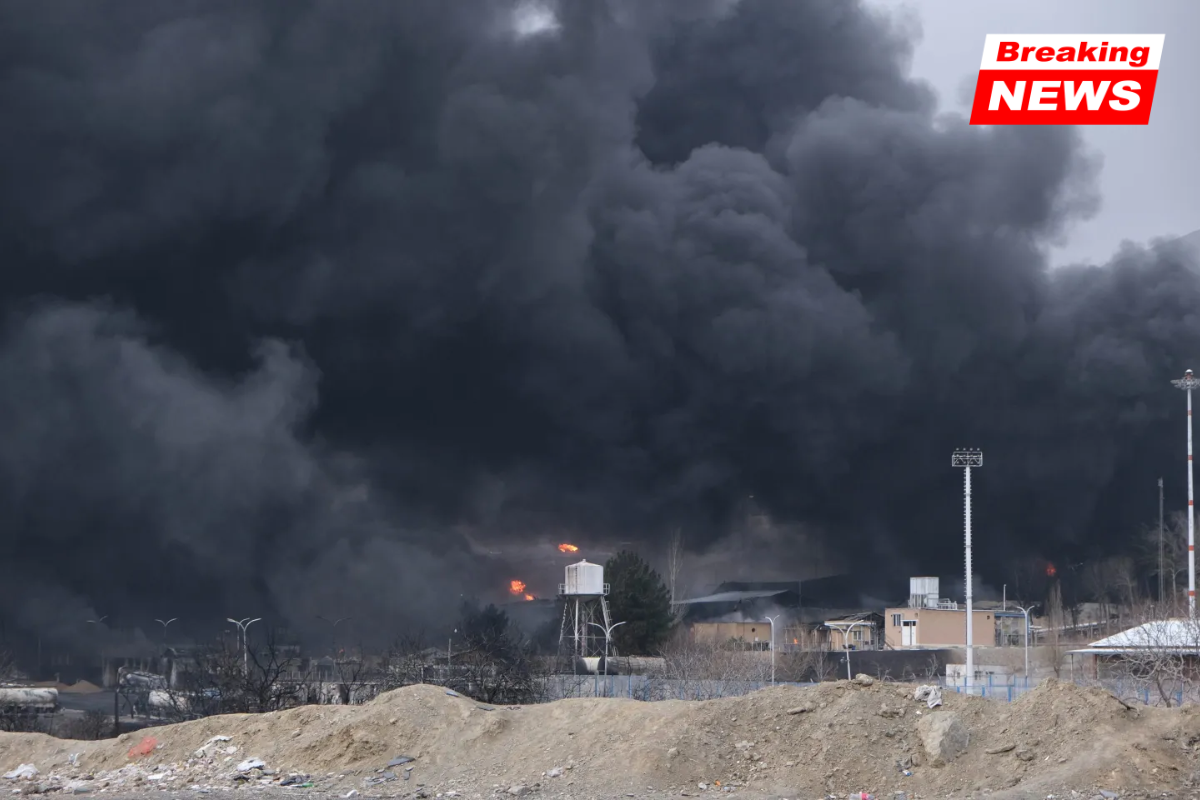
The facility was used to store fuel supplies for both civilian and military use. The strike caused large fires and heavy smoke across the city.
Some reports described oily rainfall and chemical contamination following the explosion, raising environmental and health concerns.
Iran has also launched missiles and drone attacks targeting oil facilities and civilian infrastructure across the Persian Gulf.
U.S. Military Casualties Increase
The Pentagon confirmed that a seventh American service member has died during the conflict.
The death adds to the growing toll among U.S. forces involved in operations across the region.
Officials have warned that more casualties could occur if the conflict continues to escalate.
Possible Special Forces Mission Considered
According to reports from Bloomberg, U.S. officials are considering a possible special forces operation inside Iran.
The proposed mission would reportedly aim to seize uranium that is close to weapons-grade levels and could potentially be used to produce nuclear weapons.
Officials have not confirmed whether such an operation will move forward.
Risk of Wider International Involvement
There are growing concerns that the conflict could draw additional countries into the war.
Gulf nations have reportedly warned Iran that continued attacks on their territory could lead to direct military retaliation.
Other developments raising concern include:
- Turkey considering sending fighter jets to northern Cyprus
- Russia reportedly providing intelligence support to Iran regarding U.S. military movements
These developments have increased fears of a broader regional conflict.
Leadership Change in Iran
Iran also announced that Mojtaba Khamenei, the son of Ayatollah Ali Khamenei, will become the country’s next supreme leader following his father’s reported death last weekend.
The decision has drawn attention internationally because Mojtaba Khamenei is considered a hardline figure within Iran’s political system.
Analysts say his leadership could signal that Iran’s government will take a tougher stance in the ongoing conflict.
Trump Comments on Iran Leadership
President Donald Trump previously expressed opposition to Mojtaba Khamenei becoming Iran’s leader.
In an interview, he said he would prefer a leader who could bring stability and peace to the country.
Trump also acknowledged that one of the worst outcomes of the conflict would be replacing one hostile leader with another who holds similar views.