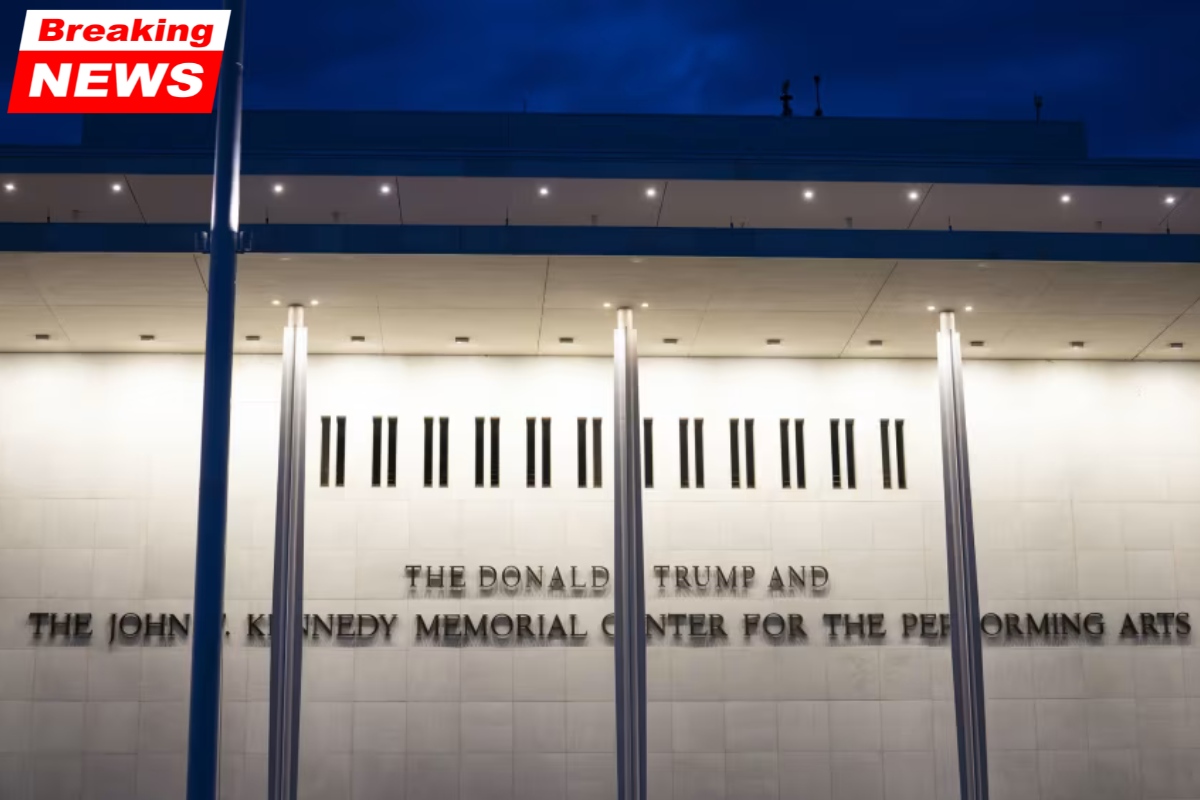
A federal judge ruled on Friday that the Kennedy Center cannot temporarily close its doors for renovations, nor can it officially bear the name of former President Donald Trump.
US District Judge Casey Cooper stated that the law establishing the center mandates it be named for President John F. Kennedy, and only Congress has the authority to alter that designation.
Judge Cooper emphasized, “Congress gave the Kennedy Center its name, and only Congress can change it.” The ruling comes after the Kennedy Center’s board unilaterally attempted to rename the institution the “Trump Kennedy Center” and approve a temporary closure for renovations.
Trump Signals Retreat Following Ruling
After the ruling, Donald Trump indicated he would step back from the initiative, transferring control to Congress.
On Truth Social, he wrote that he had instructed the Department of Commerce to coordinate with Congress to assume responsibility for the center’s operations and maintenance.
Trump also mentioned that he had “no interest in continuing” unless he was “free” to act as he wished. The specifics of such a transfer remain unclear.
Historically, the executive branch has overseen the Kennedy Center board, while Congress handles annual funding for operations and maintenance.
Mandatory Removal of Trump Name
Within two weeks, officials must remove all signage bearing Trump’s name and update digital platforms to reflect only John F. Kennedy’s name.
Judge Cooper clarified that the center is permanently prohibited from displaying any physical or digital markers suggesting it is named after anyone other than Kennedy.
The Kennedy Center plans to appeal this decision. Roma Daravi, vice president of public relations, stated confidence that an appeal would support the board’s recognition of Trump’s contributions to the center.
Renovation Plans and Board Oversight
The judge allowed the Kennedy Center to continue renovations but prohibited full closure until the board fully assessed statutory obligations. Cooper noted that the board had failed to consider how a total closure would affect its legislative mandate to maintain programming at all times.
Planned renovations include HVAC and soffit panel updates, drainage improvements, and theater seating upgrades. Daravi stressed that the facility requires “urgent and significant restoration” despite the ruling against full closure.
Lawsuit from Congresswoman Joyce Beatty
Democratic Representative Joyce Beatty, who serves on the Kennedy Center board, filed the lawsuit. Beatty opposed both the renaming and planned closure, asserting the center belongs to the American people, not Donald Trump.
The lawsuit argued that board members were not adequately informed before voting on closure and renaming. Judge Cooper found that the documents provided to Beatty focused primarily on renovation work and did not justify a total shutdown.
Board Decisions and Criticisms
Judge Cooper criticized the board’s process, noting that the closure decision was likely predetermined. Statements from Matt Floca, tasked with managing the center, suggested preparation for closure months before public announcements. Cooper wrote, “Board input was, most evidently, an afterthought,” with trustees learning about the closure via social media.
Concerns were raised by former staff about the potential consequences of closure: loss of performers to other venues, difficulty replacing staff, and declines in audience engagement and donations.
Summary Table of Key Facts
| Aspect | Details |
|---|---|
| Judge | US District Judge Casey Cooper |
| Ruling | Blocks Trump name addition and temporary closure |
| Legal Basis | Kennedy Center law mandates naming for JFK only |
| Trump Response | Signaled transfer of control to Congress |
| Renovations | HVAC, drainage, theater seating, soffit panels |
| Lawsuit | Filed by Rep. Joyce Beatty against board actions |
| Board Oversight | Criticized for insufficient consideration of statutory obligations |
| Appeal | Kennedy Center plans to appeal decision |
The ruling reinforces that the Kennedy Center’s name and operation are legally bound to its founding legislation. While renovations can proceed, the center cannot close entirely without fully respecting statutory obligations.
The case represents a significant check on unilateral decisions by the board and underscores Congress’s ultimate authority over the institution’s name. Trump’s retreat highlights the legal limitations faced even by prominent board members, ensuring the Kennedy Center remains a memorial dedicated to John F. Kennedy.