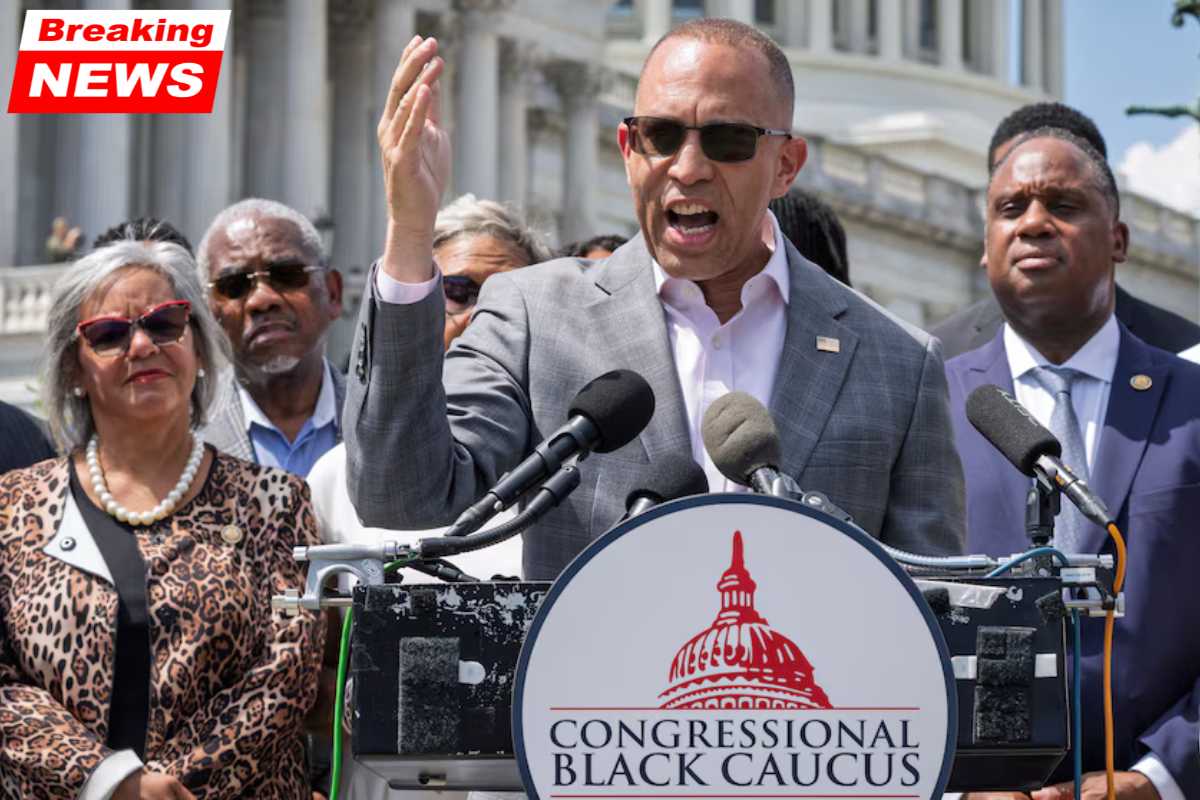
Lawmakers from the Congressional Black Caucus are urging major corporations across the United States to take a public stand against redistricting efforts that they say weaken Black political representation.
In a letter sent to more than 250 companies, the caucus asked businesses to oppose what they describe as attempts by some Republican-led states to eliminate majority-Black congressional districts.
The move marks a new phase in the ongoing debate over voting rights, corporate responsibility and political power in America.
Why the Black Caucus Sent the Letter
The letter focuses on recent redistricting efforts in Republican-led states. Lawmakers argue that these new congressional maps could dilute the voting strength of Black communities by removing or reshaping districts currently represented by Black members of Congress.
According to the caucus, these changes come after a recent decision by the U.S. Supreme Court that weakened a key part of the Voting Rights Act. That ruling, they say, has made it easier for states to redraw maps without strong federal oversight.
Representative Yvette Clarke, who chairs the caucus, said corporations that benefit from Black consumers and workers should not remain silent while Black political power is reduced.
Companies Previously Backed Voting Rights
Several of the companies that received the letter had earlier supported voting rights legislation. In 2021, a coalition called Business for Voting Rights encouraged Congress to pass the John Lewis Voting Rights Act.
That group included major firms such as:
- Apple
- Amazon
- Meta
- Microsoft
- Tesla
- Salesforce
- Target
- PayPal
- Intel
- Starbucks
Now, the caucus is asking these companies to once again speak out.
What the Caucus Wants
The letter asks companies to:
| Demand | Explanation |
|---|---|
| Publicly condemn redistricting plans | Oppose efforts that reduce majority-Black districts |
| Meet with caucus members | Discuss corporate roles in protecting voting rights |
| Disclose political donations | Reveal support given to lawmakers backing redistricting |
The caucus argues that many corporations made strong statements after events such as the murder of George Floyd and the January 6 Capitol attack. Lawmakers now want to see if those commitments were based on principle or convenience.
Mixed Corporate Responses
So far, most companies have not publicly responded. Microsoft declined to comment.
However, outdoor clothing company Patagonia said it supports protecting voting rights. A company executive stated that a healthy business depends on a healthy democracy.
It remains unclear whether other companies will issue similar statements.
Political Background
The redistricting debate intensified after Donald Trump encouraged Texas lawmakers to redraw congressional maps in a way that could favour Republicans.
In response, some Democratic-led states considered similar actions.
Representative Steven Horsford said the caucus wants corporations to stand on the side of fairness and equal representation.
He also noted that political control in Washington can shift over time, and companies should think carefully about the long-term impact of their positions.
The caucus, which includes 59 Democratic lawmakers, believes that mass protests or new federal legislation may eventually be needed.
However, passing new voting rights laws would require Democratic majorities in Congress and control of the White House.
A Larger Debate About Power
At its core, this issue is about political power and representation. Redistricting determines how communities are grouped for elections, which can directly affect who gets elected to Congress.
Supporters of the caucus argue that protecting majority-Black districts ensures fair representation. Critics of such claims often argue that states have the constitutional authority to draw their own maps.
As this debate continues, corporate America is being asked to decide whether to remain neutral or take a clear position. The coming weeks may show how companies balance business interests, political pressure and public expectations.
The situation highlights how voting rights, race, corporate influence and constitutional law are deeply connected in modern American politics.
For many lawmakers in the Congressional Black Caucus, this moment is seen as a test of whether corporate commitments to democracy and racial justice will hold strong under political pressure.
The response from major companies could shape not just this redistricting debate, but also future conversations about the role of business in public policy.