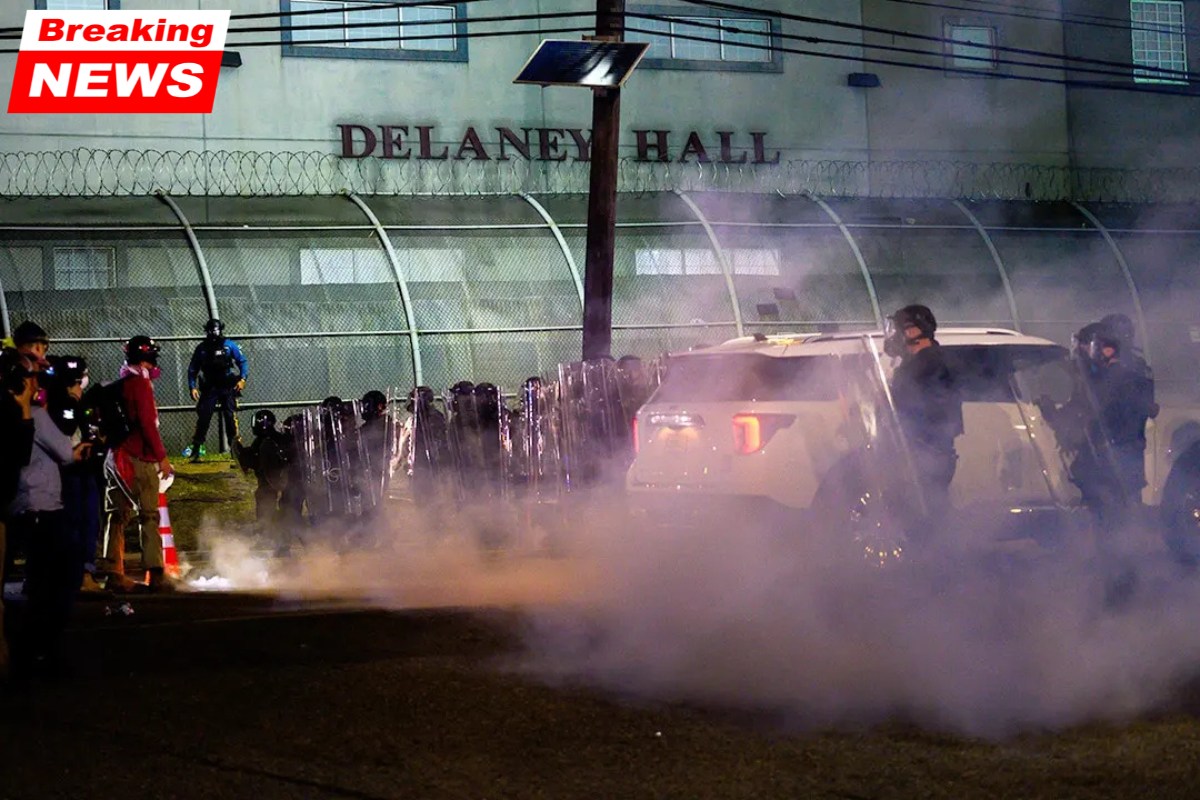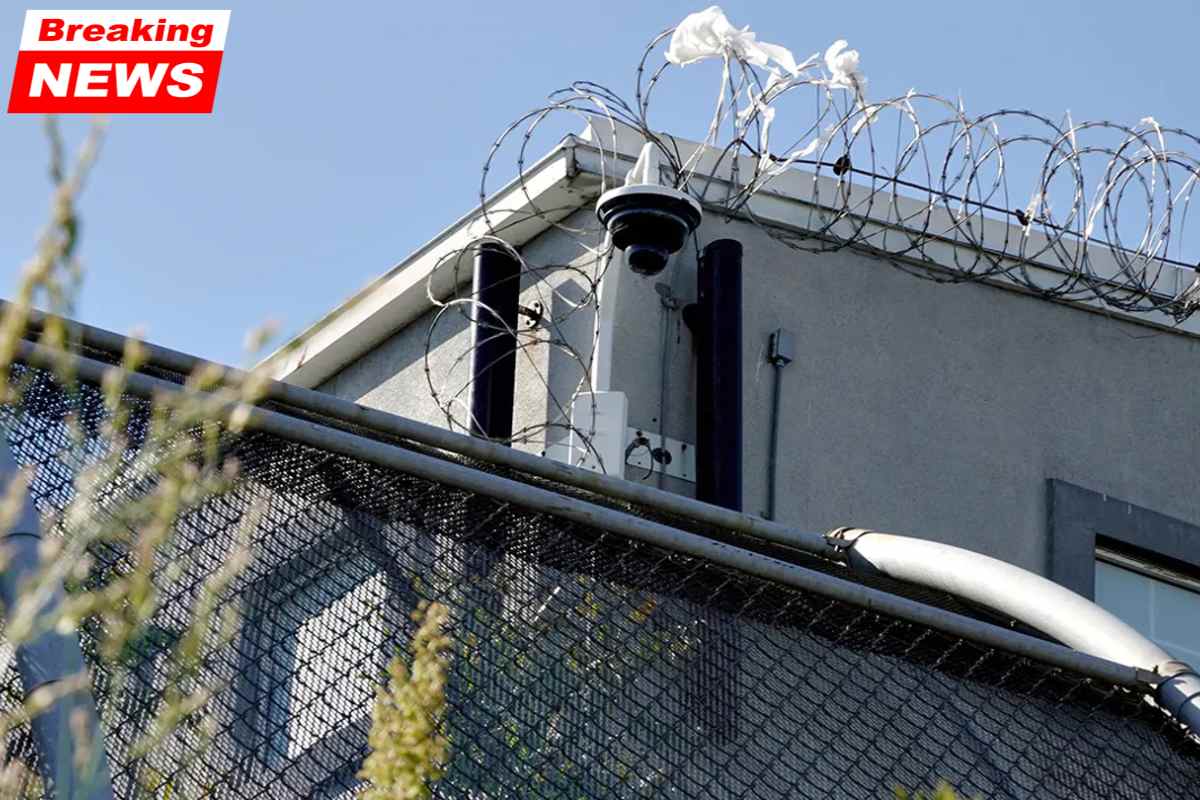
Tension rose outside a detention centre in New Jersey as anti-ICE protesters clashed with federal officers. The protest took place outside Delaney Hall in Newark, where hundreds of immigrants are being held. Demonstrators say people inside are living in very poor conditions. Officials, however, strongly deny these claims. The incident has now sparked a fresh debate on immigration detention in the United States.
Protests Outside Delaney Hall in Newark
The protest happened outside Delaney Hall detention center in Newark. Protesters tried to form a human chain around the building to block access and show their opposition to Immigration and Customs Enforcement (ICE).
Some protesters shouted slogans like “No more ICE!” and “Free them all!” A few people reportedly threw water bottles at officers. ICE agents were seen asking the crowd to move away from the road and into a grassy area. For some time, officers and protesters stood face-to-face, creating a tense situation. Later, things calmed down, but several demonstrators were detained.
Governor Mikie Sherrill Denied Entry
Mikie Sherrill also arrived at the facility on Monday. She requested permission to enter Delaney Hall but was denied access, according to reports.
After being refused entry, she said this raised serious questions about transparency. She added that she has always opposed private detention centres and will continue to push for the closure of Delaney Hall. She also spoke against plans to expand mass detention facilities in New Jersey, including a proposed centre in Roxbury.
Her statement has added political weight to the issue, as more leaders begin to question how detention centres are being managed.
Detainees Launch Hunger and Labour Strike
Inside the facility, nearly 300 detainees have reportedly started a hunger and labour strike. In a group letter released last week, detainees described their living conditions as “inhumane.”
They mentioned:
- Poor quality food
- Lack of proper medical care
- Mental stress and emotional suffering
- Limited contact with family
In the letter, the detainees admitted they entered the United States illegally. However, they explained that they were escaping dangerous conditions in their home countries. They said they now feel “vulnerable” and compared their detention to being kidnapped.
This letter has increased public attention and strengthened the protests outside the facility.
Government Response and DHS Statement
The U.S. Immigration and Customs Enforcement (ICE), which operates under the Department of Homeland Security (DHS), has rejected the claims of mistreatment.
A DHS spokesperson said that all detainees receive:
| Facility Support | Details Provided by DHS |
|---|---|
| Meals | Three meals daily, approved by certified dieticians |
| Basic Needs | Clean water, clothing, bedding, toiletries |
| Communication | Access to phones for family and lawyers |
| Living Conditions | ICE claims higher standards than many US prisons |
Officials also stated earlier that the facility houses individuals accused of serious crimes, including gang members and violent offenders. In February 2025, former DHS Assistant Secretary Tricia McLaughlin claimed that the centre included people accused of crimes such as murder, terrorism, and gang activity.
Political Leaders Call for Review
Several elected officials have recently visited Delaney Hall or demanded action. These include:
- Andy Kim
- Rob Menendez Jr.
- Nellie Pou
- LaMonica McIver
- Analilia Mejia
- Frank Pallone Jr.
Some of them have called for the facility to be shut down. Others are asking for independent inspections and better oversight.
Public Reaction and Ongoing Debate
The clash in Newark shows how divided the country is on immigration policy. Supporters of stricter enforcement believe detention centres are necessary for national security and law enforcement. Critics argue that human rights must be protected, regardless of immigration status.
Family members of detainees have been holding a peaceful vigil outside Delaney Hall since Friday. They are demanding better conditions and fair treatment for their loved ones.
This issue is likely to continue as investigations, protests, and political discussions move forward. The situation at Delaney Hall reflects a larger national debate about immigration, detention practices, and human rights.
As more leaders speak out and more information becomes public, the pressure will grow for transparency and reform. Whether the facility remains open or faces closure will depend on official reviews and political decisions in the coming weeks.
What is clear is that immigration detention remains one of the most sensitive and emotional topics in American politics today.